

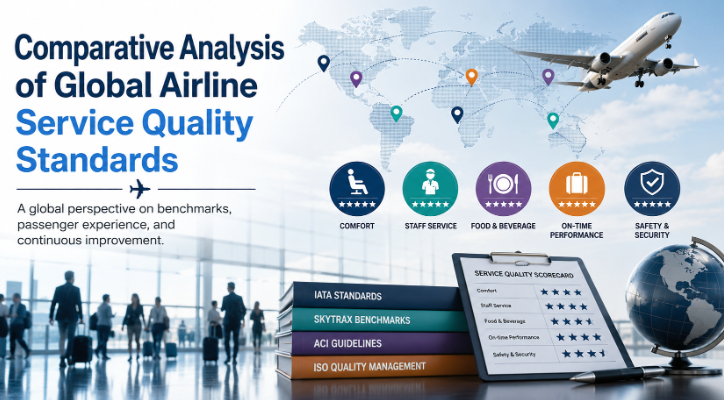
Introduction to Airline Service Quality Standards
In the highly competitive airline industry, service quality standards play a crucial role in defining the customer experience. These standards encompass a variety of factors, including punctuality, cleanliness, staff behavior, and overall operational efficiency. By establishing rigorous service quality parameters, airlines aim to enhance passenger satisfaction and loyalty, which are vital for retaining customers in an industry where alternatives are easily accessible.
Service quality standards in the airline sector are not uniform; they vary significantly across regions and carriers. Airports and airlines are subject to different regulations and customer expectations depending on their geographical location and target demographics. For instance, full-service airlines often emphasize comprehensive service offerings, including meal provision and in-flight entertainment, while low-cost carriers prioritize cost efficiency and basic services to appeal to budget-conscious travelers. This differentiation results in varying experiences from one airline to another and even between flights on the same airline.
The importance of maintaining high service quality standards cannot be overstated, as they directly correlate with customer satisfaction and retention rates. Airlines that consistently meet or exceed these standards can cultivate a loyal customer base, resulting in repeat business and positive word-of-mouth. Conversely, failure to adhere to established service quality standards can lead to customer dissatisfaction, negatively impacting an airline’s reputation and financial performance.
With the advent of digital technology, airlines are also utilizing customer feedback and data analytics to continually refine their service quality standards. By understanding passengers’ needs and expectations through surveys and online reviews, airlines can swiftly adapt their offerings to deliver an improved travel experience.
Key Service Quality Dimensions in Airlines
In the competitive landscape of the airline industry, understanding service quality is paramount for customer satisfaction and loyalty. The SERVQUAL model identifies five key dimensions of service quality: reliability, assurance, tangibles, empathy, and responsiveness. Each dimension plays a crucial role in the overall airline experience.
Reliability involves the ability of an airline to deliver promised services accurately and dependably. For instance, an airline known for its punctuality and consistency in flight schedules illustrates high reliability. When a passenger books a flight that departs on time and reaches the destination as scheduled, it enhances their perception of the airline’s reliability. The importance of reliability cannot be overstated, as delays or cancellations can significantly impact customer trust.
Assurance includes the competence and courtesy of employees, along with their ability to instill confidence in passengers. This dimension reflects a passenger’s feelings of safety and security during travel. For example, when cabin crew are well-trained in safety procedures and handle passenger queries with professionalism, they boost the airline’s assurance level. Airlines that provide clear information about safety protocols, especially during turbulent times, demonstrate an understanding of assurance.
Tangibles pertain to the physical aspects of the service, such as cleanliness, modern aircraft, and comfortable seating. A premium airline that invests in clean and well-maintained equipment conveys an image of quality through its tangibles. For instance, updated cabin interiors and advanced in-flight entertainment systems can enhance the overall passenger experience, making an airline more appealing.
Empathy emphasizes caring and individualized attention to passengers. Airlines that provide tailored services, like special assistance for elderly passengers or personalized travel recommendations, show an understanding of empathy. This personal touch can significantly influence passengers’ perceptions of an airline.
Finally, responsiveness refers to the willingness of staff to help customers and provide prompt service. Airlines that roundly respond to inquiries or resolve issues efficiently show high responsiveness. For example, a quick and effective resolution to a baggage mishap can leave a lasting positive impression on a traveler.
Global Regulatory Frameworks Influencing Airline Standards
Airlines operate within a complex framework of regulations that are governed by various international and regional bodies. Two of the most influential organizations in this regard are the International Air Transport Association (IATA) and the International Civil Aviation Organization (ICAO). These entities play pivotal roles in establishing and enforcing service quality standards across the global airline industry.
The IATA is a trade association that represents the interests of over 290 airlines worldwide. One of its main objectives is to create standards that enhance operational efficiency and service quality within the aviation sector. Through initiatives such as the IATA Operational Safety Audit (IOSA) program, the organization monitors and promotes safety measures and service standards, thereby impacting how airlines are assessed in terms of quality.
On the other hand, the ICAO, a specialized agency of the United Nations, is primarily responsible for ensuring safe and efficient international air transport. It develops policies and standards that member states are encouraged to implement in their national regulations. The organization outlines critical safety and quality benchmarks that all airlines must adhere to, thereby ensuring a minimum level of service quality globally. Its emphasis on safety and service standards is essential for facilitating international travel and commerce.
Both the IATA and ICAO influence airline operational standards, but their approaches differ slightly. While the IATA focuses on member airline interests and operational efficiency, the ICAO takes a broader approach, encompassing regulatory compliance aimed at global safety and service excellence. The interplay between these organizations establishes a regulatory framework that propels the continuous improvement of airline service quality.
Comparative Analysis of Different Regions
The global airline industry exhibits varying standards of service quality that are influenced by regional characteristics, customer expectations, and regulatory frameworks. Major regions such as North America, Europe, Asia-Pacific, and the Middle East demonstrate distinct differences in their approaches to airline service delivery.
In North America, airlines prioritize operational efficiency alongside customer service quality, facilitated by a robust regulatory environment. Data indicates that American carriers often excel in on-time performance and baggage handling, despite facing challenges related to customer satisfaction stemming from issues such as delays and cancellations. Airlines like Delta and Southwest have adopted innovative service strategies, such as loyalty programs and mobile app functionalities, to enhance the customer experience.
Conversely, Europe tends to emphasize customer rights and service quality through stringent regulations. The European Union has established the Air Passenger Rights regulation, which fosters high operational standards and transparency, thereby increasing traveller confidence. European airlines, such as Lufthansa and British Airways, frequently receive high marks in areas like in-flight service and overall passenger experience, reflecting the region’s commitment to maintaining high service quality amidst diverse cultural expectations.
Asia-Pacific stands out for its rapid growth and evolving customer expectations. Airlines in this region, including Singapore Airlines and Qantas, are renowned for their lavish in-flight services, which include luxury seating and gourmet meals. However, as competition intensifies, maintaining excellence in service delivery has become a crucial focus for these airlines.
In the Middle East, airlines such as Qatar Airways and Emirates set a global benchmark for luxury travel, often coming up top in customer satisfaction surveys. These airlines invest heavily in fleet modernizations and service innovations, catering to a diverse passenger demographic while also focusing on the unique cultural aspects that influence traveller expectations.
This comparative analysis reveals that while service quality standards differ widely, the global aviation industry is increasingly aware of the need to align services with regional expectations and regulatory compliances to meet the ever-growing demands of passengers worldwide.
Customer Feedback and Quality Assurance Metrics
Customer feedback is a crucial element in evaluating and enhancing airline service quality standards. By actively soliciting and analyzing passenger insights, airlines can identify strengths and weaknesses in their offerings. Typically, airlines employ a variety of methods to gather feedback, including online surveys, in-flight questionnaires, and social media monitoring. This multifaceted approach allows airlines to obtain real-time input from passengers, thereby ensuring a comprehensive understanding of customer experiences.
Once collected, customer feedback is meticulously analyzed to extract actionable metrics and insights. Airlines utilize advanced data analysis techniques to correlate feedback with various performance indices, helping to pinpoint specific areas needing improvement. Furthermore, these insights are often benchmarked against industry standards, allowing airlines to gauge their performance relative to competitors. By translating customer feedback into quantifiable data, airlines can more effectively address issues, improving overall service quality.
Key Performance Indicators (KPIs) serve as vital tools in the quality assurance process. Common KPIs in the airline industry include customer satisfaction scores, net promoter scores (NPS), on-time performance, and baggage handling efficacy. By monitoring these metrics, airlines can establish a clear picture of their operational performance and customer satisfaction levels. Consistent evaluation of KPIs enables airlines to adjust their strategies and operations, fostering a culture of continuous improvement.
Moreover, the integration of customer feedback with quality assurance metrics ultimately leads to a more customer-centric approach in service delivery. When airlines prioritize passenger insights in their strategic planning, it enhances both customer loyalty and business performance. Thus, effectively harnessing customer feedback and implementing robust quality assurance metrics are indispensable for airlines striving to meet and exceed service quality standards in today’s competitive market.
Case Studies of Leading Airlines
In the highly competitive aviation industry, a select number of airlines have distinguished themselves through exceptional service quality. Among these, Singapore Airlines, Qatar Airways, and Emirates stand out as paragons of excellence, each employing unique strategies to enhance the passenger experience and maintain high service standards.
Singapore Airlines is renowned for its commitment to customer satisfaction and operational excellence. The airline has consistently invested in staff training, ensuring that crew members are not only well-versed in service protocols but also equipped to create personal connections with passengers. This emphasis on human interaction is complemented by the airline’s state-of-the-art cabin design, offering spacious seating and an extensive inflight entertainment system. These features contribute to a perception of luxury and comfort, setting Singapore Airlines apart in the market.
Qatar Airways, on the other hand, has garnered attention for its innovative amenities and dedication to passenger welfare. Known for the quality of its business class experience, Qatar Airways offers features such as the Qsuite, which provides private suites and the option of double beds. The airline’s emphasis on culinary excellence is another differentiator; it collaborates with top chefs to curate menus that cater to diverse palates. Additionally, Qatar Airways places a strong focus on sustainability, continually implementing eco-friendly practices that resonate with the modern traveler.
Emirates is similarly a leader in service quality, with a well-rounded approach that includes luxurious inflight experiences and a vast network of destinations. The airline’s signature onboard service includes a personal touch, with cabin crew trained to anticipate passenger needs actively. Emirates also invests significantly in technology, offering advanced entertainment systems and Wi-Fi connectivity. Furthermore, their initiatives in customer engagement, such as personalized greetings and attentive service, reinforce their commitment to high-quality travel experiences.
Technological Advancements and Their Impact on Service Quality
Technological advancements play a pivotal role in reshaping airline service quality, significantly enhancing the overall passenger experience. Innovations such as artificial intelligence, mobile applications, and customer relationship management (CRM) systems are at the forefront of this transformation.
Artificial intelligence has emerged as a game changer in the airline industry, enabling airlines to optimize operations and personalize customer interactions. For instance, AI-powered chatbots are increasingly being deployed on airline websites and mobile applications to assist passengers with inquiries, provide real-time information, and handle booking and cancellations efficiently. This not only streamlines processes but also reduces the pressure on customer service representatives, allowing human agents to focus on more complex issues, ultimately enhancing service quality.
Mobile applications have become indispensable in improving user experience within the airline industry. Travelers can now access a plethora of services at their fingertips, such as online check-in, boarding passes, and flight status updates. Beyond convenience, these applications often provide tailored recommendations based on users’ preferences and history, thereby fostering a more personalized travel experience. The integration of features such as intuitive navigation and customer feedback options helps airlines to identify and rectify service gaps promptly, further enhancing service quality.
Additionally, CRM systems play a crucial role in managing passenger relationships, facilitating airlines in gathering and analyzing data to better understand customer preferences and behaviors. This data-driven approach enables airlines to develop targeted marketing strategies, loyalty programs, and service offerings that resonate with their customers. In turn, this fosters greater customer satisfaction, builds loyalty, and elevates the overall perception of service quality within the airline sector.
Challenges and Opportunities in Maintaining Service Standards
Maintaining service quality standards within the airline industry poses numerous challenges, particularly due to fluctuating demand and rising operational costs. Airlines frequently face significant variations in passenger numbers, often dictated by factors such as seasonality, economic conditions, and global events. When demand is low, maintaining a high standard of service becomes increasingly difficult as airlines might have to streamline operations and reduce staffing, potentially leading to a decline in service quality.
Operational costs are another critical factor influencing service standards. Airlines are burdened with expenses related to fuel, maintenance, and staffing. With the volatility of fuel prices, which can escalate unexpectedly, airlines may be forced to make tough decisions that impact service delivery. For instance, to mitigate costs, airlines might opt to reduce in-flight services, which could negatively affect passenger satisfaction and perceptions of quality.
The global landscape is further complicated by events such as pandemics, natural disasters, and geopolitical tensions. These crises can disrupt the flow of operations, resulting in a decline in customer confidence. The COVID-19 pandemic, for instance, drastically changed the travel landscape, compelling airlines to adapt quickly to new health and safety standards while still maintaining quality services that passengers expect. The necessity for cleanliness and social distancing has also led to increased operational complexities.
Despite these challenges, opportunities for improvement and innovation in service delivery abound. Airlines can embrace technology to enhance operational efficiency and customer experience. Implementing advanced data analytics can help predict demand trends, allowing airlines to adjust service levels accordingly. Moreover, the adoption of innovative platforms for customer feedback can guide enhancements in service quality, ensuring that airlines meet changing passenger expectations effectively.
Future Trends in Airline Service Quality Standards
The airline industry is undergoing significant transformations in service quality standards, influenced by emerging trends that reflect wider societal changes and customer expectations. One of the most notable trends is the emphasis on sustainability. Airlines are increasingly aware of their environmental responsibilities and are striving to implement eco-friendly practices. This includes investing in fuel-efficient aircraft, reducing single-use plastics, and exploring alternative fuels to minimize their carbon footprint. These sustainability initiatives are not merely a trend but a crucial aspect of airline service quality that resonates with consumers who prioritize environmentally conscious travel options.
Moreover, personalized customer experiences have become paramount. With advancements in technology, airlines are leveraging data analytics to tailor services to individual preferences. This can range from customized meal options to personalized entertainment choices and even individual communication styles. As airlines recognize that a one-size-fits-all approach is no longer viable, they are enhancing customer satisfaction through tailored interactions and services. This trend is not only about enhancing the immediacy of service but also about building long-term relationships with customers based on their unique needs.
Lastly, the importance of health and safety protocols has surged in the post-COVID era. Airlines have begun to prioritize the implementation of stringent health measures that exceed standard operational procedures, such as enhanced sanitization, social distancing protocols in seating arrangements, and contactless check-in processes. Customers are now more conscious of health safety when choosing airlines, making these newly adopted measures integral to overall service quality. The adaptation to health norms signifies a shift in the emphasis on quality standards in the airline industry, where customer health and well-being are at the forefront.