

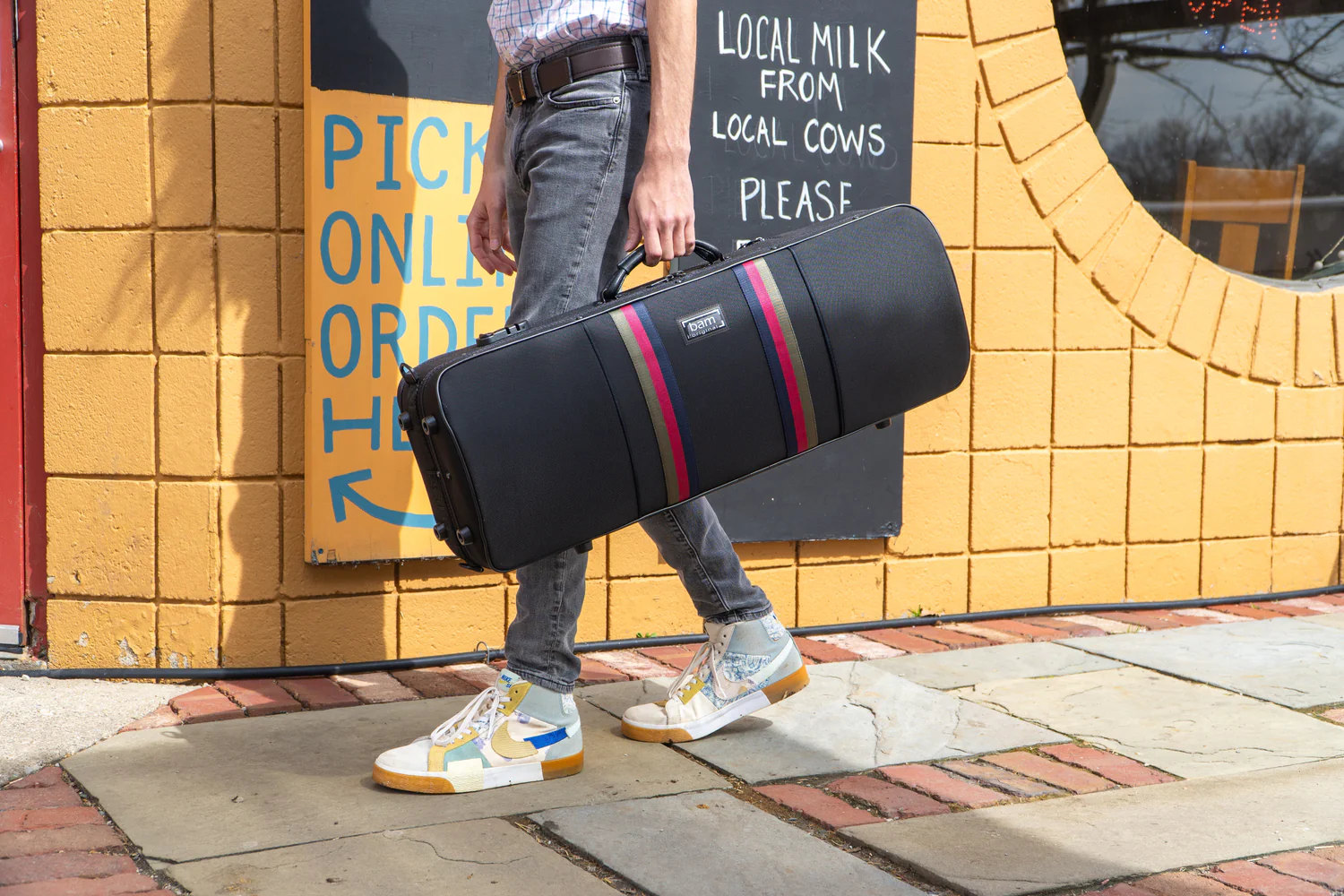
Packing for a trip is stressful enough when you are only worried about clothes and toiletries. Add a violin to the mix and the whole process changes. Suddenly you are thinking about cabin pressure, overhead bin dimensions, humidity levels, and whether the person at the gate counter is going to make you check your instrument as luggage.
For musicians who travel often, whether for gigs, auditions, or simply because they refuse to leave their violin behind on a beach holiday, a bit of planning turns a nerve-wracking ordeal into a smooth part of the journey.
Violins are small compared to cellos or double basses, which makes them more travel-friendly on paper. In practice, that small size also makes them deceptively fragile. A violin’s body is thin, its varnish reacts to temperature swings, and its setup (the bridge, the soundpost, the strings) can shift dramatically with even minor changes in climate. Traveling with one safely is part packing strategy, part understanding of airline rules, and part respecting the instrument’s relationship with its environment.
Why Traveling with a Violin Requires Extra Care
A violin is not like a guitar that can shrug off a few bumps in transit. The wood is thin by design, since thinner wood vibrates more freely and produces a richer tone. That same quality that makes a violin sing also makes it sensitive to pressure, impact, and rapid shifts in humidity. Airlines moving thousands of bags an hour are not gentle, and overhead bins are not built with violin shapes in mind.
Beyond physical handling, violins are sensitive to their surroundings in ways that catch first-time traveling musicians off guard. A flight from a humid coastal city to a dry mountain destination can cause noticeable changes in how an instrument plays within hours of landing. Strings may go out of tune more quickly, the bridge can warp slightly, and in extreme cases, seams in the body can separate. None of this means a violin should stay locked in a closet at home. It simply means a musician traveling with one needs a plan that accounts for handling, climate, and airline logistics before the trip even begins.
Choosing the Right Travel Case for Your Violin
The single biggest factor in protecting a violin on the road is the case it travels in. A flimsy or poorly padded case offers almost no defense against drops, temperature extremes, or the general chaos of travel days. A well-built case, on the other hand, acts as a personal climate and shock barrier around the instrument.
Look for a case with a hard outer shell, reinforced corners, and an interior suspension system that keeps the violin from making direct contact with the case walls. Some cases include built-in hygrometers so musicians can monitor humidity levels at a glance, which is especially useful when moving between climates. Weight matters too, since airlines increasingly enforce strict limits on what can be carried into the cabin, and a heavy case adds unnecessary bulk on top of the instrument itself.
Musicians who travel frequently often invest in a purpose-built option rather than relying on whatever case came with the violin originally. Specialist retailers like Great Violin Cases focus specifically on this category, offering options designed around the realities of air travel, climate shifts, and the kind of rough handling that comes with constant movement. Choosing a case built for travel rather than just storage at home can be the difference between arriving with an instrument that plays exactly as it did before departure and arriving with one that needs a setup adjustment.
Airline Policies and Carry-On Considerations
Every airline treats musical instruments slightly differently, and the rules are not always consistent even within the same carrier from one route to another. Violins are generally small enough to qualify as a carry-on item, but gate agents working a full flight may still ask passengers to check anything that does not fit neatly into the standard luggage dimensions.
Before booking a flight, it helps to check the specific instrument policy listed on the airline’s website rather than assuming general carry-on rules apply. Some carriers allow a violin as an additional item beyond the standard carry-on allowance, since most international aviation regulations now require airlines to make reasonable accommodations for small instruments. Arriving early and boarding as soon as the gate opens also increases the odds of finding adequate overhead bin space, since the worst-case scenario, last-minute gate checking, is far more likely on a flight that is already running tight on space by boarding time.
For musicians who fly often, it is worth keeping a printed or saved copy of the relevant airline policy and any aviation regulations that support carrying an instrument onboard. Gate staff are not always familiar with the specifics, and having documentation ready can resolve a disagreement faster than a verbal explanation.
Packing Tips for Musicians on the Move
Beyond the case itself, what goes inside and around it matters. Loosening the strings slightly before a flight can reduce tension on the instrument during pressure changes, although opinions among professional musicians vary on how much this actually helps versus simply being good practice out of habit. A soft cloth or small towel tucked gently around delicate areas inside the case adds another layer of cushioning without interfering with the suspension system.
It is worth packing a small emergency kit alongside the violin itself: a spare set of strings, rosin, a soft cloth for wiping down the instrument after handling, and a small screwdriver if the case has any adjustable fittings. These items take up minimal space but solve real problems if something goes wrong far from a music shop. Bow care deserves attention too, since bows can warp from heat or pressure just as easily as the violin body. Most quality cases include a separate compartment for the bow, and it should always be loosened before travel to release tension on the stick.
Clothing and other luggage items should never be packed into the gaps inside a violin case “for efficiency.” It might seem like a clever use of space, but it adds pressure points and removes the protective cushioning the case was designed to provide.
Humidity, Climate, and Temperature Control on the Road
Once the violin has survived the flight itself, the next challenge is adjusting to a new climate. Wood expands and contracts with humidity, and sudden swings between dry and humid environments are one of the most common causes of cracks, seam separation, and tuning instability in travel-worn instruments.
A small in-case humidifier or a humidity-controlled pouch can help stabilize conditions during the first few days in a new location, giving the wood time to adjust gradually rather than all at once. Avoiding direct exposure to air conditioning vents, heaters, or sunlit windows in hotel rooms also reduces unnecessary stress on the instrument. Musicians moving between dramatically different climates, say, a humid tropical destination and a dry winter city, sometimes notice their violin needs a few days of acclimatization before it settles back into its usual tone and playability.
Best Practices for Hotel and Accommodation Storage
Hotel rooms are not designed with violins in mind, and a surprising number of instrument mishaps happen not during flights but during the in-between moments of a trip: a violin left in a hot car, propped against a wall where it gets knocked over, or stored too close to a window with direct sun exposure.
The safest habit is to treat the case as the violin’s home base for the entire trip, returning it there whenever the instrument is not actively being played, rather than leaving it out on a bed or chair “just for a few minutes.” Hotel safes are usually too small for a violin case, but a closet shelf away from heating vents and windows works well as a temporary storage spot. For longer stays, checking the room’s general climate, particularly if it relies on older air conditioning units that swing temperatures aggressively, can help avoid surprises.
Combining Music and Leisure Travel
Plenty of musicians travel for reasons that have nothing to do with performing. A violin tucked into the luggage for a vacation is not unusual, especially for players who treat practice as part of their daily routine no matter where they are in the world. The challenge is balancing instrument care with the more relaxed pace of a holiday, where climate considerations might take a back seat to sightseeing plans.
This is where destination matters almost as much as packing technique. Warm, humid environments common in many relaxing tropical getaways can be particularly demanding on an instrument that has just come from a drier climate, so building in a day or two of acclimatization before intensive practice sessions is a smart move.
Booking accommodation with reliable air conditioning, rather than relying on natural ventilation, also gives more control over the environment the violin spends most of its time in. None of this means musicians should avoid warm-weather destinations. It simply means the same planning that applies to concert touring applies just as much to a beach trip with a violin along for the ride.
Final Thoughts on Smart Violin Travel
Traveling with a violin does not have to mean constant anxiety about every bump, temperature change, or airline counter interaction. With the right case, a clear understanding of airline policies, and a few smart habits around climate and storage, musicians can move through airports and across continents with real confidence that their instrument will arrive ready to play. The extra planning takes a bit more time upfront, but it pays off every time the case opens and the violin sounds exactly as it should, no matter how far it has traveled to get there.