

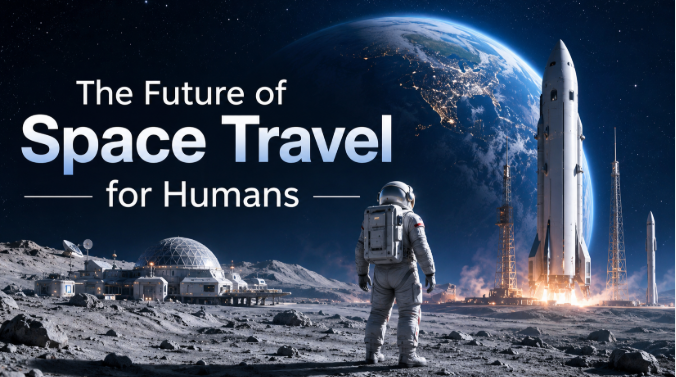
Introduction to Space Travel
Space travel, the act of traveling beyond Earth’s atmosphere, has captured the imagination of humanity for centuries. Its roots can be traced back to early science fiction, propelling ideas of exploration into the cosmos. The concept became a reality in the mid-20th century with the advent of rocketry and space technology, culminating in significant milestones that have paved the way for modern exploration.
The first major achievement in space travel occurred on October 4, 1957, when the Soviet Union launched Sputnik 1, the first artificial satellite. This marked the beginning of the space age, sparking a fierce rivalry between nations. A decade later, astronauts orbited the Earth, adding to the historical timeline with NASA’s Project Mercury and later Project Apollo, leading to the iconic moon landing on July 20, 1969, by Apollo 11. This event not only symbolized human ingenuity but also ignited interest and investment in space exploration.
Over the years, advancements in technology have significantly enhanced our ability to explore space. The development of the Space Shuttle program, the establishment of the International Space Station (ISS), and unmanned missions to planets and beyond have expanded our knowledge. Currently, we stand on the brink of a new era in space travel characterized by commercial spaceflight, advanced propulsion systems, and plans for crewed missions to Mars and beyond. Private companies like SpaceX and Blue Origin are leading the charge, making space more accessible to humans.
The exploration of space not only satisfies our curiosity but also provides vital insights into the universe’s origins, aiding scientific research that can benefit life on Earth. As new technologies emerge, the potential for human presence in space suggests a future where exploration can lead to the discovery of resources and perhaps new habitats beyond our planet.
Technological Innovations in Space Travel
The future of space travel is being significantly shaped by various technological innovations that enhance our capability to explore beyond our planet. One of the key advancements comes from improvements in rocket propulsion systems. The advent of more efficient engines, such as the development of ion and nuclear thermal propulsion, has the potential to drastically reduce travel times to distant planets and possibly facilitate crewed missions to Mars and beyond.
In addition to propulsion, spacecraft design has seen remarkable progress. New materials and structural designs are being implemented to create lightweight yet robust spacecraft that can withstand the harsh conditions of space travel. For instance, advancements in aerodynamics enable spacecraft to be designed with optimal shapes, enhancing their performance during launch and re-entry phases. The integration of artificial intelligence in spacecraft operations also fosters greater efficiency and safety, allowing for real-time decision-making during missions.
Life-support systems are another critical area of innovation in space travel technology. Developing sustainable environments for long-duration missions requires advances in life-support systems that recycle air and water, as well as systems that can grow food in space. These technological developments will play a crucial role when it comes to long-term human habitation on other celestial bodies.
The role of private companies in this revolution cannot be overstated. Entrepreneurs and innovators like SpaceX and Blue Origin are pioneering efforts to create reusable rockets. Such technology promises to reduce the cost of space access dramatically, thereby democratizing space travel and making it more accessible to a broader audience. The collaboration between governmental space agencies and the private sector is also fueling advancements, combining resources and expertise that propels us toward a promising future in space exploration.
The Role of Private Space Companies
In recent years, the landscape of space travel has been significantly transformed by the emergence and growth of private space companies such as SpaceX, Blue Origin, and Virgin Galactic. These organizations have pioneered a new era of commercial space exploration, leveraging innovative technologies and business models to reduce costs while increasing access to space.
SpaceX, founded by Elon Musk in 2002, has become a leading force in the industry. With its Falcon 9 and Falcon Heavy launch vehicles, SpaceX has successfully reduced the cost of launching payloads into low Earth orbit. Notably, their Crew Dragon spacecraft, which carries astronauts to the International Space Station (ISS), signifies a definitive step toward operationalizing space travel for non-government entities. The ongoing development of the Starship vehicle aims to enable missions to Mars and beyond, showcasing SpaceX’s ambition to make humans a multiplanetary species.
Blue Origin, established by Jeff Bezos, is another key player that focuses on sustainable access to space. The company’s New Shepard suborbital spacecraft is designed for space tourism, providing short trips to the edge of space. By emphasizing reusability and reliability, Blue Origin aims to foster a new market for commercial space flights. Additionally, their vision of lunar exploration through the Blue Moon lander further highlights the ambition to support future sustainable presence on the Moon.
Virgin Galactic, spearheaded by Richard Branson, is also at the forefront of space tourism. Their SpaceShipTwo has undergone extensive testing to provide commercial suborbital flights for private individuals. With the prospect of making space travel accessible to broader audiences, Virgin Galactic has captured public interest and invested in the dream of personal space experiences.
The collaboration between private companies and government agencies, exemplified by public-private partnerships, is a notable trend shaping future missions. NASA’s Commercial Crew Program is a prime example where the space agency relies on private companies to transport astronauts, reflecting a new strategy for sustainable space exploration. As the involvement of private entities in space travel continues to grow, it is evident that they play a crucial role in shaping the future of human exploration beyond Earth.
Human Health and Safety in Space
As humanity ventures farther into the cosmos, understanding and addressing the health risks associated with space travel becomes paramount. The unique conditions of space, particularly microgravity, pose significant challenges to the human body. In microgravity, astronauts experience muscle atrophy and bone density loss, leading to an increased risk of fractures and physical incapacitation. Studies have shown that astronauts can lose up to 20% of their muscle mass during long-duration missions. Hence, exercise regimens, including resistance training and aerobic workouts, are critical for maintaining physical health in space.
Another serious concern for astronauts is radiation exposure. Outside of the protective layers of Earth’s atmosphere, space presents an environment rife with cosmic rays and solar particle events, which can increase the risk of cancer and impact neurological functions. Current protective measures include the design of spacecraft with radiation-shielding materials and the development of real-time radiation monitoring systems. Research is ongoing to explore pharmaceutical countermeasures that could mitigate the effects of radiation exposure on the body, enhancing astronaut safety.
Additionally, psychological challenges must be considered, particularly during long missions such as those planned for Mars. Isolation, confinement, and the stresses of living and working in a closed environment can adversely affect mental health. Crew selection, ongoing psychological evaluations, and implementing robust support systems, including communication with Earth and recreational activities, are strategies employed to bolster mental resilience. Developing technologies that promote social interaction, even in virtual formats, is crucial for sustaining morale and ensuring the well-being of astronauts during extended missions.
In conclusion, tackling the health risks of space travel requires a multifaceted approach, ensuring that physical and psychological well-being is prioritized as humanity advances its aspirations in the cosmic frontier.
Prospects for Space Colonization
The idea of establishing human settlements beyond Earth has transitioned from speculative reports to tangible discussions among scientists, engineers, and policymakers. As humanity contemplates the prospects for space colonization, two celestial bodies frequently emerge as focal points: Mars and the Moon. Each offers unique advantages and challenges that could significantly influence the future of human habitation beyond our planet.
Firstly, the Moon serves as an accessible stepping stone for space colonization. Its proximity allows for relatively short travel times, which could facilitate ongoing missions and the transport of materials. The construction of lunar habitats would likely employ local resources, such as regolith, to create sustainable living conditions. Moreover, the potential for harnessing Helium-3 from the lunar surface for fusion energy makes the Moon an attractive option for long-term energy solutions.
On the other hand, Mars presents a more complex environment for colonization but offers greater opportunities for self-sufficiency. With its similar day length and seasonal changes, the Red Planet has the potential to support agricultural practices that would enable human settlers to cultivate food. The abundance of frozen water on Mars is crucial for any sustainable settlement, providing necessary resources for drinking, agricultural irrigation, and even producing rocket fuel. However, challenges such as radiation exposure, atmospheric conditions, and long-term health impacts due to reduced gravity cannot be disregarded.
The implications of human colonization of space extend beyond mere survival. Establishing communities on other planets could fundamentally alter our understanding of humanity, our place in the universe, and our relationship with Earth. As we look towards the future of space exploration, contemplating the ethics and logistics of colonizing these celestial bodies will be paramount. Technical advancements, collaborative efforts across nations, and sustainable practices will undoubtedly shape the feasibility of these ambitious endeavors.
The Search for Extraterrestrial Life
The quest to discover extraterrestrial life is one of the most significant motivations driving contemporary space exploration. As humanity ventures deeper into the cosmos, the implications of discovering life beyond Earth are profound, potentially redefining our understanding of biology, evolution, and our place in the universe. Current exploration missions are at the forefront of this pursuit, utilizing advanced scientific methods to survey exoplanets and analyze the atmospheric conditions conducive to life elsewhere.
Among the various missions, NASA’s Mars rovers, such as Perseverance, are actively combing the Martian surface for signs of microbial life that may have existed in the planet’s ancient past. These rovers are equipped with sophisticated instruments designed to conduct in-situ analyses of rock and soil samples, thereby enhancing our comprehension of the planet’s geology and potential habitability. Similarly, the study of the icy moons of Jupiter and Saturn is gaining traction, as missions like Europa Clipper and Dragonfly focus on subsurface oceans that could harbor life.
Furthermore, the application of scientific methods such as spectroscopy has become pivotal in the search for extraterrestrial life. This technique allows scientists to analyze the light emitted by distant exoplanets, enabling the detection of biosignatures—substances that indicate the presence of living organisms. The discovery of phosphine in Venus’s atmosphere sparked renewed interest, fueling debates among scientists about the planet’s potential for hosting life forms.
The implications of finding extraterrestrial life extend beyond the scientific realm, affecting philosophical and sociopolitical dimensions of human society. A confirmed discovery would not only ignite a new era in astrobiology but could also influence practices in environmental stewardship on Earth, as we reflect on our responsibilities towards inhabited and potentially inhabited worlds.
The Societal Impacts of Space Travel
Space travel has far-reaching implications that extend beyond the realm of science and technology. One critical area where these implications are evident is in education, as space exploration serves as a powerful catalyst for inspiring younger generations. The excitement surrounding missions to other planets and the potential for human colonization stimulates interest in STEM (Science, Technology, Engineering, and Mathematics) fields. Educational initiatives driven by discoveries in space often motivate students to pursue careers in these disciplines. This occurs through various programs and outreach initiatives that engage students through simulations, interactive tools, and partnerships with agencies like NASA.
Moreover, the collaborative nature of international space missions fosters a sense of global unity. Countries working together on projects, such as the International Space Station (ISS), share knowledge, resources, and technology, positioning space travel as a pivotal platform for diplomacy and collaboration. This collective effort encourages an exchange of ideas and cultures, highlighting the importance of shared objectives in addressing global challenges.
The exploration of other planets also raises important ethical considerations regarding the colonization and utilization of extraterrestrial resources. As humans contemplate settlements on Mars or beyond, a vital discourse on stewardship emerges. Questions about the environmental impact on other celestial bodies, the rights of potential microbial life forms, and the preservation of their natural environments must be considered. Engaging in this ethical conversation is essential to ensure that the pursuit of knowledge and advancement does not come at the cost of planetary integrity.
In summary, the societal impacts of space travel extend from inspiring future generations to fostering international collaboration and raising vital ethical questions about our responsibilities in the cosmos. The ongoing developments in space exploration continue to shape not only our understanding of the universe but also our relationship with each other on Earth.
The Future of Space Travel: Challenges and Opportunities
The future of human space travel is poised on the cusp of significant transformation, driven by both challenges and opportunities. As humanity seeks to extend its presence beyond Earth, it encounters a variety of hurdles that must be overcome to ensure successful exploration and habitation of other celestial bodies.
One of the primary challenges is economic in nature. The costs associated with launching missions and sustaining spacecraft are prohibitively high, demanding substantial financial resources from governments and private entities alike. The reliance on public funding, especially in times of economic uncertainty, poses a significant hurdle. Therefore, innovative financing solutions, including public-private partnerships, could provide the necessary capital for ambitious space missions.
Political considerations also play a critical role in shaping the future of space travel. International cooperation is essential for collaborative missions; however, geopolitical tensions can hinder progress. The formation of treaties and agreements that promote peaceful exploration is vital. These diplomatic frameworks will facilitate collaboration among nations, enabling a more unified approach to space exploration and addressing shared challenges such as space debris management and planetary protection.
Technological advancements represent another key challenge. While significant strides have been made in rocket propulsion, life support systems, and robotics, more research and development are necessary to overcome existing limitations. Innovations in reusable launch systems and in-situ resource utilization are essential for reducing costs and improving mission sustainability.
Despite these challenges, the future of space travel is rife with opportunities. Emerging technologies, such as artificial intelligence and advanced materials, are set to revolutionize spacecraft design and operation. Furthermore, a surge in public interest and investment in space exploration, exemplified by numerous private companies entering the sector, signifies a vibrant and increasingly competitive landscape. This environment encourages collaboration, leading to new discoveries that could redefine humanity’s journey into the cosmos.
Conclusion: The Vision Ahead
As we reach the end of our exploration into the future of space travel for humans, it is essential to reflect on the key advancements and trends that will shape this incredible journey. Over the past decades, we have witnessed significant progress in both technology and ambition, leading to a renewed interest in the cosmos. From the early days of astronaut missions to the International Space Station’s ongoing research, humanity’s quest for knowledge and exploration has only intensified.
Looking forward, the prospects for space travel continue to expand. Innovations in propulsion systems, such as ion thrusters and potential breakthroughs in fusion technology, promise to reduce travel time for missions to Mars and beyond. Moreover, the emergence of private space enterprises injecting competition into the industry has catalyzed advancements, leading to a democratization of access to space. This shift not only enhances our exploration capabilities but also fosters a new generation of scientists, engineers, and space enthusiasts.
Exploratory missions to Mars, asteroid mining, and the establishment of lunar bases are no longer just dreams of science fiction; they are tangible goals within our reach. This growing involvement in space exploration is paralleled by an increase in international partnerships that underscore the collaborative spirit required to overcome the immense challenges posed by space travel.
As humanity strides forward into the unknown, the potential rewards of space exploration are profound. Beyond the scientific knowledge gained, the possibility of finding extraterrestrial life, securing sustainable resources, and even establishing human habitats on other celestial bodies opens up exciting new horizons. The vision ahead is one of hope, innovation, and the relentless pursuit of knowledge, reflecting our innate desire to understand our place in the universe. The future of space travel for humans is filled with promise, reminding us that while there may be uncertainties, our collective ambition will guide us through the cosmos.