
Introduction to Mountain Expeditions
Mountain expeditions refer to organized journeys undertaken in mountainous regions, typically aimed at exploration, adventure, or scientific study. These expeditions can take various forms, including hiking, climbing, and trekking. Each type offers unique experiences and challenges, appealing to individuals with varying levels of skill and interest in terrain exploration. Hiking often involves walking along established trails in lower elevations, making it accessible to a broader audience, while climbing necessitates advanced skills and equipment as it involves ascending steep, rocky faces.
Trekking, on the other hand, can include both walking and climbing but is usually characterized by longer journeys that traverse multiple terrains and varying altitudes. All these activities draw outdoor enthusiasts to the majestic allure of mountain landscapes, which not only provide visual excitement but also evoke a profound connection with nature.
Embarking on a mountain expedition is not only a test of physical endurance but also a route to psychological growth. The rugged wilderness challenges individuals, pushing them beyond their comfort zones and enabling personal development. Participants often report heightened self-awareness, increased confidence, and a sense of achievement upon completion of their chosen expedition.
Furthermore, the tranquil surroundings of mountains allow for introspection and mental respite from daily life’s pressures. While the thrill of adventure calls many, the notable health benefits associated with vigorous outdoor activities cannot be overlooked. Engaging with nature provides opportunities for both physical and mental rejuvenation, making mountain expeditions a worthwhile pursuit for those seeking to reconnect with themselves and the environment.
Essential Gear and Equipment
When planning a mountain expedition, having the right gear and equipment is vital for safety and success. The types of gear required can vary significantly depending on the specific nature of your expedition, the altitude, and the weather conditions. Proper clothing is paramount. Utilitarian fabrics that wick moisture, insulate against cold, and resist wind are preferred. Layering is key, as it allows you to adjust your clothing as conditions change, ensuring comfort during the trek.
Footwear is another critical component. Appropriate hiking boots should provide adequate support, traction, and durability, particularly for rocky and uneven terrain. The importance of breaking in your boots before the trip cannot be overstated—it can prevent blisters and ensure a more pleasant experience on the trails.
Climbing gear, such as harnesses, ropes, and carabiners, is essential for those who plan to scale challenging ascents. It is also advisable to invest in high-quality navigation tools, including maps, compasses, or GPS devices, allowing for precise tracking of your route and location. Familiarize yourself with these tools before embarking on the expedition.
Camping equipment, including tents, sleeping bags, and cooking gear, must also be chosen with care. Ensure that your camping equipment is lightweight yet durable, suitable for the anticipated weather conditions, and easy to set up. Safety devices, such as first-aid kits, multi-tools, and emergency beacons, should never be overlooked. These can significantly reduce risks and enhance your preparedness for unpredictable circumstances.
Ultimately, it is critical to tailor your gear selection to the specific needs of your expedition and conditions. Researching the terrain and potential weather patterns can inform choices and enhance overall safety during your mountain adventure.
Route Planning and Navigation Techniques
Effective route planning is a critical component of any successful mountain expedition. The first step in this process involves basic map reading skills, which are essential for understanding the geography of the area. Topographic maps provide crucial information, including elevation changes, terrain types, and water sources, allowing expeditions to make informed decisions on the best paths to take.
Understanding topography is not solely about reading maps. It involves recognizing how physical features like ridges, valleys, and slopes can impact the route. For instance, steep inclines may require added effort for ascent and descent, while valleys may hold danger from weather changes or avalanches. Planning a route must include an evaluation of these aspects to ensure a secure and efficient journey.
In today’s digital age, the integration of GPS devices has revolutionized navigation on mountain expeditions. These devices provide real-time information about the hiker’s location, speed, and elevation, which are invaluable in dense or unfamiliar terrains. However, it is crucial to remain vigilant and not rely solely on technology. Battery failures or signal loss can occur, and having traditional navigation skills remains a vital element in ensuring safety.
Creating contingency routes is also an essential aspect of route planning. Factors such as sudden weather changes, trail accessibility, and physical conditions of the group may necessitate diversions from the original path. Researching various trails beforehand and marking alternative routes on maps can greatly increase flexibility and safety during the expedition.
Finally, comprehensive research on the planned trails is invaluable. Prospective adventurers should familiarize themselves with local regulations, trail conditions, and recent reports on accessibility, which can differ significantly by season. By meticulously planning the route and being prepared for unexpected scenarios, the likelihood of a successful mountain expedition increases significantly.
Physical Preparation and Training
Preparing for a mountain expedition requires a comprehensive physical fitness regimen to ensure that participants can manage the challenges posed by steep terrains and varied altitudes. A systematic training approach that incorporates strength, endurance, and acclimatization is essential for success. Strength training is vital, focusing on core muscles, legs, and upper body. Exercises like squats, lunges, and deadlifts will help build the necessary muscular endurance and strength to handle both the ascent and descent of mountains. Resistance training should be integrated into weekly workouts to enhance overall stability and resilience.
In addition to strength training, endurance activities such as running, cycling, and hiking are critical components of physical preparation. Engaging in these activities for extended periods promotes cardiovascular fitness, which is essential when traversing challenging landscapes. Aim for at least 150 minutes of moderate aerobic exercise weekly, gradually increasing intensity as fitness improves. This allows the body to adapt to prolonged physical activity, which is paramount in mountaineering.
Acclimatization is another key element of preparation. High-altitude environments can pose various physiological challenges, including altitude sickness. To combat this, training should be incrementally adjusted to include exposure to higher altitudes. Consider undertaking gradual climbs, spending nights at elevated camps to aid the body’s adaptation to reduced oxygen levels. Additionally, practicing on varied terrains will prepare hikers for different conditions they may encounter. Emphasizing the importance of gradually increasing the difficulty of training is critical to avoid injury and enhance performance during the expedition.
Understanding Weather Conditions and Risks
Monitoring and interpreting weather conditions is critical for ensuring the safety of mountain expeditions. The mountainous regions are often characterized by rapidly changing weather patterns which can significantly affect the feasibility and safety of any planned activities. Therefore, gaining an understanding of these patterns is the first step in effective risk management.
Common weather conditions in mountainous areas include temperature fluctuations, high winds, rain, and snowfall. It is essential to keep an eye on weather forecasts, as these can provide important insights into impending weather changes. Additionally, utilizing local weather stations or mobile applications designed for outdoor activities can offer real-time updates, which are invaluable for expedition planning.
Attention must also be given to warning signs of changing weather. Darkening skies, sudden drops in temperature, or increased wind speeds are indicators that conditions may shift rapidly. Expedition teams should develop procedures for handling severe weather conditions, such as finding appropriate shelter, setting up emergency gear, or, when necessary, altering the expedition’s route or timetable.
Risk management strategies should include thorough pre-expedition briefings about potential weather-related challenges. Establishing a clear communication plan can facilitate timely decision-making in the event of severe weather. Moreover, all team members should be trained to recognize weather-related risks and know how to respond appropriately. Adequate time for planning and adjustment can be vital—delaying or rescheduling an expedition may mean the difference between a successful outing and a dangerous situation.
In essence, understanding weather conditions and their associated risks is an integral part of a well-prepared mountain expedition. The key is to continuously assess both the forecasts and the immediate environment, ensuring that all team members remain vigilant and informed throughout the journey.
Safety Protocols and Emergency Procedures
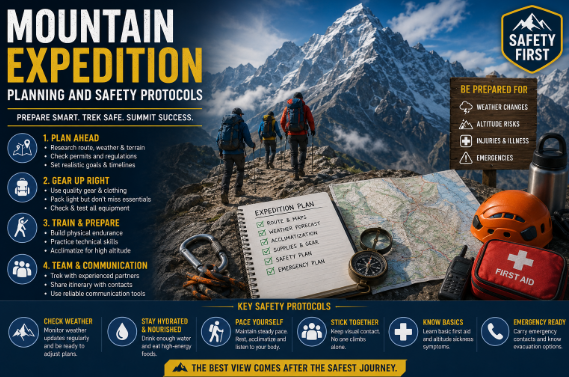
Safety is paramount in mountain expeditions, where unpredictable environments and physical challenges can pose significant risks. By establishing comprehensive safety protocols and emergency procedures, expedition leaders can better prepare their teams for handling unexpected situations. Effective communication is essential; all team members should be equipped with reliable means of communication, such as walkie-talkies or satellite phones, to ensure they can stay in touch, especially in remote locations.
First aid training is another critical element in preparation for mountain expeditions. It is advisable that at least one member of the team holds a valid first aid certification, equipped with knowledge of common injuries related to altitude sickness, fractures, or severe weather conditions. A well-stocked first aid kit should accompany the expedition, containing essentials such as bandages, antiseptics, and medications for pain and altitude sickness. Familiarity with the use of these supplies can make a substantial difference in the event of an injury.
In addition to preventive measures, a comprehensive emergency response plan is crucial. This plan should encompass various scenarios, including injuries, adverse weather, and even situations such as getting lost. For example, if a team member sustains an injury, the designated first aider should assess the situation while others provide support by securing the area to prevent further accidents. Moreover, if a member becomes separated from the group, a systematic search protocol should be established, outlining the search area and communication checkpoints.
Teams should regularly review and practice these safety protocols to ensure compliance and readiness before embarking on their expedition. By fostering a culture of safety, the likelihood of successful mountain expeditions increases, enhancing each member’s experience while minimizing risks. Overall, adhering to established safety protocols and understanding emergency procedures serve as foundational practices for any mountain expedition.
Group Dynamics and Team Roles
Mountain expeditions are not merely physical challenges; they are also complex social endeavors where group dynamics play a crucial role in determining the expedition’s overall success. Understanding the interactions between team members, as well as defining individual roles within the group, is essential for effective teamwork in high-stress environments. Each member brings unique strengths, experiences, and abilities, which collectively enhance the team’s capacity to tackle challenges encountered during the expedition.
Effective communication is fundamental in fostering a cohesive group. It enables team members to express ideas, share concerns, and address conflicts openly. Establishing clear lines of communication helps minimize misunderstandings and ensures that everyone is aware of the team objectives and individual responsibilities. By promoting an environment where team members feel comfortable voicing their opinions, leaders can motivate group cohesion and enhance collaboration.
Additionally, defining leadership roles is vital in shaping group dynamics. Appointing a leader who possesses both technical skills and interpersonal acumen ensures that decisions are made efficiently and with clarity. The leader must be equipped to assess situations critically and navigate challenges calmly, especially during emergencies. Moreover, it is equally important for other team members to assume support roles, such as navigation, safety, and medical responsibilities, which will distribute tasks adequately and enhance the group’s functionality.
Conflict resolution strategies should also be integrated into expedition planning. Conflicts may arise due to stress, differing personalities, or varying expectations. Establishing guidelines for resolving disagreements amicably can prevent tensions from escalating. Techniques such as active listening, empathy, and negotiation should be practiced among team members to address issues promptly and constructively. By emphasizing the importance of teamwork and harmonious relationships, expedition leaders can cultivate a supportive atmosphere, ultimately leading to a successful and enjoyable mountaineering experience.
Leave No Trace and Environmental Responsibility
As adventurers venturing into mountainous terrains, it is imperative to consider the ethical ramifications of our actions on the environment. The Leave No Trace principles serve as a foundational guideline for ensuring that our outdoor pursuits do not come at the expense of preserving the natural beauty and integrity of these fragile ecosystems. By adhering to these principles, hikers, climbers, and campers alike foster a greater sense of responsibility towards nature.
Leave No Trace comprises seven core principles that advocate for minimal environmental impact. Firstly, planning ahead and preparing enhances the experience while reducing risks and environmental degradation. It is advisable to research trails, weather conditions, and current regulations to avoid unexpected hazards that can harm both the environment and the adventurer.
Secondly, choosing the right paths is essential. Stick to established trails and campsites to prevent soil erosion and protect sensitive vegetation. Opting for durable surfaces aids in minimizing disturbances, safeguarding the biodiversity of the region. When it comes to wildlife, respectful behavior is crucial; observing animals from a distance ensures their natural behaviors are not interrupted.
Proper disposal of waste forms the third principle. Utilizing designated waste disposal facilities, or packing out all trash, food scraps, and hygiene products, significantly lessens the human impact on these pristine areas. Furthermore, educating oneself about local wildlife and plant life allows adventurers to avoid trampling delicate habitats.
By following these practices and understanding the importance of environmental responsibility, outdoor enthusiasts can enjoy their mountain expeditions while ensuring that these breathtaking landscapes remain preserved for future generations. Overall, a commitment to Leave No Trace fosters a sustainable relationship between adventurers and the natural world, emphasizing respect and care as core values of outdoor exploration.
Conclusion and Final Thoughts
Embarking on a mountain expedition can be one of the most exhilarating experiences, combining physical challenge with breathtaking natural beauty. However, the thrill of such adventures must be accompanied by careful planning and adherence to established safety protocols. As discussed throughout this blog, preparation is pivotal in ensuring a successful and safe mountain trek.
First and foremost, creating a detailed plan before setting off can make a significant difference in the outcome of an expedition. This includes mapping out the route, understanding the terrain and climate conditions, and preparing adequately with suitable equipment and supplies. From proper clothing to navigational tools, each item contributes to the overall safety and enjoyment of the experience.
Moreover, respecting safety protocols cannot be overstated. They are designed to protect adventurers from the unpredictable nature of mountainous environments. This includes understanding and evaluating weather conditions, maintaining effective communication among team members, and adhering to designated trails to minimize environmental impact. By following these guidelines, individuals not only ensure their own safety but also contribute to the preservation of the majestic landscapes they traverse.
As we reflect on the elements highlighted in this blog, it is evident that the fusion of thrill and safety is integral to every mountain expedition. Ultimately, the marvels of the majestic peaks can be best appreciated when approached with the right mindset and preparation. Engaging with the mountains is not just about the climb but also about fostering a profound respect for nature’s beauty and unpredictability, encouraging adventurers to embark on their journeys with awareness and responsibility.