

Bali’s road network was never built for the traffic it now carries. A five-kilometre trip between Canggu and Seminyak can take forty minutes by car and twelve on a scooter, and that single fact explains why two wheels remain the default way to move around the island. Cars struggle in the narrow lanes of the older villages, parking is scarce, and the traffic punishes anything wider than a metre. For most visitors, then, the question is not whether to ride but how to do it sensibly, legally, and without inheriting someone else’s mechanical problems.
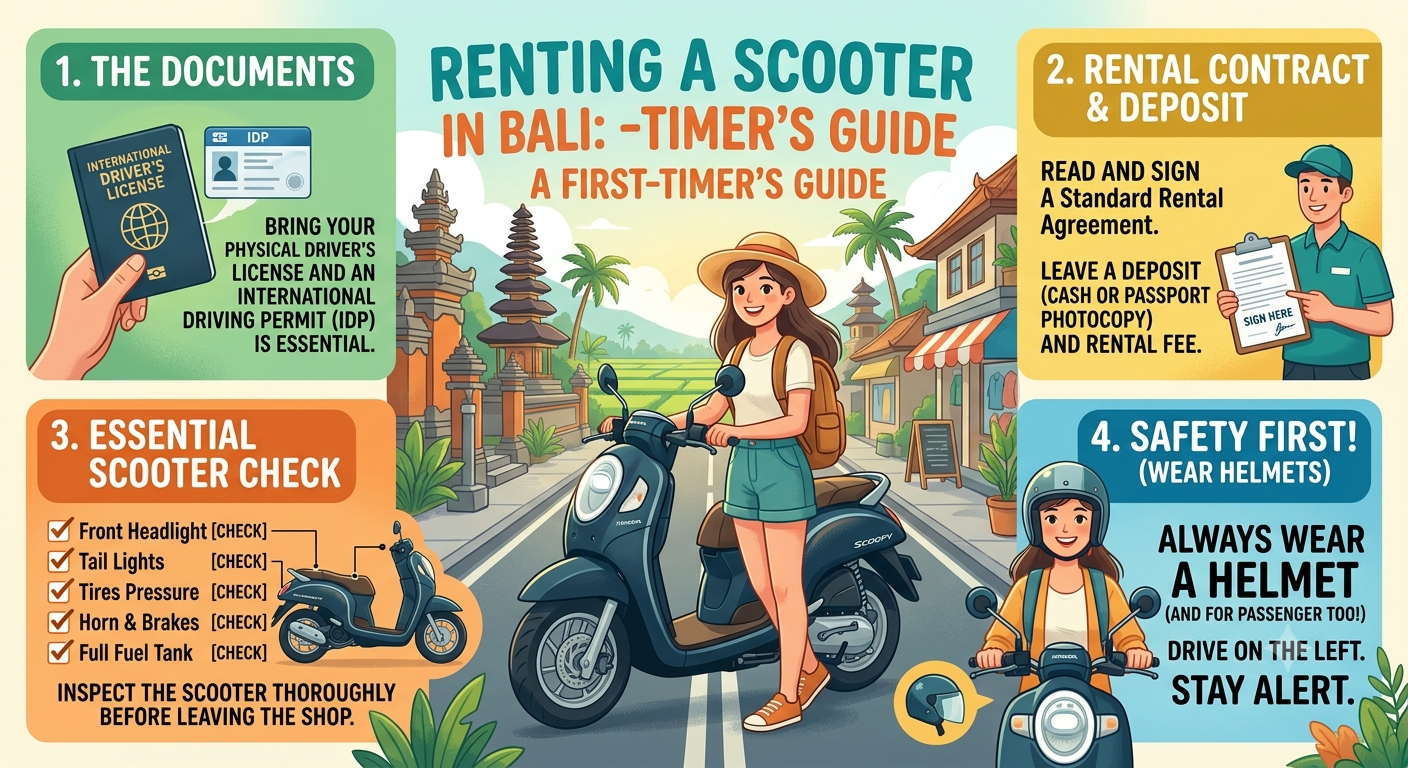
The informal roadside market makes renting easy and getting it wrong even easier. Stalls along the tourist strips offer tired machines at tempting daily rates, frequently in exchange for holding a passport as security — a practice that remains widespread and remains a genuinely bad idea. Reputable operators take a cash deposit or a copy of the document instead, record the condition of the bike at handover, and answer the phone when something goes wrong three days into the rental. That level of service is the difference between a functioning vehicle and a rolling liability.
Travellers who rent scooter bali through a provider offering weekly or monthly terms usually pay a fraction of the equivalent daily total, and the contract typically includes maintenance and a replacement bike if the machine goes off the road. For anyone staying longer than a week, paying tourist day rates makes no financial sense. It is worth asking, before any money changes hands, who covers a puncture or a flat battery, whether the service history is documented, and how quickly a breakdown will be dealt with.
The legal essentials
Indonesian law requires a licence valid for motorcycles. For most visitors that means an International Driving Permit endorsed for category A, carried alongside the home-country licence. A car-only IDP does not cover a scooter, and this is precisely the gap that police checkpoints look for. Helmets are mandatory for rider and passenger alike, and the vehicle registration document — the STNK — must be kept under the seat at all times. Checkpoints around Kuta, Denpasar, and Sunset Road are routine rather than random, and officers consistently check three things: helmet, licence, and registration.
Insurance and common sense
Standard travel policies often exclude motorcycle accidents unless the rider held a valid, category-appropriate licence at the time of the incident. Confirming that a policy explicitly names motorcycle use is worth the ten minutes it takes, because Bali’s private hospitals are competent and expensive and evacuation costs run high. Beyond the paperwork, the habits matter most: ride in the morning while the roads are calm, avoid the Kuta strip at sunset, carry a rain poncho through the wet season, and treat the left lane as a shared negotiation rather than an entitlement. Bali rewards mobility and punishes improvisation in equal measure.