

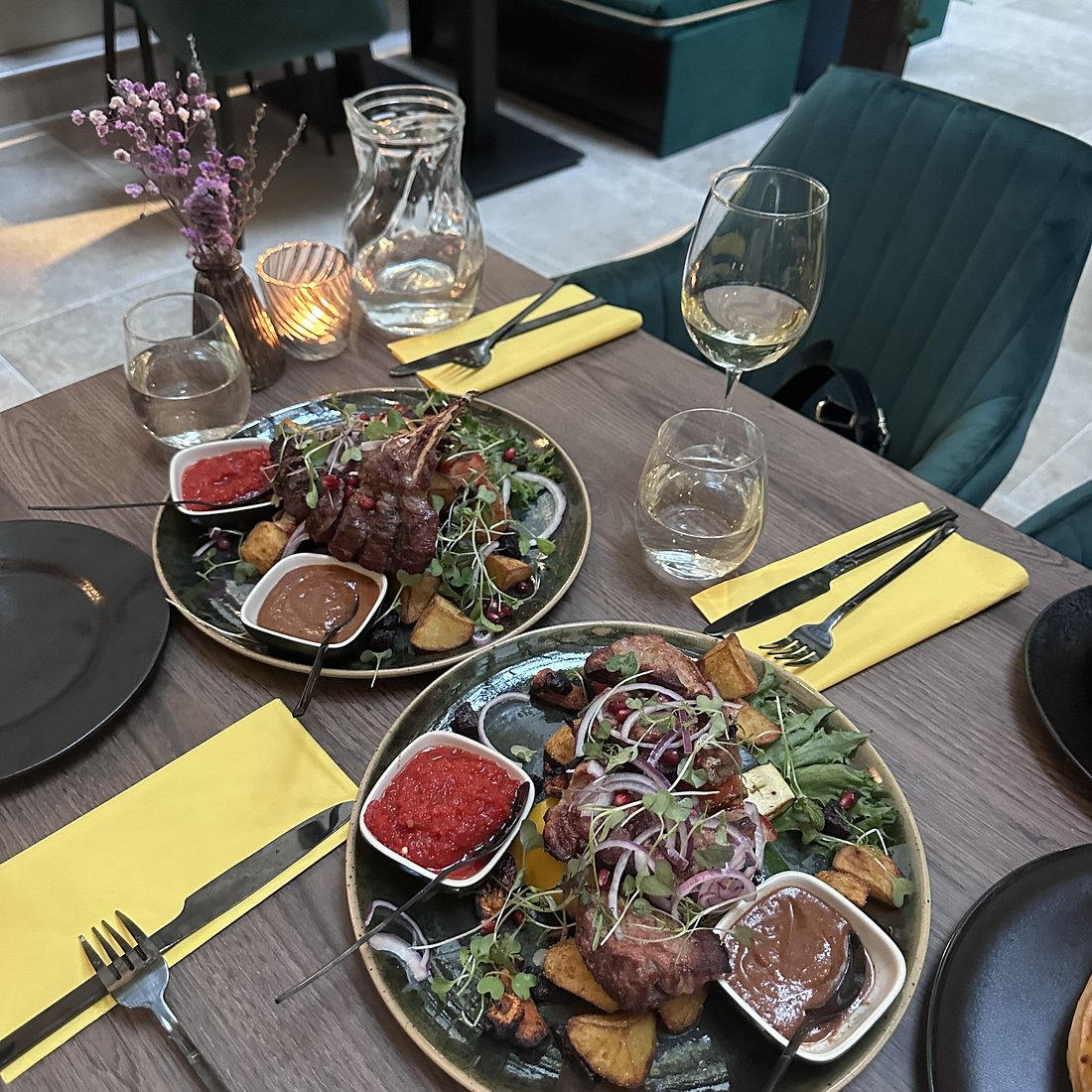
A first Georgian meal rarely runs the way a Finnish diner expects. Dishes arrive together rather than in courses, bread turns out to be a course rather than a side, and the unit being fed is the table, not the person. None of that is improvisation. It is the structure the cooking was built around.
How Georgian cooking left the Caucasus
Georgia has under four million people and a cuisine with a reach far out of proportion to that. Two things pushed Georgian cuisine outward. Through the Soviet decades, Georgian restaurants were the celebratory option in cities from Moscow to Tashkent, which meant cooks, recipes and expectations travelled long before tourists did. Then, after independence, emigration carried the same cooking into Western Europe, usually through small family-run rooms rather than restaurant groups.
Wine did the rest. Qvevri winemaking, in which the wine ferments and ages in buried clay vessels, was inscribed on UNESCO’s intangible cultural heritage list in 2013, and the trade embargo that closed the Russian market in 2006 forced Georgian producers to find buyers in Europe and North America. Sommeliers found the wine first and the food followed it onto menus.
The supra, and why it explains the menu
The Georgian feast is called a supra, which translates roughly as the laid table. It is run by a tamada, a toastmaster chosen for the evening, who proposes toasts in a set sequence: peace, the reason for gathering, family, absent friends, and so on down a familiar order. Guests do not toast freely over the top of him. He can hand the floor to someone else, a move called alaverdi, and that person elaborates on the same theme before the table drinks.
Not every Georgian meal is a supra. An ordinary dinner with friends is a keipi, and it has no toastmaster and no sequence. What both share is the shape of the table: everything is put out to be reached across, and plates are stacked on plates when the surface runs out.
What arrives, and in what order
There are starters, but they do not leave. The cold table comes first and stays through the meal: walnut and herb pkhali spreads, badrijani matsvnit, which is aubergine rolled around a walnut filling, jonjoli pickles, salads dressed with walnut rather than oil. Bread and hot dishes land next, and the grill usually last, by which point the cold plates are half empty and still in play.
This is why ordering one dish per person goes wrong. Four people ordering four mains end up with the bread and the cold table on top and no room for the grill. Order fewer things than feels right and add a course later.
Where a first-time diner is usually surprised
Bread is the clearest one. Khachapuri, the filled cheese bread, is a dish in its own right and a shared one; adjaruli arrives open in a boat shape, the egg and butter folded through the hot filling in front of you, imeruli comes sealed and flat, and both are cut and passed around.
The second surprise is that the seasoning is sour rather than hot. Georgian cooking uses sour plum, pomegranate, barberry and fermented milk to give dishes their edge, and the chilli, where it appears at all, is a western regional habit rather than a national one.
The third is pace. A table that has ordered properly will be there for two hours or more, and the kitchen expects that. If you have a train to catch, say so when you sit down.
Booking a Georgian restaurant in Helsinki for a first visit
Anyone looking for a Georgian restaurant in Helsinki is choosing from a short list this far north, so the practical question is usually less which one and more what to ask for. Go with at least three people if you can, because the format rewards a table that can order across the whole menu. Say when you book whether you want the meal paced slowly or need to be out by a certain hour.
Winest, on Eteläinen Makasiinikatu in the city centre, bakes its khachapuri daily and puts the Nadimi sharing menu in front of tables of four or more, which does the ordering work for you on a first visit. It also keeps a private dining room, the kabinetti, for groups, and takes group bookings online.
What to order the first time
For four people, a reasonable first order is one cold spread to share, one khachapuri, one plate of dumplings and one thing from the grill. Khinkali qalaquri are the meat dumplings; lobios khinkali are the bean-filled vegetarian version. Mtsvadi is charcoal-grilled meat, usually served plain with onion, and it does not need a sauce. If someone at the table eats no meat, Georgian menus handle it easily, because so much of the cold table is walnut and vegetable.
Key takeaways
- Georgian food travelled through Soviet-era restaurant culture and later emigration, with the wine trade widening its reach after 2006.
- The supra is a structured feast with a toastmaster; an everyday dinner, a keipi, has no such structure.
- Dishes are shared and arrive together, so order fewer plates than the number of people and add later.
- Expect sour rather than hot seasoning, bread served as a course, and a meal that runs two hours or more.
Frequently asked questions
What is a supra?
A supra is a Georgian feast held for an occasion, run by a chosen toastmaster called a tamada who proposes toasts in a fixed sequence. The food is laid out all at once rather than in courses and stays on the table throughout. An informal dinner without a toastmaster is called a keipi instead.
How many dishes should four people order?
Four is a good number for roughly five or six dishes to start: one or two cold spreads, one khachapuri, one plate of khinkali and one grill dish. Georgian portions are built for sharing and the bread is filling. Order that much, see where you are, and add a second round if the table wants it.
What should you order on a first Georgian meal?
Start with a walnut and herb spread and one khachapuri so you meet the two flavours the cuisine is built on, then add dumplings and something grilled. Ask which khachapuri the kitchen bakes that day. Avoid ordering a main each; the format assumes you are reaching across the table.