

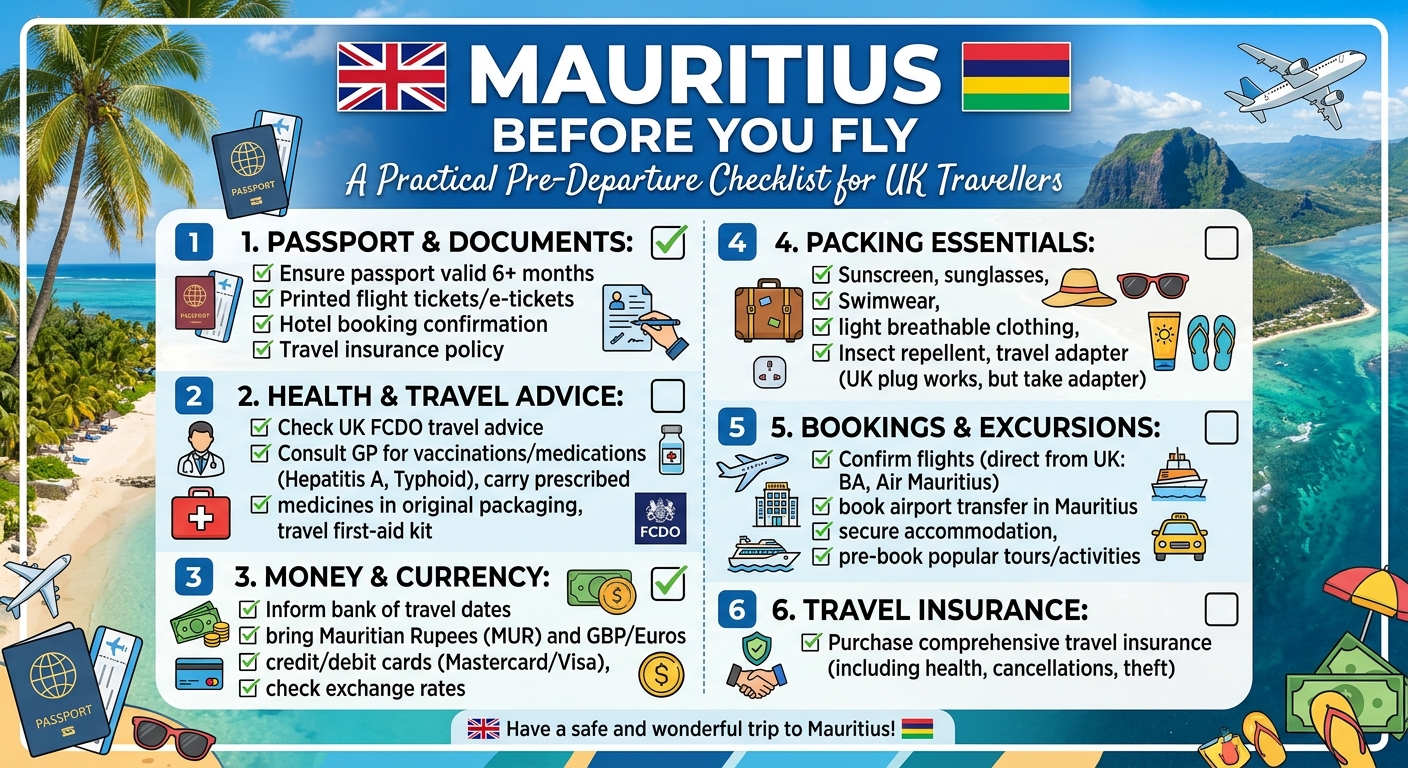
Mauritius is the sort of destination that can make the planning stage feel deceptively simple. Book a flight, choose a beachside hotel, throw a few summer clothes into a suitcase and start thinking about turquoise lagoons. In reality, the smoothest long-haul trips usually come down to the less glamorous details sorted before you leave home.
I like to think of the final few days before an international trip as an admin window rather than a packing frenzy. That means checking travel documents, confirming accommodation details, saving important information offline and making sure entry paperwork has not been forgotten. Mauritius is increasingly digital when it comes to arrival formalities, so having everything organised before heading to the airport is particularly useful.
Travellers who prefer extra help with that paperwork can use a paid third-party service for the all in one form Mauritius process like HandleVisa. Its service checks the information supplied and submits the travel form on the traveller’s behalf. It is an independent company rather than a government agency, so any fee paid is for its assistance service rather than for access to the underlying form itself.
Sort Out the Travel Admin Before the Suitcase Is Closed
The first task is making sure your passport, flights and accommodation details all tell the same story.
Check the spelling of every passenger’s name against the passport, particularly if bookings were made months ago. Then confirm flight numbers, arrival dates and the full address of your first accommodation. These are exactly the sort of details that are easy to remember approximately but need to be entered accurately on travel forms.
Air Mauritius currently advises passengers travelling to the island to complete the digital All-in-One Travel Form and carry the necessary documentation for their journey. Its passport and visa information is worth checking close to departure because entry conditions can change.
UK travellers wanting a broader check based on their passport and itinerary can also use the IATA Travel Centre. IATA draws its passport, visa and health information from a large database used throughout the airline industry, making it a useful independent checkpoint before a long-haul flight.
Save Important Documents in More Than One Place
A phone is incredibly convenient until the battery is flat, airport Wi-Fi refuses to cooperate or an email attachment decides not to load.
I would keep the essentials in three places: on the phone itself, in cloud storage and as a small paper backup. You do not need to print your entire inbox. A compact folder containing key confirmations is enough.
That folder should include:
- passport and travel-document copies;
- return or onward flight details;
- your first accommodation booking and address;
- travel insurance information;
- any completed arrival-form confirmation or QR code;
- emergency contact and airline details.
Travel Nester’s existing guide to Mauritius entry requirements for UK travellers goes into more detail on the paperwork side, so it is useful reading if you want to separate entry formalities from the rest of your holiday planning.
Pack for More Than the Beach
Mauritius deserves its reputation for beautiful coastline, but packing as though you will spend seven days moving between a sun lounger and the sea can be limiting.
The island has hiking country, towns, markets, waterfalls and elevated interior areas where conditions can feel very different from the coast. A lightweight waterproof layer, comfortable walking shoes and something slightly warmer for evenings can earn their space in your case.
Season also matters. The Rough Guides overview of when to visit Mauritius describes a warmer, wetter period roughly from October to April and a cooler, drier season from May to September, while also pointing out that conditions vary around the island.
In practical terms, I would pack for heat but leave room for changing weather. A tropical destination does not guarantee uninterrupted sunshine.
Leave Some Space in the Itinerary
It is easy to plan Mauritius entirely around a resort, especially when so many hotels have restaurants, water sports and beaches on the doorstep. But an itinerary with no flexibility can mean missing much of the island.
Port Louis, village markets, the mountainous interior and quieter stretches of coastline can all offer a very different picture from the polished resort areas. The Responsible Travel Mauritius guide is a useful starting point for ideas beyond a conventional fly-and-flop holiday, covering places such as Chamarel, Île aux Cerfs and Trou aux Biches.
Rather than booking every hour before departure, I would choose two or three priorities and leave a couple of days open. Weather, recommendations from local people and simple changes of mood can easily alter what sounds appealing once you arrive.
Be Realistic About Moving Around
Mauritius looks compact on a map, but island driving does not always translate into quick journey times.
If you are hiring a car, check where your hotel actually sits in relation to the places you want to visit. A property on the east coast might be ideal for quiet mornings by the lagoon but less convenient if most of your planned days are in the west.
The same applies to airport transfers. After a long flight from the UK, knowing who is collecting you, where to meet them and approximately how long the transfer should take removes an unnecessary layer of uncertainty.
I also like to save the hotel address as plain text rather than relying solely on a booking app. It is a tiny detail that becomes surprisingly useful when you are tired and someone asks where you are staying.
Keep the Last Evening Before Departure Boring
There is a temptation to use the evening before a holiday for last-minute shopping, packing and frantic online research. I would rather have everything important finished by then.
Charge your devices, download entertainment, put travel documents together, confirm the alarm and check the route to the airport. Keep medication and anything essential in hand luggage rather than checked baggage.
Most importantly, check your travel requirements one final time. Entry rules can change more quickly than hotel bookings or sightseeing plans, and information saved months earlier may no longer be the information that matters on departure day.
The Best Arrival Starts at Home
Mauritius should feel like an escape once you reach it. Spending a little time on documents, weather planning and practical details beforehand helps keep the first day focused on the island rather than on avoidable admin.
The paperwork does not have to dominate your preparation. Treat it as one small part of a wider checklist, confirm everything while you still have reliable Wi-Fi and plenty of time, and then get back to the enjoyable decisions.
After all, deciding whether your first afternoon should involve a lagoon, a local meal or absolutely nothing at all is a much better problem to have.