
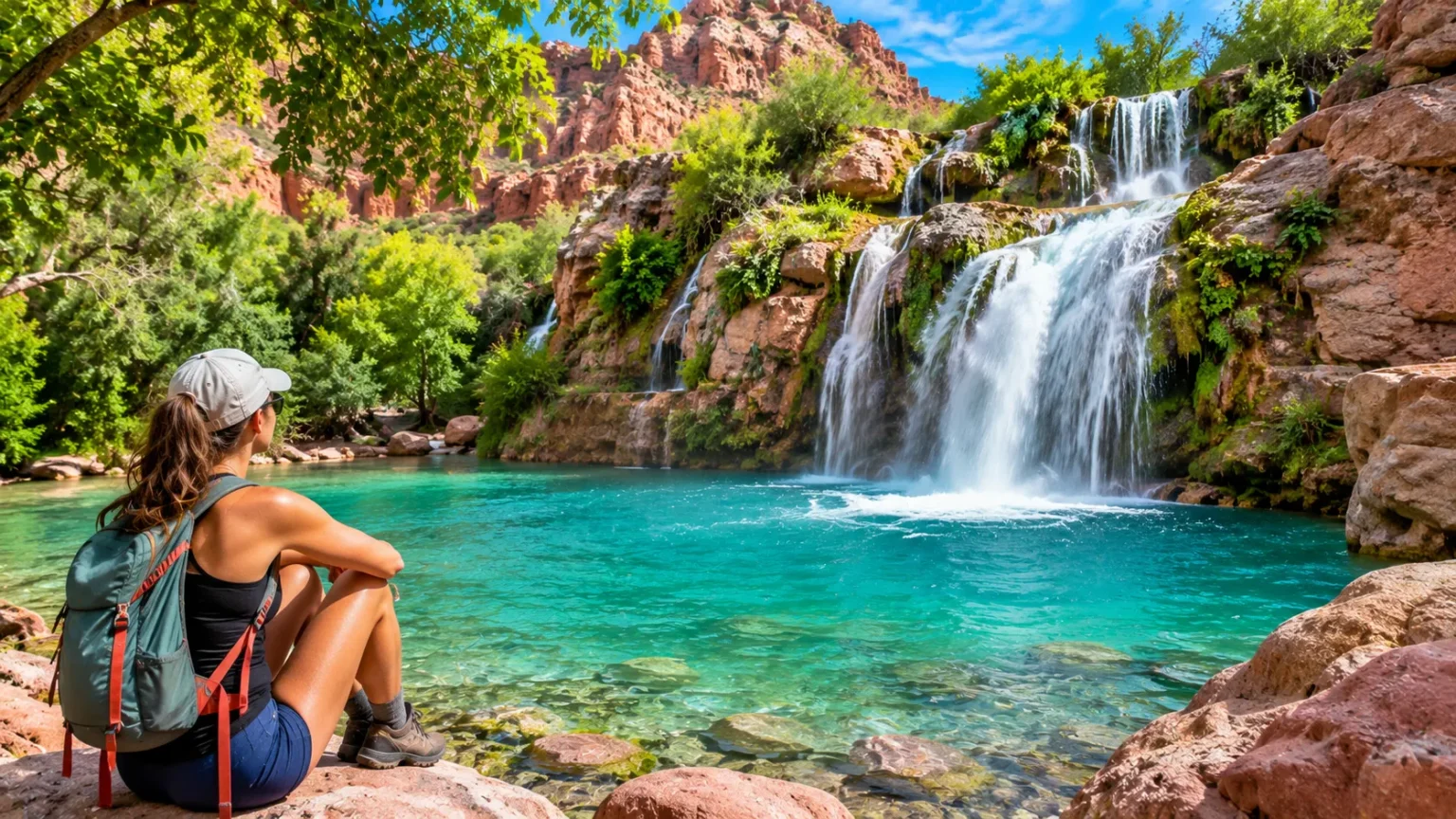
Beaver Falls Arizona is one of the most beautiful natural attractions in the Grand Canyon region. Known for its turquoise pools, cascading waterfalls, and dramatic red canyon walls, this remote destination offers scenery unlike many other places in the Southwest. Its layered limestone formations and clear blue-green water create a memorable landscape for nature lovers, photographers, and experienced hikers.
Visiting Beaver Falls Arizona requires careful planning because the waterfall is located on Havasupai tribal land and cannot be reached by a regular sightseeing drive. Visitors need advance reservations, suitable preparation, and an understanding of challenging trail conditions. This guide explores the best views, nearby attractions, seasonal considerations, and important visiting tips to help you plan a responsible trip.
Where Is Beaver Falls Arizona Located?
Beaver Falls is located within Havasu Canyon on the Havasupai Indian Reservation in northern Arizona. The waterfall lies downstream from the famous Havasu Falls and Mooney Falls, surrounded by towering canyon walls and desert vegetation. Although the area forms part of the greater Grand Canyon landscape, Havasupai land is administered separately from Grand Canyon National Park.
The closest community is Supai Village, home to the Havasupai people, who have longstanding cultural and historical connections to the canyon. Unlike many tourist destinations, Supai is not accessible by a conventional public road. Visitors reach the reservation through arrangements governed by the Tribe, making advance planning essential for anyone interested in experiencing its waterfalls.
Beaver Falls is particularly remote because it is situated beyond the main campground and Mooney Falls. Its location creates a quieter natural setting, but access involves demanding terrain and several stream crossings. Travelers should understand that reaching the destination requires significantly more preparation than visiting a roadside waterfall or developed national park overlook.
What Makes Beaver Falls Arizona So Special?
Beaver Falls stands out because it consists of several beautiful cascades rather than one uninterrupted waterfall. Water flows across natural travertine terraces, forming a series of pools that descend through the canyon. The combination of pale mineral formations, turquoise water, and surrounding red sandstone creates an unusually colorful and layered landscape.
The waterfall’s distinctive appearance comes partly from minerals carried by Havasu Creek. Dissolved calcium carbonate contributes to the formation of travertine deposits that gradually shape natural barriers and terraces. Light interacting with the mineral-rich water also influences the remarkable blue-green appearance that makes the Havasupai waterfalls so recognizable.
Unlike destinations dominated by paved walkways and developed viewing platforms, Beaver Falls remains within a rugged canyon environment. Visitors encounter natural scenery that can change after heavy rainfall and flooding. Its appeal comes not only from the waterfalls themselves but also from the opportunity to appreciate a landscape closely connected to the Havasupai people’s homeland.
How to Visit Beaver Falls and Understand Permit Requirements
Visiting Beaver Falls requires an official Havasupai reservation arranged before arrival. The Tribe manages tourism access, and visitors cannot simply arrive at the trailhead expecting to purchase a day pass. Current reservation arrangements are designed around overnight stays, with campground and lodge bookings subject to specific terms, availability, and visitor regulations.
For 2026, official campground reservations were listed at $455 per person for a three-night stay. Lodge reservations were listed at $2,277 per room for three nights, accommodating up to four people. These figures are specific to the 2026 reservation program and should not be assumed to remain unchanged in future seasons.
Reservations are made through the Tribe’s official tourism booking system, and permit holders must complete the required check-in process. Visitors should review identification requirements, cancellation conditions, and current access rules before traveling. Because permits are limited and regulations may change, confirming official information is an essential part of planning a successful visit.
Understanding the Journey to Beaver Falls
The usual approach to Havasupai begins at Hualapai Hilltop, a remote trailhead reached by road from the Route 66 area. From there, the journey to Supai Village covers approximately eight miles. The Havasupai campground lies about two additional miles beyond the village, creating a substantial distance before visitors reach the main waterfall area.
Beaver Falls lies farther downstream beyond Mooney Falls, making it an additional excursion rather than a short walk from the village. Official campground information has described the Beaver Falls outing as a strenuous hike of approximately seven miles round trip from the campground. Actual walking distances and difficulty can vary with trail conditions and access changes.
The journey involves an environment where emergency assistance may be limited and weather conditions can change quickly. The section beyond Mooney Falls includes particularly challenging terrain, including exposed areas and water crossings. Visitors should follow Tribal guidance, evaluate their abilities realistically, and avoid proceeding when conditions or official instructions indicate that travel is unsafe.
Best Views of Beaver Falls Arizona
One of the most impressive views of Beaver Falls is the wider perspective showing its multiple natural terraces. From an appropriate, authorized viewing area, visitors can appreciate how the turquoise pools connect through a series of cascading ledges. This broader perspective highlights the waterfall’s unique shape and the dramatic contrast between the water and surrounding canyon.
Views that include the red canyon walls provide additional depth and context to the scenery. The combination of limestone terraces, flowing water, and desert vegetation makes the landscape especially memorable. Changing sunlight can also affect the appearance of the pools, creating different shades of turquoise, green, and blue throughout the day.
Closer views can reveal the textures of the natural mineral formations and the movement of water between pools. However, fragile terraces and wet rock surfaces should never be treated as unrestricted viewing platforms. Remain in authorized areas, respect posted instructions, and prioritize established viewing opportunities over reaching difficult or potentially unsafe positions.
Best Time to Visit Beaver Falls Arizona
Spring and autumn are often considered appealing seasons for exploring the Havasupai region because temperatures may be more comfortable than during peak summer. Seasonal conditions still vary, and canyon environments can experience unexpected weather changes. Visitors should review current forecasts, reservation availability, and official access notices rather than relying exclusively on typical seasonal patterns.
Summer can bring intense desert heat and a greater concern about thunderstorms and flash flooding. Heavy rainfall upstream may create dangerous water conditions even when the immediate area appears relatively calm. These hazards make weather awareness particularly important, and official closures or ranger instructions must always take priority over sightseeing plans.
Winter and early spring may bring cooler conditions, shorter daylight hours, and cold water temperatures. Although the scenery remains attractive, weather and trail conditions can affect the overall experience. The best travel period depends on current safety conditions, individual needs, and confirmed permission to visit rather than a single universally ideal month.
Photography Tips for Capturing Beaver Falls
Beaver Falls offers remarkable photography opportunities because of its colorful water and layered landscape. Wide compositions can capture several cascades together, while more focused images highlight the textures of the limestone formations. Including surrounding canyon walls can help communicate the scale and natural setting of this distinctive Arizona destination.
Natural lighting changes the appearance of the waterfall throughout the day. Bright sunlight may emphasize the vivid blue-green water, while softer light can reveal details in shaded canyon areas. Photographers should work within permitted viewing locations and avoid moving onto unstable edges or fragile natural formations simply to achieve a particular composition.
Protecting photography equipment is important in an environment with water, dust, and changing conditions. Lightweight protective storage can help keep cameras and personal belongings secure when not in use. Visitors should also respect the privacy of Havasupai residents and follow Tribal photography rules, particularly around community areas and culturally important locations.
Nearby Waterfalls Worth Knowing About
Havasu Falls is among the best-known attractions within the Havasupai region. Its powerful waterfall descends into a striking turquoise pool surrounded by red canyon walls. The falls are located along the main route toward the campground and are often a major highlight for visitors staying in the reservation area.
Mooney Falls is another impressive feature, known for its tall waterfall and dramatic canyon setting. It lies beyond the campground along the route toward Beaver Falls. Access to its lower section is especially demanding and involves exposed terrain, so visitors should appreciate the available scenery without feeling obligated to undertake a descent beyond their abilities.
Fiftyfoot Falls and Little Navajo Falls are additional waterfalls associated with the Havasu Creek system. Their appearance and accessibility can change because flooding reshapes portions of the canyon. Visitors should confirm which areas are open and follow official guidance instead of assuming that every waterfall shown in older travel photographs remains accessible.
What to Know About Accommodation and Facilities
Accommodation in the Havasupai area is limited and operates under the Tribe’s reservation system. Visitors generally choose between authorized campground stays and lodge accommodation in Supai Village. The appropriate option depends on availability, personal comfort preferences, and the logistical requirements of traveling within this remote canyon environment.
The campground provides a designated area for overnight visitors, while the lodge offers a more conventional indoor accommodation option. Neither should be approached with the expectation of full resort-style facilities throughout the canyon. Travelers need to understand what is included with their booking and which supplies or services may be unavailable during their stay.
Supai Village has limited visitor services, including a store and café, but opening arrangements can change. Remote conditions mean that travelers should not depend on immediate access to every product or service they might need. Reviewing official accommodation details before departure helps prevent misunderstandings and supports a more organized visit.
Important Safety Considerations Before Visiting
Beaver Falls is a remote wilderness destination with challenges that should be taken seriously. Extreme temperatures, difficult terrain, unstable surfaces, and sudden changes in water conditions can create significant hazards. The journey is not suitable for every visitor, particularly those without the experience or support needed for strenuous canyon travel.
Flash flooding is one of the most important environmental concerns in Havasu Canyon. Water levels can rise unexpectedly after storms, and conditions may become dangerous without much warning. Visitors must respect closures, remain attentive to official alerts, and never enter restricted areas or attempt to cross dangerous floodwater.
The most responsible approach is to assess whether the trip matches your abilities before making reservations. Follow current Tribal instructions, travel with appropriate experienced support, and recognize that turning back or declining a difficult section may be the safest decision. Scenic photographs are never worth disregarding environmental warnings or taking unnecessary risks.
How to Respect Havasupai Land and Local Culture
The Havasupai Reservation is the homeland of the Havasupai people rather than an unrestricted public recreation area. The community has maintained deep connections to the canyon and its water for generations. Visitors should recognize that tourism takes place within a living cultural landscape governed by Tribal rules and responsibilities.
Respect begins with obtaining valid permission, remaining within authorized visitor areas, and following instructions from Tribal representatives. Avoid entering private community spaces or treating residents as part of a tourist attraction. Understanding the difference between visiting Tribal land and exploring a public park supports a more respectful travel experience.
Environmental responsibility is equally important because the canyon contains delicate natural features and limited waste-management resources. Visitors are expected to take out their belongings and trash rather than leaving them behind. Protecting the water, vegetation, and surrounding landscape helps preserve the destination and respects the community responsible for its long-term stewardship.
Planning a Memorable Beaver Falls Arizona Experience
A successful visit to Beaver Falls begins with realistic expectations about distance, access, and available facilities. Review the official reservation conditions before choosing travel dates, and remember that visiting the falls is only one part of a longer Havasupai trip. The surrounding waterfalls and cultural landscape offer additional reasons to appreciate the destination.
Consider the overall physical demands and seasonal conditions instead of planning solely around attractive photographs. Weather, travel restrictions, and personal comfort can all influence which locations are appropriate to visit. Travelers who cannot safely reach Beaver Falls may still find meaningful scenery in other authorized areas of the Havasupai region.
Allow the experience to focus on appreciating the natural environment rather than completing a checklist of difficult viewpoints. Respecting the Havasupai community, following established rules, and making thoughtful decisions are essential parts of visiting responsibly. With suitable preparation and realistic expectations, Beaver Falls can be appreciated as one of Arizona’s most remarkable canyon landscapes.
Conclusion
Beaver Falls Arizona is a distinctive natural attraction known for its terraced waterfalls, turquoise pools, and dramatic canyon surroundings. Its location within the Havasupai Reservation makes it different from ordinary roadside sightseeing destinations. Visitors need advance permission and should understand the substantial physical and logistical requirements before planning a trip.
The best views showcase the waterfall’s layered limestone formations and the contrast between vibrant water and red canyon walls. Spring and autumn may provide comfortable conditions during some periods, but weather and access can change unexpectedly. Respecting safety notices, authorized viewing areas, and Tribal regulations remains more important than reaching any particular viewpoint.
For travelers interested in natural beauty and cultural landscapes, the Havasupai region offers an extraordinary setting. However, Beaver Falls should be approached as a demanding, carefully managed destination rather than a casual day trip. Responsible planning and respect for the land help protect both visitors and the remarkable environment they have come to appreciate.
Frequently Asked Questions
Where is Beaver Falls Arizona located?
Beaver Falls is located along Havasu Creek within the Havasupai Indian Reservation in northern Arizona. It lies downstream from Mooney Falls in the greater Grand Canyon region, near Supai Village.
Do you need a permit to visit Beaver Falls Arizona?
Yes, visitors must have an authorized Havasupai reservation before entering the reservation for tourism. Day visits are not permitted under the current booking arrangements, and travelers must follow Tribal check-in requirements.
How difficult is the hike to Beaver Falls?
The journey is strenuous and involves a long approach, difficult terrain, and water crossings. Access beyond Mooney Falls is particularly demanding, making the destination appropriate only when conditions and visitor abilities allow safe travel.
What is the best time of year to visit Beaver Falls?
Spring and autumn can offer more comfortable temperatures than peak summer, although conditions vary. Visitors should check current weather, flood warnings, reservation availability, and official access information before planning their trip.
Can you visit Beaver Falls without camping?
Visitors may be able to stay at the Havasupai Lodge instead of camping, subject to reservation availability and Tribal rules. However, reaching Beaver Falls still requires substantial travel through challenging canyon terrain.