

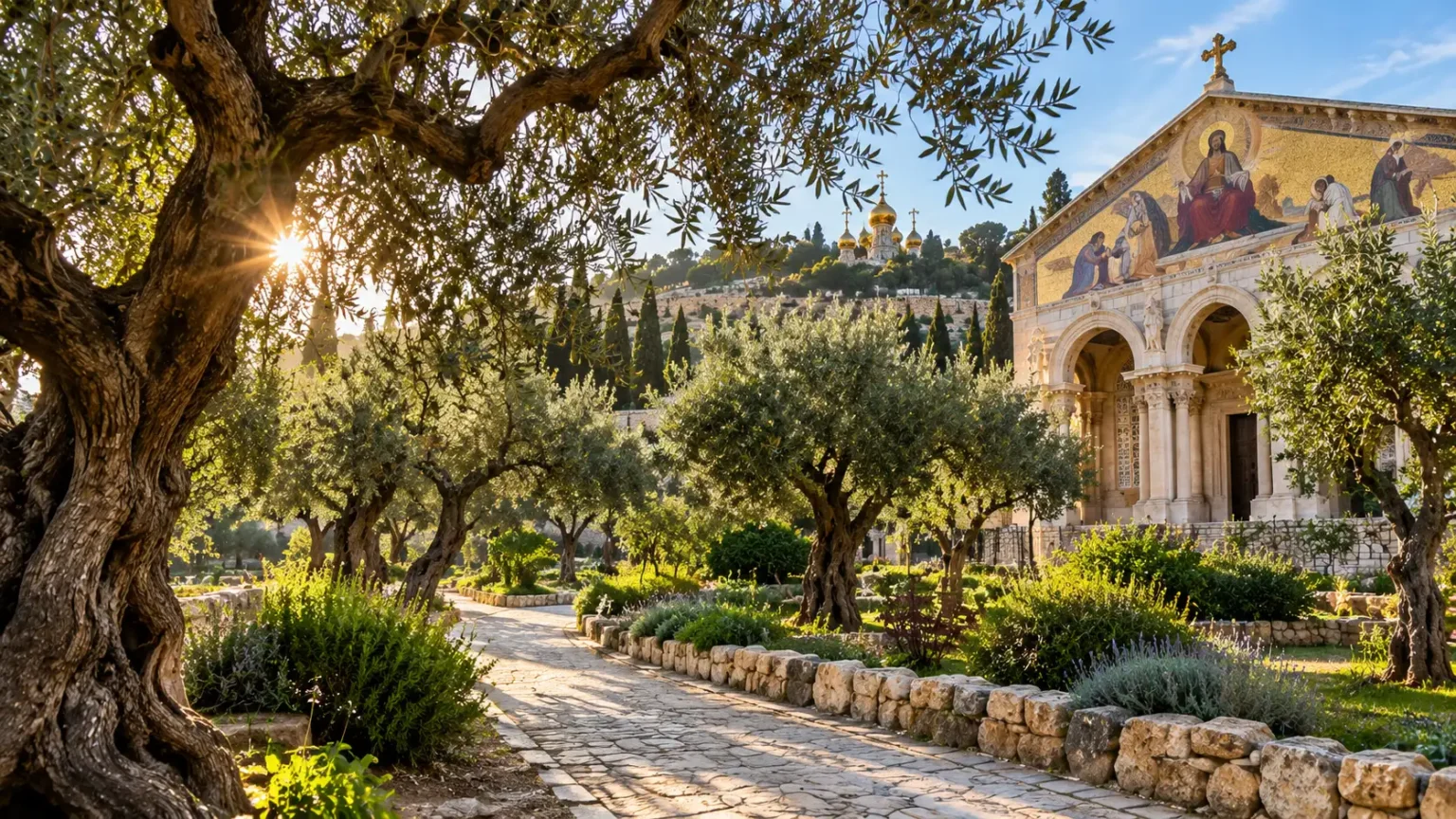
The Garden of Gethsemane is one of the most meaningful religious and historical places in Jerusalem. Located at the foot of the Mount of Olives, this peaceful garden is closely connected with the final hours of Jesus Christ before his arrest. Its ancient olive trees, nearby churches, and biblical significance attract Christian pilgrims, history enthusiasts, and travelers interested in the Holy Land.
Whether you want to explore its religious importance, discover nearby landmarks, or plan a meaningful visit, understanding the Garden of Gethsemane makes the experience more rewarding. The site combines centuries of Christian tradition with remarkable architecture and natural beauty. This guide explains its location, history, famous olive trees, surrounding attractions, and practical travel tips worth knowing.
Where Is the Garden of Gethsemane Located?
The Garden of Gethsemane is located in East Jerusalem, near the western foot of the Mount of Olives. It lies across the Kidron Valley from Jerusalem’s Old City, close to several important Christian religious landmarks. The garden is relatively small but historically significant. Its position makes it accessible to visitors exploring the Mount of Olives and surrounding biblical sites.
On a Jerusalem map, the garden appears east of the Old City walls, near the road leading toward the Mount of Olives. The Church of All Nations stands immediately beside the historic olive grove. Nearby religious sites include the Tomb of the Virgin Mary and the Grotto of Gethsemane. These landmarks help visitors identify the garden’s location.
The surrounding area has a landscape of hills, stone buildings, historic pathways, and religious institutions. Visitors can appreciate views toward the Old City from different parts of the Mount of Olives. Because the area contains several important attractions within walking distance, it can form part of a larger sightseeing itinerary. However, some routes involve uneven ground and slopes.
What Is the Biblical Significance of Gethsemane?
The Garden of Gethsemane holds great importance in Christianity because the Gospels associate it with Jesus praying before his arrest. According to the biblical accounts, Jesus visited this area with his disciples after the Last Supper. He experienced deep distress while preparing for the events that followed. This moment is remembered as an important expression of prayer, obedience, and spiritual struggle.
The Gospels of Matthew, Mark, and Luke describe Jesus praying while some of his disciples remained nearby. Christian interpretations often emphasize his willingness to follow God’s will despite his suffering. The event forms an important part of the Passion narrative. For many believers, visiting Gethsemane provides an opportunity to reflect on faith, perseverance, and prayer.
The garden is also traditionally associated with the betrayal and arrest of Jesus. According to the Gospel accounts, Judas arrived with a group that came to arrest him. This event marked a turning point in the final stages of Jesus’ earthly ministry. The location remains deeply meaningful to Christians who study the events surrounding the crucifixion and resurrection.
What Does Gethsemane Mean and What Is Its History?
The name Gethsemane is generally connected with an Aramaic expression meaning oil press. This name reflects the agricultural character of the area during ancient times, when olive cultivation was common around Jerusalem. Olive oil production played an important role in local economic and cultural life. The connection between the name and olive processing helps explain the garden’s historical identity.
The Mount of Olives and surrounding valleys have been associated with biblical history for centuries. During the time of Jesus, the landscape likely included agricultural plots, olive groves, and routes connecting Jerusalem with nearby settlements. The precise boundaries of the original garden are not known. Today’s traditional site preserves the religious association rather than proving every detail of its ancient appearance.
Christian pilgrims began identifying and commemorating places associated with Jesus’ final days during the early centuries of Christianity. Religious buildings were established and rebuilt in the Gethsemane area at different historical periods. Byzantine and Crusader traditions influenced its development. These successive layers of history contribute to the site’s significance beyond its biblical associations.
How Old Are the Olive Trees in Gethsemane?
The ancient olive trees are among the most recognizable features of the Garden of Gethsemane. Their thick trunks, twisted branches, and distinctive shapes create a memorable appearance. Visitors often wonder whether these trees were standing during the lifetime of Jesus. Although they are exceptionally old, scientific research has not established that the surviving trunks date back two thousand years.
Research involving some of the garden’s olive trees has identified wood dating to approximately the twelfth century. The oldest central wood is missing from several hollow trunks, making their full ages difficult to determine. This means researchers cannot confidently establish the original age of every tree. Claims that all surviving trees directly witnessed biblical events should therefore be treated cautiously.
Olive trees can survive for centuries and may regenerate through new growth from established root systems. This ability contributes to their cultural and historical importance in Mediterranean landscapes. The trees at Gethsemane remain powerful symbols of continuity and tradition. Visitors can admire them from designated areas while respecting measures intended to protect the historic grove.
Church of All Nations: A Must-See Landmark
The Church of All Nations is one of the most important attractions beside the Garden of Gethsemane. Also known as the Basilica of the Agony, it commemorates Jesus’ prayer before his arrest. The present church was completed in 1924 and incorporates historical elements associated with earlier structures. Its distinctive architecture makes it immediately recognizable among Jerusalem’s religious landmarks.
The exterior features an impressive mosaic above the entrance and a series of columns supporting the building’s façade. Inside, visitors encounter a relatively subdued atmosphere designed to encourage reflection and prayer. Traditional Christian belief associates a rock within the church with the place where Jesus prayed. This feature is an important focus for many pilgrims.
The church takes its name from the international contributions associated with its construction. Its interior decoration and architectural details reflect the site’s significance for Christians from different countries. Visitors interested in religious art can appreciate the mosaics and carefully designed worship space. As an active religious building, the church requires respectful behavior during services and personal prayer.
Grotto of Gethsemane and Tomb of the Virgin Mary
The Grotto of Gethsemane is a religious site located near the garden and the Church of All Nations. Also known as the Grotto of the Apostles, it is traditionally connected with events surrounding Jesus and his disciples. The underground setting creates a different atmosphere from the open olive grove. Visitors may find its historical traditions particularly interesting.
Nearby stands the Tomb of the Virgin Mary, an important Christian pilgrimage site located at the foot of the Mount of Olives. According to longstanding Christian tradition, this location is associated with the burial of Mary, the mother of Jesus. The site includes steps descending into an underground church. Its architecture and religious atmosphere reflect centuries of devotion.
These nearby attractions allow visitors to explore different aspects of Christian history within a relatively small geographical area. However, individual sites may have separate visitor arrangements, religious services, and access restrictions. Their traditions should be understood as religious associations rather than archaeological proof of every historical event. Respectful exploration helps preserve the atmosphere of these sacred places.
Best Places to Visit Near the Garden of Gethsemane
The Mount of Olives is one of the most rewarding places to explore near the Garden of Gethsemane. This historic hill provides views toward Jerusalem’s Old City and contains several important religious landmarks. Christian tradition connects the area with different events in the life of Jesus. Its elevated position also makes it significant for understanding the city’s landscape.
Dominus Flevit Church is another notable attraction on the Mount of Olives. Its name refers to the biblical tradition of Jesus weeping over Jerusalem. The church is known for its distinctive architecture and views toward the Old City. Nearby, the Church of Mary Magdalene features recognizable golden domes that stand out against the surrounding hillside.
Travelers can also consider visiting the Chapel of the Ascension and other historic religious sites farther up the Mount of Olives. The area’s paths connect several locations associated with Christian traditions. Some sections involve steep slopes and uneven surfaces, making comfortable footwear important. Planning a walking route carefully allows time to appreciate individual landmarks without rushing.
How to Visit the Garden of Gethsemane
Planning a visit begins with understanding the garden’s location and the conditions around Jerusalem’s historic districts. Visitors may approach from the Old City or travel toward the Mount of Olives using suitable transportation. Routes and access arrangements can change because of local events or security conditions. Checking current official travel advice is important before departure.
The Garden of Gethsemane and surrounding churches may have different visiting schedules, particularly during religious celebrations. Access to certain areas may be limited to protect the olive trees or accommodate worship services. Travelers should verify current opening arrangements through official visitor information. Do not assume that nearby religious sites will all be accessible at identical times.
A guided visit can provide historical explanations and help distinguish biblical accounts from later religious traditions. Independent visitors can also appreciate the site’s atmosphere by reading background information beforehand. Allow enough time for quiet observation and nearby landmarks. Since many visitors come for religious reasons, sightseeing should be conducted respectfully and without interrupting prayer.
Best Time to Visit the Garden of Gethsemane
Jerusalem generally experiences hot, dry summers and cooler, wetter winters, influencing the comfort of outdoor sightseeing. Spring and autumn often offer more moderate temperatures for exploring religious landmarks. However, seasonal weather varies, and occasional rain or heat can affect walking conditions. Checking forecasts before visiting helps you choose suitable clothing and plan your day.
Morning visits may offer a quieter atmosphere on some days, although visitor numbers depend on religious events and tour schedules. Major Christian holidays can attract large groups of pilgrims to sites associated with the Passion narrative. These periods can be especially meaningful for religious visitors. However, crowding and changes to access arrangements may require additional planning.
The best time ultimately depends on whether your priority is religious reflection, architecture, photography, or historical exploration. Travelers interested in quiet contemplation may prefer less crowded visiting periods when available. Those attending religious events should confirm the relevant schedules in advance. Flexible arrangements help accommodate changing circumstances without compromising the purpose of the visit.
What to Wear and How to Behave at Gethsemane
The Garden of Gethsemane is a sacred destination for many visitors, so clothing should reflect the setting. Modest attire is generally appropriate, particularly when entering the Church of All Nations or other nearby religious buildings. Comfortable shoes are useful for walking around the area. Lightweight layers can help visitors adapt to changing weather and indoor conditions.
Respectful behavior is especially important because the site is used for prayer and religious reflection. Speak quietly inside worship spaces and avoid interrupting people participating in services. Photography rules may differ between locations, so follow posted instructions and staff guidance. Flash photography or filming may be restricted in particular areas.
Visitors should remain on designated paths and avoid touching or damaging the ancient olive trees. These trees are living historical features that require ongoing care and protection. Eating, loud conversations, and disruptive behavior may be inappropriate in sacred spaces. Being considerate allows people with different reasons for visiting to experience the site respectfully.
Practical Travel Tips for a Meaningful Visit
A rewarding visit to the Garden of Gethsemane begins with realistic expectations about its size. The garden itself is relatively small, so the experience focuses more on history and spiritual significance than extensive outdoor exploration. Combining it with nearby landmarks can create a fuller itinerary. However, allow time to appreciate the garden without rushing through it.
Bring drinking water, suitable footwear, and weather-appropriate clothing when exploring the Mount of Olives. The surrounding streets and pathways can include slopes, steps, and uneven surfaces. Visitors with mobility limitations should investigate access arrangements in advance. Keeping essential travel information available is also helpful when moving between different areas of Jerusalem.
Finally, remember that Jerusalem is a city of major significance to several religious communities and has a complex contemporary political and security context. Conditions affecting transportation, access, and visitor safety may change unexpectedly. Check current official guidance and follow local instructions. A thoughtful visit respects the people, traditions, and historical importance connected with this remarkable destination.
Conclusion
The Garden of Gethsemane is one of Jerusalem’s most meaningful Christian pilgrimage destinations. Located at the foot of the Mount of Olives, it is traditionally associated with Jesus’ prayers and arrest before his crucifixion. Its ancient olive trees and nearby religious buildings create a distinctive historical setting. Understanding these connections helps explain why the garden continues to attract visitors.
Important attractions near the garden include the Church of All Nations, the Grotto of Gethsemane, and the Tomb of the Virgin Mary. The wider Mount of Olives contains additional churches, viewpoints, and historic pathways. Together, these places offer insight into Christian traditions and Jerusalem’s layered history. Their significance extends beyond architecture to centuries of worship and cultural memory.
Whether you visit for faith, history, or cultural interest, careful planning can make the experience more rewarding. Verify current access conditions, dress respectfully, and allow time for quiet observation. Remember that the area remains a place of active religious devotion. A considerate approach helps preserve its atmosphere while allowing you to appreciate one of Jerusalem’s best-known sacred locations.
FAQs
Where is the Garden of Gethsemane located?
The Garden of Gethsemane is located in East Jerusalem, at the western foot of the Mount of Olives. It lies near the Kidron Valley, across from Jerusalem’s Old City.
What happened in the Garden of Gethsemane?
According to the New Testament, Jesus prayed in Gethsemane before his arrest. The location is traditionally associated with his spiritual struggle, the arrival of Judas, and events preceding the crucifixion.
Are the olive trees in Gethsemane 2,000 years old?
Scientists have dated wood from some surviving olive trees to approximately the twelfth century. Their exact original ages remain uncertain, so there is no conclusive evidence that the existing trunks date to Jesus’ lifetime.
Is the Garden of Gethsemane free to visit?
The traditional garden and adjacent religious sites have generally welcomed visitors without standard admission charges, although arrangements can change. Check current access information, visiting schedules, and any special restrictions before traveling.
How much time do you need at the Garden of Gethsemane?
Around 30 to 60 minutes may be enough for the garden and adjacent church, depending on access and personal interests. Allow additional time for nearby religious sites and the Mount of Olives.