

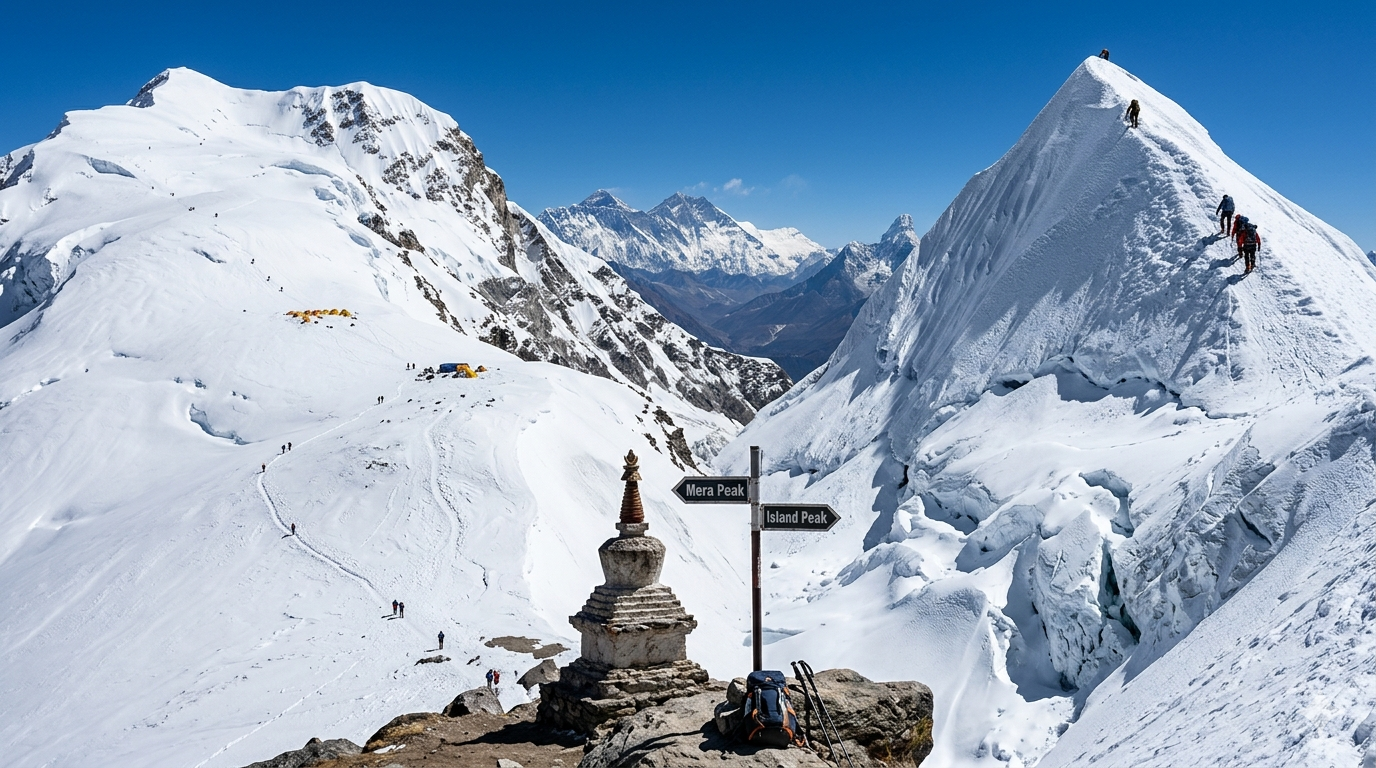
It is something to remember when one is in the midst of the Himalayas and gazes up at huge snow-covered mountains that have emerged into the sky.Nepal is land with trekking trails, mountain towns, glaciers, and among the most renowned mountains worldwide.Among the most popular choices are Mera Peak and Island Peak. They are not 8,000-meter giants, but they offer climbers a more achievable Himalayan experience. For people who dream of climbing in the Himalayas without attempting one of the highest mountains in the world, these two peaks are often the most attractive options.
Both mountains are considered trekking peaks, meaning they are less difficult than major expedition mountains such as Everest, Manaslu, or Annapurna.Even though they are trekking peaks, they are serious climbs which demand preparation, physical fitness and perseverance.When you have to choose Mera Peak and Island Peak, it can be a tough decision to make since both are breathtaking, memorable and an opportunity to be at the peak of a Himalayan mountain.Nonetheless, the experience in each mountain is quite different.In this vlog, I will draw a comparison between Mera Peak and Island Peak with details of the trekking routes, climbing difficulty, heights, scenery, technicalities, cost, and types of climbers that both mountains are best suited.
Initial thoughts of Mera Peak.
Mera Peak is often considered the easier of the two peaks, although this does not imply that it is easy.Mera Peak is higher than Island Peak at 6,476 meters.Mera Peak is not a technical climbing challenge but rather an altitude challenge.Mera Peak starts with a flight to Lukla then a walk along remote valleys, forests, rivers, and small mountain villages.The trail to Mera Peak is also less busy and crowded as compared to the Everest Base Camp route.
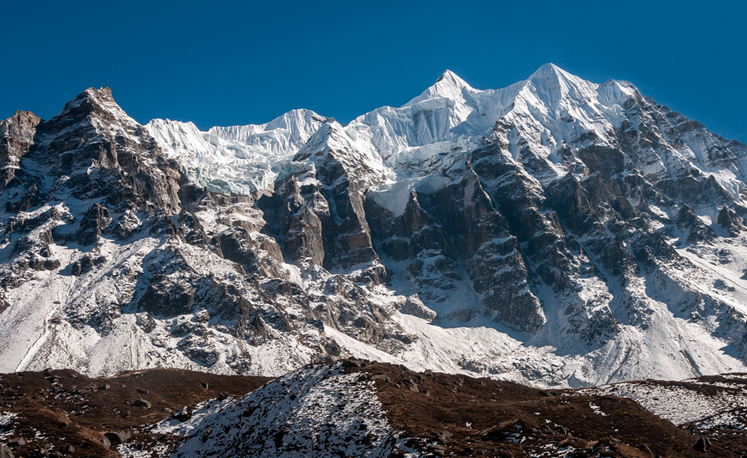
The days spent walking across quiet forests with rhododendron trees, Sherpa villages of traditional buildings, and open valleys of beautiful mountain scenery are long.The sense of remoteness is one of the best aspects of Mera Peak.The trail does not have as many trekkers, and this makes the experience a personal and serene one.You take days of walking on the lovely landscapes and only to arrive at Mera High Camp.The peak day on Mera Peak is tedious and exhausting.Climbers typically rise very early in the day, often at 2 or 3 AM, and start climbing by the use of headlamps.
The path traverses a glacier, and the scenery is not very steep, but due to the altitude each step is hard.A reward becomes apparent as the sun rises, from the summit of Mera Peak, climbers can see five of the world’s highest mountains: Everest, Lhotse, Makalu, Cho Oyu, and Kanchenjunga.It boasts one of the most beautiful mountain views in Nepal.
First Impressions of Island Peak
ImjaTse, also known as Island Peak is one of the most popular trekking peaks in Nepal.At 6,189 meters, Island Peak is lower than Mera Peak, but it is considered more technically challenging.The trek to Island Peak takes the popular Everest Base Camp route throughout the trek.This implies that you traverse well known locations such as Namche Bazaar, Tengboche, Dingboche and Chhukung.Along the way, you pass Buddhist monasteries, suspension bridges, prayer flags, and dramatic views of Everest and AmaDablam.Island Peak lies within the Everest region, which means the trail is usually busier than the Mera Peak route.
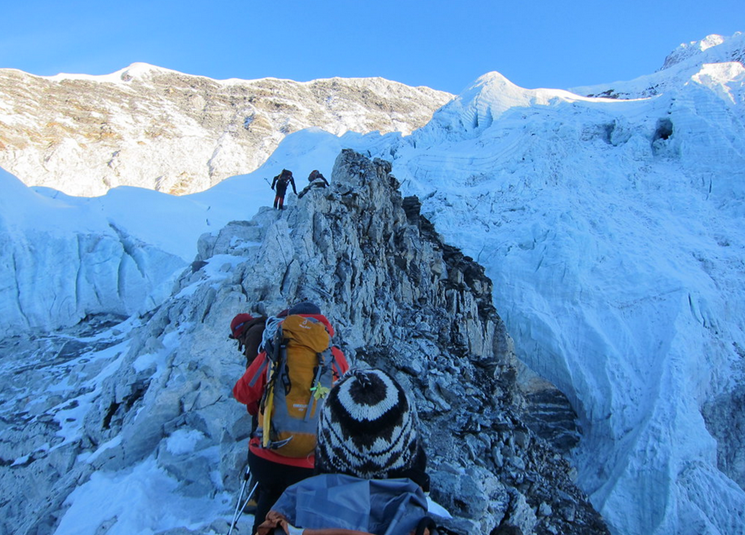
The trails may get extremely congested during the primary climbing seasons of spring and autumn, as trekkers approach Everest Base Camp and climbers gear up on Island Peak.Island Peak feels more adventurous and technical from the beginning.After arrival at base camp, The summit route includes glacier travel, steep snow slopes, fixed ropes, and places where the climbers might have to utilize ascenders and crampons cautiously.
The final section before the summit is usually the hardest part. Climbers must ascend a steep headwall using fixed rope.t can be physically demanding, especially at high altitude.But, having climbed up, the possibilities are amazing.The summit is surrounded by peaks such as Lhotse, Nuptse, Baruntse, AmaDablam and Makalu.Island Peak often feels like a real mountaineering experience in that it entails more climbing techniques and a sense of difficulty.
Comparison of the Trekking Experience.
The trekking routes to Mera Peak and Island Peak are very different.The trail to Mera Peak is less busy and is a more remote one.It takes you away from the busy Everest Base Camp trail into quieter valleys.It features forests, rivers, secret villages, alpine meadows and broad valleys of the glaciers.It is so quiet and untamed.For many people, the appeal of Mera Peak is not only the summit but also the journey itself.The route provides an opportunity to experience a less commercial side of the Himalayas.Island Peak, however, is a continuation of one of Nepal most renowned trekking areas.
The route passes through some of the most iconic villages in the Everest region. There are more lodges, more trekkers, and more opportunities to meet fellow travelers.Island Peak may be the better choice if you want a more lively trekking experience and to incorporate your climb with the Everest Base Camp experience.Before the start of the climb, you are able to see some of the most recognized trekking sites in Nepal.Mera Peak is usually the better alternative in case you want to enjoy solitude, less noise and be on a more distant adventure.
Difficulty Level
The largest question that people may have when comparing Mera and Island peak is that of difficulty.Mera Peak climbing is physically challenging because of its altitude and long summit day, but technically it is easier. The slopes tend to be not as steep and the number of sections that involve high levels of mountaineering skills are also limited.Mera Peak is suitable for people with good fitness and a basic understanding of crampons, ice axe use, and glacier walking.
A lot of climbers use Mera Peak as their introductory Himalayan peak due to the introduction of a challenging yet not impossible entry point to high-altitude climbing.Island Peak is said to be more challenging due to the technical climbing involved.It is required that climbers have a comfortable time with ropes, harnesses, crampons and ascenders.The steep ice wall near the summit can feel intimidating, especially for beginners.Although Island Peak is lower, it is more challenging than Mera Peak due to steepness and more confidence with steepness on the mountain.In case you have never done mountaineering before, Mera Peak might seem to be the less risky and less challenging option.In case you already have some climbing experience and desire a more technical challenge, Island Peak might be a better choice.
Altitude and Acclimatization
One of the largest obstacles is the altitude on both mountains.Mera Peak is 6,476 meters in altitude and this implies that climbers spend a lot of time at such high altitude.The breathing is harder and the air is thinner and the body requires time to acclimatize.Since Mera Peak is higher, acclimatization is of paramount importance.
The climbers typically take a few days to walk steadily and ascend slowly before the actual summit is tried.Island Peak is a little bit lower, yet the problem of elevation remains a significant one.Several journeys will incorporate acclimatization in Namche Bazaar, Dingboche, or Chhukung, preceding the summit attempt.Other climbers opt to start with Everest Base Camp and extend their time in the area to Island Peak since more time in the area will assist in acclimatization.Whichever mountain you choose, it is important to listen to your body, stay hydrated, and move slowly.Anyone, regardless of his or her fitness or experience, can experience altitude sickness.
Technical Requirements
Mera Peak is a simple mountain peak and needs simple mountaineering skills.Crampon walking, ice axe use, harness, and safety on glacier terrain should all be familiar to climbers.Nevertheless, climbing is not that difficult.The peak path is not often extremely steep and there are few technical challenges.
Island Peak requires more advanced climbing techniques.Climbers might be forced to work on fixed ropes, ascend steep snow or ice climbs and go through crevasses in glaciers.Crevasse-crossings may also be in the form of ladder crossings according to the situation on a route.This renders Island Peak more of a real climbing trip as opposed to a trekking peak.Beginners are normally advised to master the simple climbing skills before they can endeavor either of the peaks.Numerous guiding firms train prior to the summit push, yet prior experience can be very significant.
Scenic Beauty
Both mountains offer stunning scenery, but the style of the landscape is different.Mera Peak is known for its huge panoramic views.The summit view is massive because Mera Peak is one of the highest trekking peaks in Nepal.When one sees Everest, Makalu, Lhotse, Cho Oyu and Kanchenjunga all in a single panorama, it is something that many people do not forget.The route to Mera Peak is also excellent in that it goes through the secluded valleys and less-explored regions of the Himalayas.Island Peak offers spectacular scenery throughout the trek. AmaDablam dominates much of the route and The Everest region is filled with sharp peaks, glaciers, monasteries, and traditional Sherpa villages.
The summit view from Island Peak is also breathtaking, but most people claim that all of what happens in the whole Everest region is the best part and not just the summit.Mera Peak is the right place to go in case you are seeking a less noisy and wilder landscape.Island Peak is difficult to beat if you are looking to have classic scenery in the Everest-region.
Cost Comparison
Climbing Mera Peak and Island Peak are generally equally expensive, though Island Peak may occasionally be a little more due to the technical equipment and the more hectic Everest region logistics. A facilitated Mera Peak trip typically comprises permits, guides, porters, meals, lodging, climbing gear, and domestic flights.Island Peak tours tend to have similar services, although due to the frequent combination with Everest Base Camp, the general itinerary can be longer and costly.Personal equipment like boots, sleeping bags, jackets, gloves, trekking poles, and insurance are also to be included in the budget of the climbers.Although these climbs are costly, it is very common to find that they are viewed as one time in a lifetime experiences and the money spent is worth all the memories that are made by many if not all.
Best Season to Climb
Spring and autumn are the optimal seasons of Mera Peak and Island Peak.The month of spring and, particularly, March-May are warmer with a longer daytime and rhododendron forest.It is a very popular climbing time.Another good season is autumn that follows late in September to November since most of the skies are clear and the mountain scenery is breathtaking.Winter climbs are possible but are significantly colder and harder due to the presence of snow and freezing temperatures.Monsoon season is not always recommended as the trails will be muddy, flights might also be postponed and often the mountain views may be hidden by clouds.
Which Peak is Better for Beginners?
Mera Peak tends to be a better choice to beginners who are well-fit but have limited technical climbing experience.It enables climbers to feel as though they are at a Himalayan summit without all the technical or steep areas.The greatest difficulty is stamina and surviving in the high altitude.Island Peak is more appropriate in those people who already have a bit of climbing experience or are interested in a more technical adventure.Most climbers in fact climb Mera Peak and come back later and climb Island Peak when they are more at ease with mountaineering abilities.
Final Thoughts
The decision to make between Mera Peak and Island Peak lies in the type of adventure you desire.Mera Peak is more likely to be the better option in case you desire remote hiking experience, less noise and disturbance, spectacular mountain vistas, and a less technical journey.It is ideal for beginners who want to experience their first Himalayan summit.When you wish a more technical climb, appreciate the popular Everest region and wish to challenge your mountaineering abilities, then Island Peak will be the superior choice.There is nothing easy about either mountain.They both involve preparation, physical fitness, patience, and respect of the altitude.However, both mountains are equally memorable and they are the experiences you have in a life time even after the climbing experience.
Island Peak and Mera Peak are two very different trekking peaks in Nepal, yet they are also considered very rewarding.Mera Peak is taller, less technical, and quieter and ideal in bringing a remote Himalayan adventure and first high-altitude peak to the climbers.Island Peak is more technical and closely connected to the Everest region, making it a better option for climbers seeking a more serious mountaineering experience.
You can choose either, there is no right or wrong.The optimal peak is affected by your fitness, past climbing experience, and the type of adventure that you wish to experience.Some climbers may prefer the peace of routes and expansive view of Mera Peak, and others may prefer the technical test and terrain of Everest which Island Peak can provide.Whatever mountain you climb, one thing is sure that climbing in the Himalayas is a life-altering experience.
The numerous walking days, the chilly mornings, the mountain hamlets, the prayer flags, the glaciers, and lastly the experience of being at the top all become memories that will always remain with you.For many people, these peaks are not only about reaching the top.
They are also about finding personal strength, going outside comfort zones and seeing the beauty of the mountains in a manner that few people ever get to see.The expedition educates on the importance of patience, determination, perseverance, and respecting nature.After all, you will not return home with just photographs, whether you are on the summit of Mera Peak or Island Peak.You will return with tales, with confidence, with experiences that you will remember and with an attachment to the Himalayas.
Ultimately, be it at the top of Mera Peak or Island Peak, you will go back home with more than mere photographs.You will return with stories, peace of mind, and memories that will last a lifetime, as well as a stronger bond with the Himalayas.