

Understanding the Importance of Religious Customs
When traveling to different regions of the world, an understanding of religious customs is essential for a meaningful and respectful visit. These customs not only offer insights into the cultural fabric of a society but also serve as an embodiment of the values, beliefs, and traditions that define a community. For travelers, recognizing and respecting these practices can significantly enrich their experience, providing a deeper appreciation of the destination’s heritage.
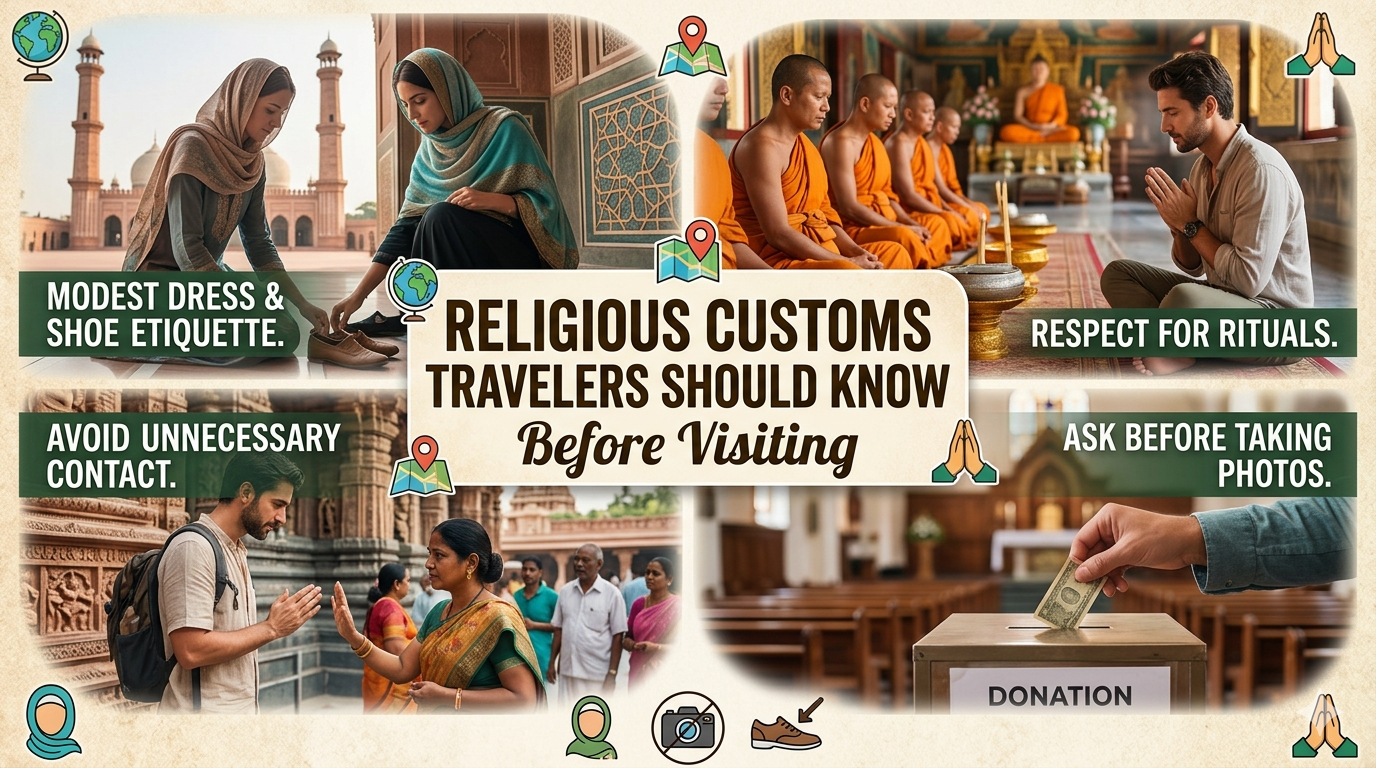
Religious customs shape social interactions, and engaging with locals who observe these practices can promote positive relations. Demonstrating respect for rituals, attire, and sacred spaces fosters goodwill and shows a genuine interest in the culture. For instance, in many countries, dressing modestly when visiting a place of worship is not just considerate but often required. Such understanding can help travelers navigate social complexities and avoid unintentional offenses that could detract from their journey.
In addition, awareness of religious customs can influence a traveler’s itinerary and choice of activities. Participating in local religious festivals can provide unique insights into a community’s ethos and facilitate connections that transcend the barriers of language and culture. Moreover, these experiences frequently lead to memorable encounters that resonate well beyond the trip itself, leaving travelers with a profound sense of fulfillment.
Overall, understanding the significance of religious customs is not merely an act of courtesy; it is an opportunity to learn and grow through meaningful engagement with people and places. Revering these traditions can lead to more enriching experiences, allowing travelers to leave with cherished memories and an enlightened viewpoint of the world.
Common Religious Customs Across Various Faiths
Traveling to different parts of the world frequently introduces individuals to a diverse array of religious customs, which can influence local culture and interpersonal interactions. Understanding these customs is essential for fostering respect and ensuring a positive experience. This overview encompasses rituals, symbols, and gestures prevalent across major religions such as Christianity, Islam, Hinduism, Buddhism, and Judaism.
In Christianity, a significant practice is attending church services, especially on Sundays. Rituals like baptism and communion hold profound meanings, often accompanied by communal prayers and hymns. The symbol of the cross is widely recognized and carries deep spiritual significance.
Islam emphasizes the Five Pillars, critical to a devout Muslim’s faith. One notable custom is the daily prayer (Salah), performed five times a day. Travelers should be aware of appropriate behavior in mosques; removing shoes is customary, and modest dress is often required. The call to prayer (Adhan) is another important soundscape in predominantly Muslim regions, marking the times for prayer.
Hinduism presents a rich tapestry of rituals, such as puja (worship), which can occur at home or in temples. Rituals may involve offerings of flowers, food, and incense to deities. Symbolism is crucial, with yantras and mandalas representing spiritual concepts that may catch the eye of observant travelers.
Buddhism encourages practices like meditative silence and mindful interactions. The act of bowing before a Buddha statue or a monk may symbolize respect and is a vital ritual seen in various Buddhist cultures. Additionally, the lotus flower serves as a powerful symbol of purity and enlightenment across Buddhist traditions.
Judaism is characterized by customs such as observing the Sabbath, which begins Friday evening and concludes Saturday night, where work is refrained from, emphasizing rest and spirituality. Symbols like the menorah and Star of David also hold significant meanings. Understanding and respecting these customs enhances the travel experience and showcases cultural appreciation.
Dress Codes and Attire Considerations
When planning a visit to religious sites, understanding appropriate dress codes is crucial. Many cultures enforce dress codes that reflect their traditions and values, ensuring that visitors show respect and adherence to sacred spaces. Adopting the proper attire not only demonstrates reverence but also enhances the travel experience by helping visitors engage more fully with the local culture.
Across various religions, modesty is often a central tenet of dress. For instance, in Islamic countries, women are frequently expected to wear long sleeves and skirts that cover the ankles, while men might need to wear long pants and avoid sleeveless shirts. In contrast, Hindu temples may require both men and women to remove their shoes before entering, and women might be asked to wear a sari or other modest clothing. In some Christian churches, particularly in the Vatican, visitors should avoid wearing shorts or revealing tops as a sign of respect. Understanding these requirements will help prevent uncomfortable situations during your travels.
Additionally, when visiting Buddhist temples, it is common for visitors to cover their shoulders and knees. Both male and female travelers should opt for lighter fabrics that comply with the local customs while ensuring comfort, especially in warmer climates. Certain sites, such as the Western Wall in Jerusalem, require men to wear a kippah, while women may be asked to dress more conservatively.
If in doubt, researching the specific attire expectations for a destination prior to your visit is prudent. Packing options that allow for easy modifications, such as scarves or shawls, can also facilitate compliance with unexpected dress codes. Ultimately, showing sensitivity to these customs can create a more respectful and enriching travel experience.
Prayer and Worship Etiquette
When traveling to various destinations around the world, it is essential to understand the diverse prayer and worship customs that may vary significantly from one’s own practices. Participating in or observing religious services can offer profound insights into the local culture; however, travelers should approach these situations with respect and sensitivity. It is common practice in many religious settings to dress modestly, as this demonstrates respect towards sacred spaces. For instance, in Islam, women may be required to wear a hijab, while in some Christian churches, men might be expected to remove their hats.
When attending prayer times or worship services, it is crucial to be aware of the customs that govern behavior. Silence is typically regarded as a sign of respect during these occasions. Many faith traditions, including Judaism and Buddhism, emphasize quiet contemplation; thus, maintaining a respectful demeanor is essential. In certain instances, observers are encouraged to remain passive participants, refraining from interrupting rituals or speaking during prayer times.
In addition to personal conduct, understanding the dynamics of participation in worship can be beneficial. For example, in some Christian churches, congregants are invited to join in singing hymns or participating in communal prayers, while in other settings, such as the Islamic mosque, outsiders may be expected to simply observe rather than join in the prayer itself. Familiarity with these nuances can enhance one’s travel experience, allowing for deeper connections with the host culture. Ultimately, travelers should approach prayer and worship with an open heart and a willingness to learn, ensuring that their engagement is one of curiosity and respect.
Food Practices and Dietary Restrictions
When traveling to diverse religious regions, it is crucial to understand the dietary customs that are often linked to specific beliefs. Many religions have unique food practices that dictate what is appropriate or inappropriate to consume. Understanding these customs can enhance the travel experience and show respect for local traditions.
For instance, Hinduism strongly emphasizes the principle of non-violence, which leads to widespread vegetarianism among its followers. In many parts of India, eating meat, particularly beef, is not only frowned upon but can also be illegal in certain states. Therefore, travelers should be mindful of this when dining out, opting for vegetarian dishes that align with local practices. Popular choices include paneer dishes, lentil soups (dal), and a variety of vegetable curries.
Islam, on the other hand, mandates specific dietary restrictions known as halal. Foods that are permissible must adhere to stringent guidelines, including the way animals are slaughtered. Pork and alcohol are strictly prohibited within the faith. Travellers in predominantly Muslim countries should look for halal certifications when selecting food, especially in restaurants or markets. Additionally, fasting during the month of Ramadan is a significant spiritual practice; thus, it is respectful for travelers to be considerate of Muslims who may refrain from eating and drinking during daylight hours.
By familiarizing oneself with these dietary laws and practices, travelers can engage more authentically with diverse cultures while avoiding unintentional offenses. It is always advisable to ask locals or restaurant staff for guidance regarding food practices, as this openness fosters a deeper appreciation of the religious influences that shape dietary habits.
Observing Religious Holidays and Festivals
Religious holidays and festivals play a significant role in the spiritual and cultural practices of various faiths around the world. Each religion has its own unique celebrations, marked by distinct rituals that reflect their beliefs and traditions. For travelers, understanding the essence and significance of these events is crucial to foster respect and appreciation for local customs.
For instance, in Christianity, Easter celebrates the resurrection of Jesus Christ and is marked by various traditions, including attending church services, organizing feasts, and engaging in community activities. Similarly, Ramadan, observed by Muslims, involves fasting from dawn until sunset, allowing participants to engage in prayer, reflection, and family gatherings. These observances are not just religious practices; they are opportunities for communities to come together, renew their faith, and share joy with others.
In the Hindu tradition, Diwali – the festival of lights – signifies the victory of light over darkness and good over evil. This celebration involves lighting oil lamps, decorating homes, and exchanging gifts, fostering an environment of love and positivity. Travelers interested in participating in or observing these religious festivals should familiarize themselves with the specific customs involved, as many festivals include communal meals, prayers, and other significant rituals.
To respectfully engage with these events, it is advisable for travelers to dress appropriately, observe quietness during prayers, and ask permission before photographing sacred rituals. Showing genuine interest and respect towards the traditions can enhance the experience and enable meaningful connections with the local community. Participating in religious events often offers an enriching perspective on the culture and beliefs of the destination, allowing travelers to gain a deeper understanding of the people and their traditions.
Communicating with Local Religious Communities
When visiting regions with distinct religious practices, it becomes essential for travelers to communicate effectively with local religious communities. This communication not only fosters respect and understanding but also enriches the travel experience. Understanding the language nuances is vital; therefore, learning basic phrases in the local language can facilitate more meaningful interactions. Even simple greetings or expressions of gratitude can go a long way in establishing rapport.
In addition to language, non-verbal communication, such as gestures, plays a crucial role in conveying respect. Specific gestures may hold significant cultural meanings, so it is essential to be aware of local customs. For instance, maintaining eye contact in some cultures can signify attentiveness, while in others, it may be seen as disrespectful. Always observe how locals interact, and mirror their approach where suitable, to demonstrate goodwill and openness.
Moreover, it is advisable to be mindful of the context in which conversations occur. Engaging in discussions about religious beliefs can be a sensitive topic; therefore, approaching such subjects should be done tactfully. Expressing genuine interest in understanding their practices, rather than imposing one’s views, can lead to enriching dialogues. Questions should be open-ended and respectful, showing a willingness to listen.
Lastly, timing is also an essential factor in effective communication. Certain times, such as during prayer services or festivals, may not be suitable for deeper conversations. Instead, consider reaching out after such events to engage in more relaxed discussions. Being respectful of the religious community’s time and practices will help you form a positive connection, ensuring that your travel experience remains enriching and respectful.
Common Misunderstandings and Taboos to Avoid
When traveling to different countries, understanding local customs and religious beliefs is essential to ensure respectful interactions. One common misunderstanding is that religious practices are uniform across communities. However, rituals and customs can vary significantly even within the same religious framework. For example, a gesture perceived as respectful in one culture may be viewed as offensive in another. Thus, familiarizing oneself with local religious practices is crucial before visiting.
Another taboos travelers must be aware of is the dress code. In many religious sites, modesty is a key aspect of respect. Tourists should avoid wearing revealing clothing, such as shorts or tank tops, when visiting churches, temples, or mosques. Instead, they should opt for clothing that covers the shoulders and knees, or even specific garments that may be provided at the entrance of sacred places. Failing to adhere to these dress codes might not only offend the faithful but could also lead to personal denial of entrance.
Furthermore, certain gestures, such as pointing with the feet or showing the soles of one’s shoes, are considered highly disrespectful in many cultures. Always being conscious of body language is important; spiritual places often dictate certain postures as a sign of reverence. Thus, being mindful when sitting, standing, or speaking in sacred spaces becomes imperative.
Additionally, discussing religious beliefs casually can lead to discomfort. For many individuals, their faith forms a significant part of their identity, and intrusive questions can be perceived as disrespectful. Engaging with cultural practices through observation rather than inquiry often yields a better understanding of a location’s religious customs.
In conclusion, avoiding misunderstandings and taboos related to religious customs requires careful attention and respect for differing cultures. Travelers should approach their visits with an open mind and a willingness to learn, ensuring a fulfilling experience that honors local traditions.
Conclusion: Respecting Diversity in Religious Practices
As we conclude our discussion on religious customs that travelers should know before visiting various destinations, it becomes evident that respecting and appreciating religious diversity is paramount. Across the globe, myriad religions and belief systems shape cultures, influence social norms, and dictate practices that are both sacred and integral to local communities. For travelers, understanding these customs is not merely a matter of etiquette; it reflects a broader respect for the rich tapestry of human experience.
In recognizing that every faith has its distinctive practices and beliefs, travelers are encouraged to approach their journeys with an open mind. The exploration of diverse religious customs can significantly enhance one’s travel experience, fostering deeper connections with local populations. Whether it is by participating in a religious ceremony, adhering to dress codes, or observing local norms when visiting sacred sites, engaging with the local culture enriches the overall travel narrative and contributes to mutual respect.
Furthermore, embracing religious diversity extends beyond mere observation. It involves a willingness to learn and understand different perspectives that shape the lives of individuals around the world. This openness can encourage intercultural dialogue and promote a greater sense of community among travelers and locals alike. Ultimately, it is through this respect and appreciation for differing beliefs that one can transform travel from a mere act of exploration into an opportunity for personal growth and enlightenment.
In summary, as you embark on future travels, keep in mind the importance of being aware of and respectful toward the diverse religious practices that one may encounter. With this approach, journeys can become not only more enjoyable but also profoundly meaningful.