

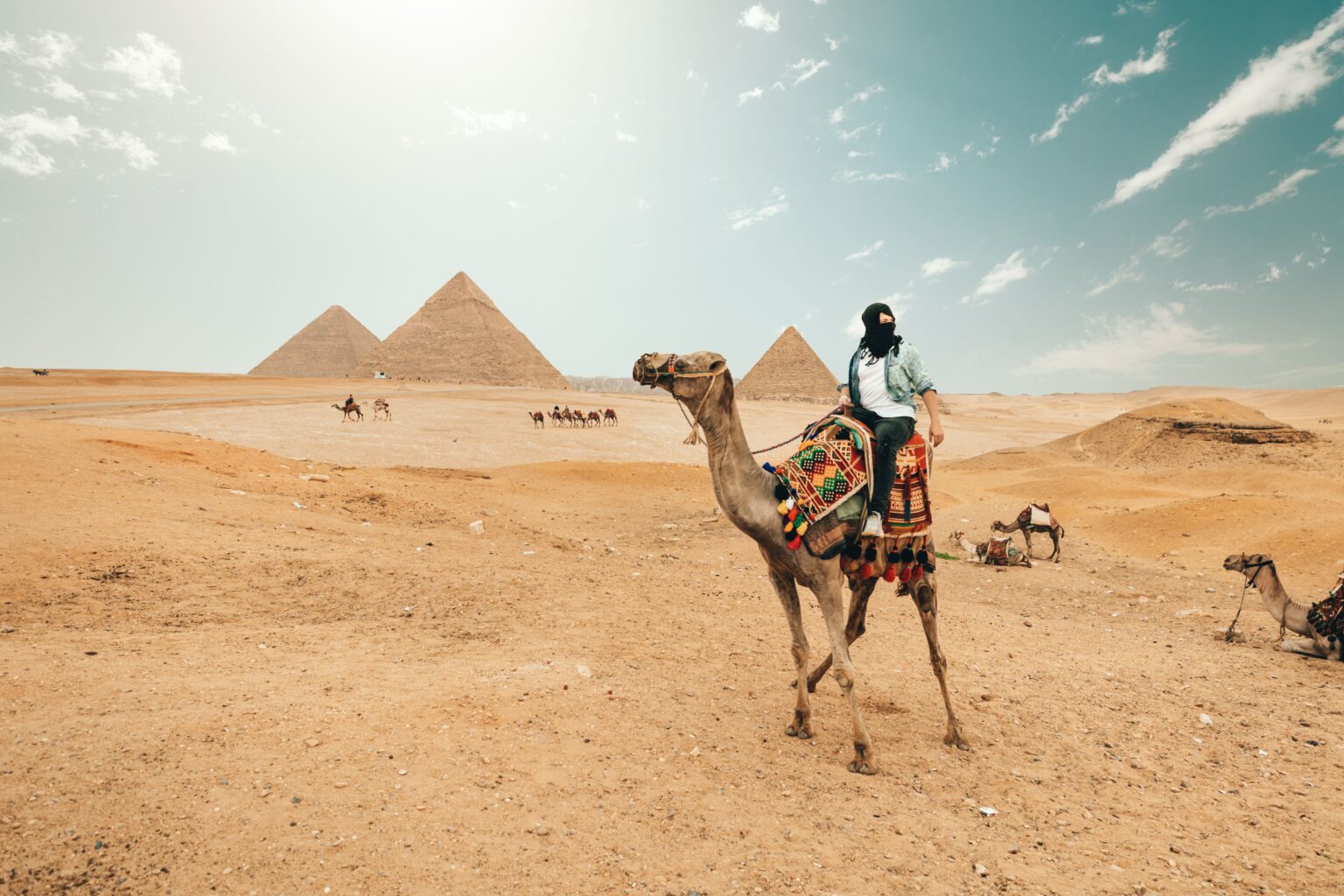
There are some places you visit just to relax. You unpack your bag, find a good view, eat something delicious, and let the days drift by.
Egypt is not really that kind of place.
Yes, you can relax there. You can sit by the Nile at sunset, drink mint tea, listen to the soft noise of the city fading in the background, and feel completely still for a moment. But Egypt asks more of you than most destinations. It pulls you in. It makes you look closer. It makes you wonder how people thousands of years ago built monuments that still leave modern travelers speechless.
That is why your first trip to Egypt deserves more than a standard tour.
A basic tour might get you from one famous site to the next. It might show you the Pyramids, the Sphinx, the Egyptian Museum, Luxor, Karnak, and maybe a few tombs in the Valley of the Kings. On paper, that sounds great. You can check off the big names and come home with the photos everyone expects.
But is that really the trip you want to remember?
Egypt is not just a list of attractions. It is a place of stories, symbols, rituals, landscapes, and human emotion. It is ancient and alive at the same time. If you rush through it, you may see a lot, but you might not feel much of it. And for a first visit, that would be a real loss.
Standard Tours Often Move Too Fast
Standard tours are popular for a reason. They are simple. They are easy to book. They usually promise to cover the highlights in a set number of days. For many travelers, that feels comforting, especially when visiting a country with so much history and so many places to see.
The problem is that Egypt does not always work well at high speed.
A packed schedule can look exciting when you are planning from home. Three temples in one day. A museum visit in the morning. A flight in the afternoon. Dinner somewhere new at night. It sounds efficient. But once you are there, walking through heat, crowds, traffic, security lines, and long stretches of information, that same schedule can start to feel exhausting.
And exhaustion changes how you experience a place.
Instead of standing quietly in front of a temple wall and noticing the carvings, you may find yourself checking the time. Instead of asking a question about a pharaoh or a symbol, you may be wondering when the bus leaves. Instead of absorbing the atmosphere, you may just be trying to keep up.
That is not because you do not care. It is because the pace does not give you enough room to care properly.
Egypt needs breathing space. It needs pauses. It needs time for your eyes to adjust and your mind to catch up with what you are seeing.
Your First Visit Shapes the Way You Remember Egypt
First impressions are powerful. This is true anywhere, but it feels especially true in Egypt.
For many people, Egypt is a dream destination. They have seen photos of the Pyramids since childhood. They have watched documentaries about tombs, mummies, golden masks, and lost cities. They have imagined the Nile, the desert, the temples, and the stories of kings and queens who lived thousands of years ago.
So when the trip finally happens, it carries weight.
Your first visit becomes the version of Egypt that stays with you. If it feels rushed, crowded, and stressful, that can shape your memory. You might still enjoy it, but you may come home feeling like you only skimmed the surface.
A more thoughtful trip can leave a very different impression.
You may remember the silence inside an ancient tomb. You may remember the way the stone changed color in the late afternoon light. You may remember a guide explaining a small carving that suddenly made an entire wall feel alive. You may remember the sound of the Nile moving beside you while the city slowly settled into evening.
Those are the moments that last.
Photos are wonderful, of course. Everyone wants a photo at the Pyramids. But the deeper memories often come from the moments when you are not posing at all. You are simply there, paying attention.
Egypt’s History Needs More Than a Quick Explanation
Ancient Egyptian sites are impressive even if you know nothing about them. The size alone is enough to stop you in your tracks. The columns, statues, tombs, and temples can feel almost unreal at first glance.
But the real magic begins when you understand what you are looking at.
A temple is not just a beautiful old structure. It was a sacred space. A tomb was not just a burial chamber. It was connected to beliefs about the afterlife, protection, memory, and eternity. A carving was not just decoration. It often carried meaning, power, and purpose.
Without context, you can admire Egypt. With context, you can connect with it.
That is a big difference.
When someone helps you understand why a temple was built where it was, why certain gods appear again and again, why the Nile mattered so deeply, or why specific symbols were carved into stone, the whole experience changes. You are no longer just looking at ancient ruins. You are stepping into a world with its own logic, beauty, fears, hopes, and imagination.
And honestly, that is where Egypt becomes unforgettable.
You begin to see that ancient Egyptians were not just mysterious figures from a textbook. They were people. They planned, built, prayed, celebrated, mourned, ruled, worked, and dreamed. Their world was different from ours, but not as distant as it first seems.
A Personal Journey Feels More Meaningful
One of the biggest benefits of moving beyond a standard tour is that your trip can become more personal.
Not every traveler cares about the same things. Some people are fascinated by archaeology. Some love architecture. Some want to understand mythology. Some are drawn to food, daily life, photography, religion, or the feeling of being in places where history still seems close enough to touch.
A standard tour often treats everyone the same.
A more personal journey gives you space to follow your curiosity. You can ask more questions. You can spend extra time at a site that moves you. You can slow down when something catches your attention instead of rushing away because the schedule says it is time to leave.
For travelers researching how a more thoughtful Egypt journey can feel, resources such as inside-egypt.com can offer a helpful glimpse into the kind of deeper, more personal travel experience that goes beyond a typical sightseeing schedule.
That kind of planning matters because Egypt can be overwhelming in the best possible way. There is so much to see that it helps to have a trip shaped around meaning, not just movement.
You do not need every minute filled. You need the right moments to have enough space.
The Nile Is Not Just a Pretty View
The Nile is one of those things people think they understand before they arrive.
It is a river. It is famous. It looks beautiful in photos. Simple enough.
But once you are there, you realize the Nile is much more than scenery. It is the thread running through Egypt’s past and present. Ancient life depended on it. Cities grew around it. Agriculture followed its rhythm. Temples rose near it. Myths and rituals were shaped by it.
Even today, the Nile has a special kind of presence.
Spending time along the river can shift the pace of your whole trip. After busy days in temples and museums, the Nile gives you a slower rhythm. You see palm trees, boats, birds, villages, and soft evening light on the water. You watch life unfold in small, ordinary ways.
And sometimes those ordinary views are exactly what make the trip feel real.
A Nile cruise or a slower route along the river can give your journey balance. It connects the grand history with the living country around you. You are not just moving from monument to monument. You are following the same river that has shaped Egypt for thousands of years.
That is hard to feel when everything is rushed.
Comfort Helps You Stay Present
Some travelers feel guilty about wanting comfort, especially on a cultural or historical trip. They may think comfort means being less adventurous or less serious.
But that is not true.
Comfort can make you more present.
Egypt can be intense for first-time visitors. The days can be hot. The cities can be busy. The distances can be long. The amount of history can be a lot to take in. Even when everything is exciting, it can still be tiring.
When your trip is planned well, comfort supports the experience instead of distracting from it.
Good pacing, reliable transport, thoughtful timing, and knowledgeable guidance can make a huge difference. You have more energy to listen, observe, and enjoy. You are not constantly worrying about logistics or feeling drained by avoidable stress.
Think about it. Would you rather arrive at an ancient temple tired, rushed, and distracted, or calm enough to actually take it in?
Comfort is not the opposite of depth. Often, it is what allows depth to happen.
The Best Trips Leave Room for Wonder
There is a temptation, especially on a first visit, to do everything.
You may think, “I have come all this way, so I should see as much as possible.” That is understandable. Egypt is full of places that feel too important to miss.
But more is not always better.
A packed itinerary can start to blur. After a while, one temple runs into another. One early morning blends into the next. You may technically visit more places, but remember fewer details.
The best Egypt trips balance the major highlights with quieter moments.
That might mean seeing fewer sites in one day so you can enjoy them properly. It might mean visiting a temple at a better time for light and atmosphere. It might mean leaving space for a slow lunch, a conversation with your guide, or a quiet evening by the river.
These pauses are not wasted time. They are part of the experience.
Wonder needs room. It does not always appear on command. Sometimes it shows up when you stop trying to see everything and simply let one place fully reach you.
Local Insight Changes Everything
A good guide can change the entire feel of your trip.
Not just because they know facts, though facts are important. A good guide helps you understand what matters. They can point out details you would never notice alone. They can explain the difference between one dynasty and another without making it feel like a lecture. They can connect ancient history to modern Egyptian life in a way that feels natural and human.
Local insight also helps with the smaller parts of travel.
How should you behave in a mosque or local neighborhood? What foods should you try? What customs should you understand? What is worth buying, and what is just tourist noise? Where can you pause for a moment when the day feels too full?
These details may seem small, but they shape the trip.
They help you feel less like an outsider being moved through a program and more like a visitor who is learning, listening, and engaging with the place in front of you.
That matters. Especially in Egypt, where the difference between seeing and understanding can be huge.
Your Trip Should Feel Like a Story, Not a Schedule
A standard tour often feels like a list.
Day one, arrive. Day two, pyramids. Day three, museum. Day four, fly south. Day five, temples. Day six, more temples. Day seven, return home.
There is nothing wrong with structure. You need structure. But a great trip should feel like more than a schedule. It should have a sense of movement, emotion, and discovery.
Your first trip to Egypt should feel like a story.
It might begin with the shock of seeing the Pyramids in person. Then it might deepen in Cairo, where ancient history and modern life sit side by side. It might slow down along the Nile, where the landscape begins to explain why this river meant everything. It might grow richer in Luxor, where temples and tombs pull you into the beliefs of another world.
By the end, you should not just feel like you covered Egypt.
You should feel like Egypt unfolded for you.
That is the difference between a trip that is efficient and a trip that is meaningful.
Choose the Egypt You Want to Remember
Your first trip to Egypt is not something you can repeat in the same way. You may return one day, and many travelers do, but the first encounter is special. It carries surprise. It carries expectation. It carries that strange feeling of finally standing in a place you have imagined for years.
So it is worth asking yourself what kind of experience you want.
Do you want to rush from site to site, collecting quick photos and half-remembered facts? Or do you want a journey that gives you time to understand what you are seeing, feel where you are, and come home with stories that actually mean something to you?
Egypt deserves attention. It deserves patience. It deserves curiosity.
And you deserve a first trip that feels worthy of the place itself.
A standard tour may show you Egypt’s greatest landmarks. But a more thoughtful journey can help you feel their power. It can turn famous places into personal memories. It can give you not just a vacation, but a connection to one of the most fascinating countries on earth.
That is why your first trip to Egypt deserves more than a standard tour.
Because Egypt is not just a destination to check off.
It is a place to experience fully, slowly, and with your whole attention.