

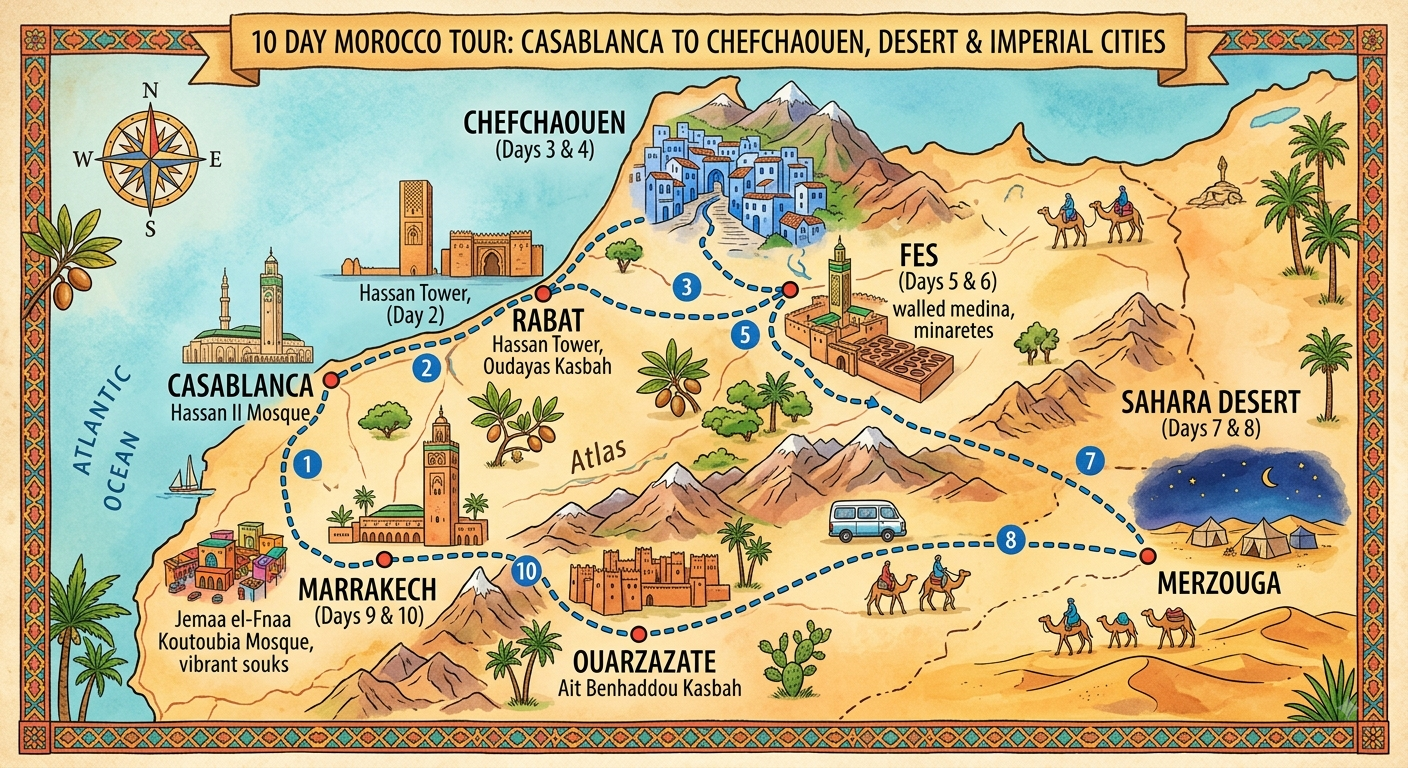
Morocco is a destination where modern cities, ancient medinas, dramatic mountains, and vast desert landscapes come together in one unforgettable journey. For travelers looking to experience several sides of the country in a relatively short time, a carefully planned 10 day tour from casablanca to chechouen ,desert, imperial cities can offer an excellent introduction to Morocco’s history, culture, scenery, and cuisine. Travelers can also explore Morocco travel experiences and tour inspiration when planning their route.
Morocco’s official tourism organization highlights destinations such as Casablanca, Chefchaouen, Fez, Rabat, Meknes, Marrakech, and the Merzouga desert region, making this combination particularly appealing for visitors who want both cultural sightseeing and outdoor adventure.
Start Your Journey in Casablanca
Casablanca is often the natural starting point for an international trip to Morocco. As the country’s largest city and an important economic center, it offers a fascinating contrast between modern urban life and traditional Moroccan architecture.
One of the city’s most impressive landmarks is the Hassan II Mosque, situated beside the Atlantic Ocean. Visitors can also explore the city’s Art Deco architecture, lively neighborhoods, cafés, and markets before beginning the journey toward Morocco’s historic cities.
Spending a day in Casablanca allows travelers to adjust after their flight while getting their first taste of Moroccan culture.
Discover the Blue Streets of Chefchaouen
From Casablanca, continue north toward Chefchaouen, one of Morocco’s most visually distinctive destinations. Built among the Rif Mountains, the city is famous for its blue-painted buildings, narrow streets, peaceful squares, and traditional handicrafts. Morocco’s National Tourist Office describes Chefchaouen as a blue-hued mountain city with a distinctive atmosphere and rich heritage.
The best way to experience Chefchaouen is on foot. Wander through the medina, photograph its colorful doors and stairways, browse local shops, and stop at a small café for mint tea. Travelers who enjoy hiking can also explore the surrounding mountain scenery and nearby natural attractions.
Unlike some of Morocco’s larger cities, Chefchaouen has a relaxed atmosphere that makes it ideal for slowing down and appreciating everyday Moroccan life.
Explore the Imperial Cities
After Chefchaouen, the journey can continue toward Morocco’s historic imperial cities. Rabat, Meknes, Fez, and Marrakech are particularly important for travelers interested in architecture, history, and traditional culture. The official Moroccan tourism website groups these destinations under cultural and heritage experiences.
Rabat
Rabat combines Morocco’s political importance with a rich architectural heritage. Visitors can explore historic sites, gardens, the old medina, and the atmospheric Kasbah of the Udayas.
Meknes
Meknes provides a quieter alternative to some of Morocco’s busier tourist destinations. Its historic gates, walls, squares, and traditional architecture provide a glimpse into the country’s royal past.
Fez
Fez is one of the highlights of a Moroccan cultural journey. Its ancient medina is filled with narrow lanes, traditional workshops, markets, historic religious buildings, and artisan craftsmanship.
Walking through Fez can feel like stepping into another era. Leatherwork, pottery, metalwork, textiles, and traditional food all contribute to the city’s distinctive character.
Head South Toward the Sahara
One of the biggest highlights of a Morocco itinerary is the transition from historic cities to the desert. The route toward Merzouga takes travelers through changing landscapes, including mountain roads, valleys, and arid regions.
The Moroccan National Tourist Office specifically features the Errachidia-Midelt-Merzouga region among the country’s destinations and promotes desert experiences as one of its suggested travel themes.
As you approach Merzouga, the landscape becomes increasingly dominated by the Sahara’s dramatic sand dunes. This change in scenery is one of the most memorable parts of traveling through Morocco.
Experience a Night in the Desert
A desert stay gives travelers an opportunity to experience Morocco away from its busy urban centers. A camel excursion around sunset can provide spectacular views as the dunes change color in the fading light.
After sunset, many desert camps offer traditional meals, music, and opportunities to sit beneath a remarkably clear night sky. Waking early to watch sunrise over the dunes is equally rewarding.
The desert experience is not simply about sightseeing. It provides a chance to slow down, disconnect from busy routines, and appreciate the scale and silence of the Sahara.
Travel Through Morocco’s Scenic Landscapes
The journey between the desert and the major cities can be just as interesting as the destinations themselves. Morocco’s landscapes change dramatically across relatively short distances, from the Rif and Atlas Mountains to valleys, rocky plateaus, palm-filled oases, and desert dunes.
For road-trip travelers, these transitions create countless opportunities for photographs and spontaneous stops. Villages, roadside cafés, local markets, and scenic viewpoints can provide memorable experiences that aren’t always included in a standard sightseeing schedule.
Finish in Marrakech
A 10-day Moroccan adventure can finish in Marrakech, one of the country’s most famous destinations. The city combines historic architecture, colorful souks, gardens, restaurants, and lively public spaces.
The medina is ideal for travelers who enjoy shopping and discovering local crafts. Visitors can browse carpets, leather goods, ceramics, lamps, spices, and other traditional products while experiencing the energetic atmosphere of the old city.
Marrakech also offers opportunities to relax after several days of traveling. A traditional hammam, Moroccan meal, or quiet evening in a riad can be a pleasant way to end the journey.
Tips for Planning a 10-Day Morocco Tour
A trip covering Casablanca, Chefchaouen, the imperial cities, and the Sahara involves considerable travel, so planning the route carefully is important.
Choose comfortable transportation, especially for the longer journeys between northern Morocco, Fez, and the desert. Accommodation should also be selected according to location, since staying near historic medinas can make sightseeing easier.
Pack lightweight clothing for daytime travel along with warmer layers for desert nights and mountain areas. Comfortable walking shoes are particularly important because many medinas have uneven streets and pedestrian-only lanes.
Food should also be considered an essential part of the experience. Moroccan cuisine offers plenty to discover, from tagines and couscous to fresh salads, grilled meats, pastries, and mint tea.
Why This Route Works So Well
The appeal of this itinerary is its variety. In just ten days, travelers can experience the modern atmosphere of Casablanca, the blue streets of Chefchaouen, historic imperial cities, mountain scenery, and the Sahara Desert.
Rather than focusing on a single type of attraction, the route demonstrates the extraordinary diversity of Morocco. The country’s official tourism resources similarly present Morocco through a combination of medinas, cultural heritage, nature, mountains, deserts, beaches, gastronomy, and traditional lifestyles.
For first-time visitors, this makes Morocco an especially rewarding destination. Every stage of the journey offers something different, while the combination of cities and landscapes creates a travel experience that can remain memorable long after returning home.
Final Thoughts
A 10-day journey through Morocco can be an ideal introduction to North Africa, particularly for travelers who want history, culture, adventure, and beautiful scenery in one trip. Starting in Casablanca, visiting the enchanting streets of Chefchaouen, exploring the imperial cities, crossing toward the Sahara, and finishing in Marrakech creates a diverse itinerary without limiting the experience to one region.
With thoughtful planning and enough time to enjoy each destination rather than simply passing through it, Morocco can transform a short vacation into a rich cultural adventure filled with architecture, hospitality, food, landscapes, and unforgettable moments.