
Casablanca is one of Morocco’s most fascinating cities, where modern urban life meets centuries of history and culture. Located on the Atlantic coast, the city is known for its impressive architecture, lively streets, traditional markets, oceanfront neighborhoods, and the spectacular Hassan II Mosque.
While many travelers use Casablanca as their arrival point before continuing to Marrakech, Fez, or the Sahara Desert, the city itself has plenty to discover. From historic medinas and traditional souks to Art Deco buildings and the Atlantic Corniche, there are many memorable places to visit.
If you are planning a longer Moroccan adventure, a Morocco itinerary can also be a convenient way to combine Casablanca with other major destinations across the country.
1. Visit the Hassan II Mosque
The Hassan II Mosque is one of the most recognizable landmarks in Casablanca and is located directly beside the Atlantic Ocean. Its impressive minaret rises 210 meters above the city, while the mosque features detailed Moroccan craftsmanship, including marble, zellige tilework, carved wood, and ornate decorative elements.
The mosque is particularly impressive because of its oceanfront setting. Visitors who are not Muslim can enter the mosque as part of an organized guided tour, with visiting times subject to the mosque’s schedule and prayer times. Respectful clothing is required.
For many visitors, seeing the Hassan II Mosque is one of the essential things to do in Casablanca.
2. Explore the Old Medina
The Old Medina offers a completely different atmosphere from Casablanca’s modern city center. Its narrow streets, traditional shops, cafés, and local businesses provide an opportunity to experience an older side of the city.
The Medina was rebuilt after the 1755 earthquake and combines Arab-Islamic architectural influences with elements reflecting Casablanca’s later European influence. Visitors can walk through the streets, browse local products, and explore the area around the historic port.
It is a good place to take your time, observe everyday life, and discover traditional Moroccan crafts.
3. Discover the Habous Quarter
The Habous Quarter, sometimes called the New Medina, is another interesting place to visit in Casablanca. The neighborhood combines traditional Moroccan design with planned streets, arches, small squares, markets, and artisan shops.
Visitors can browse stores selling Moroccan handicrafts, carpets, pottery, leather goods, and other traditional products. The area is also home to the Mahkama of the Pasha, an architectural landmark featuring detailed Moorish-style decoration.
Habous is also a good place to stop for Moroccan pastries or mint tea while exploring the neighborhood.
4. Walk Along the Casablanca Corniche
For travelers who want to enjoy Casablanca’s Atlantic atmosphere, the Corniche is a great place to explore. The waterfront area stretches along the coast and includes cafés, restaurants, leisure facilities, beaches, and entertainment venues.
A walk along the Corniche can be especially enjoyable in the late afternoon when visitors can enjoy the ocean views. The area also provides access to Ain Diab and other popular coastal attractions.
If you want a break from sightseeing in historic districts, spending some time along the waterfront offers a more relaxed side of Casablanca.
5. Explore Casablanca’s Art Deco Architecture
Casablanca’s city center is known for its Art Deco architecture and broad urban avenues. Walking through the downtown area gives visitors a chance to see how Moroccan and European architectural influences developed alongside one another.
The city’s architecture is particularly interesting for travelers who enjoy photography, history, and urban design. United Nations Square and the surrounding downtown streets are useful starting points for exploring this side of Casablanca. The Moroccan National Tourist Office also highlights the city’s Art Deco buildings as an important part of its character.
6. Visit Mohammed V Square
Mohammed V Square is an important public space in central Casablanca and is surrounded by notable government and civic buildings. It is a useful stop for visitors exploring the city’s architectural center.
The square and surrounding streets demonstrate Casablanca’s combination of Moroccan design traditions and European architectural influences. It can easily be included in a walking route through downtown.
7. Discover the Mahkama of the Pasha
Located in the Habous area, the Mahkama of the Pasha is known for its detailed Moroccan architecture. The building features decorative arches, intricate tilework, carved elements, and traditional design.
It provides another opportunity to appreciate the craftsmanship found throughout Casablanca. Travelers interested in Moroccan architecture can combine a visit to the Mahkama of the Pasha with an exploration of the Habous Quarter.
8. Spend Time Around Ain Diab
Ain Diab is one of Casablanca’s best-known coastal areas and forms part of the city’s Atlantic waterfront. The district is associated with beaches, cafés, restaurants, and leisure activities.
It is a good choice for travelers who want to experience Casablanca beyond its historic attractions. You can combine an afternoon around Ain Diab with a walk along the Corniche and enjoy the contrast between the busy city and the open Atlantic coastline.
9. Explore Local Markets and Moroccan Food
No trip to Casablanca would be complete without experiencing some of the city’s food and shopping culture. Traditional markets and neighborhood shops offer opportunities to discover Moroccan spices, pastries, ceramics, textiles, and other local products.
Food lovers can also try classic Moroccan dishes such as tagine, couscous, pastilla, and Moroccan mint tea. Exploring local cafés and restaurants is a simple way to experience another part of the city’s culture.
10. Make Casablanca Part of a Morocco Itinerary
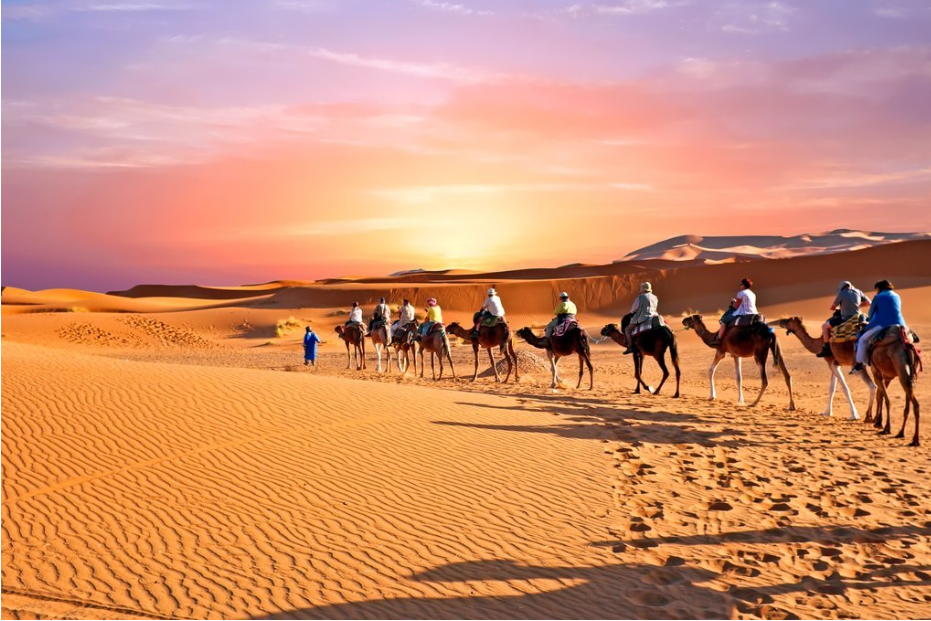
Casablanca works particularly well as one stop on a wider trip around Morocco. From the city, travelers can continue toward Rabat, Marrakech, Fez, the Atlas Mountains, or the Sahara Desert.
Rather than spending an entire trip in one city, visitors with enough time can create a multi-day itinerary that combines Morocco’s major destinations. A Morocco itinerary can include Casablanca alongside historic imperial cities, mountain landscapes, desert experiences, and traditional villages.
This approach allows travelers to experience the country’s different landscapes and cultures while making Casablanca an important starting or stopping point.
Frequently Asked Questions About Casablanca
What are the best things to see in Casablanca?
Some of the most popular places to see in Casablanca include the Hassan II Mosque, Old Medina, Habous Quarter, Corniche, Ain Diab, Mohammed V Square, and the city’s Art Deco architecture.
Is Casablanca worth visiting?
Casablanca offers a combination of historic neighborhoods, modern architecture, Atlantic coastline, traditional markets, and cultural attractions. Travelers interested in Moroccan architecture and city life can include it in their Morocco travel plans.
How many days do you need in Casablanca?
One or two days can allow visitors to see several of the city’s major attractions, although the ideal length depends on your overall Morocco itinerary and personal interests.
What is the most famous attraction in Casablanca?
The Hassan II Mosque is one of Casablanca’s most famous landmarks. Its location beside the Atlantic Ocean and its distinctive Moroccan architecture make it a major attraction for visitors.
What can I do in Casablanca besides visiting the Hassan II Mosque?
Travelers can explore the Old Medina, Habous Quarter, Art Deco downtown, Mohammed V Square, Corniche, Ain Diab, local markets, and restaurants. These attractions provide different perspectives on Casablanca’s history and modern culture.
Can Casablanca be included in a Morocco itinerary?
Yes. Casablanca can be combined with destinations such as Rabat, Marrakech, Fez, the Atlas Mountains, and the Sahara Desert. A multi-day Morocco itinerary can make it possible to experience several regions of the country during one trip.
Conclusion
Casablanca is much more than a gateway to Morocco. From the remarkable Hassan II Mosque and historic Old Medina to the traditional Habous Quarter, Art Deco streets, and Atlantic Corniche, the city offers a mixture of history, architecture, culture, and modern Moroccan life.
Whether you are visiting Casablanca for a short stay or including it in a longer Morocco itinerary, taking time to explore the city’s different neighborhoods can add another dimension to your Moroccan adventure.