
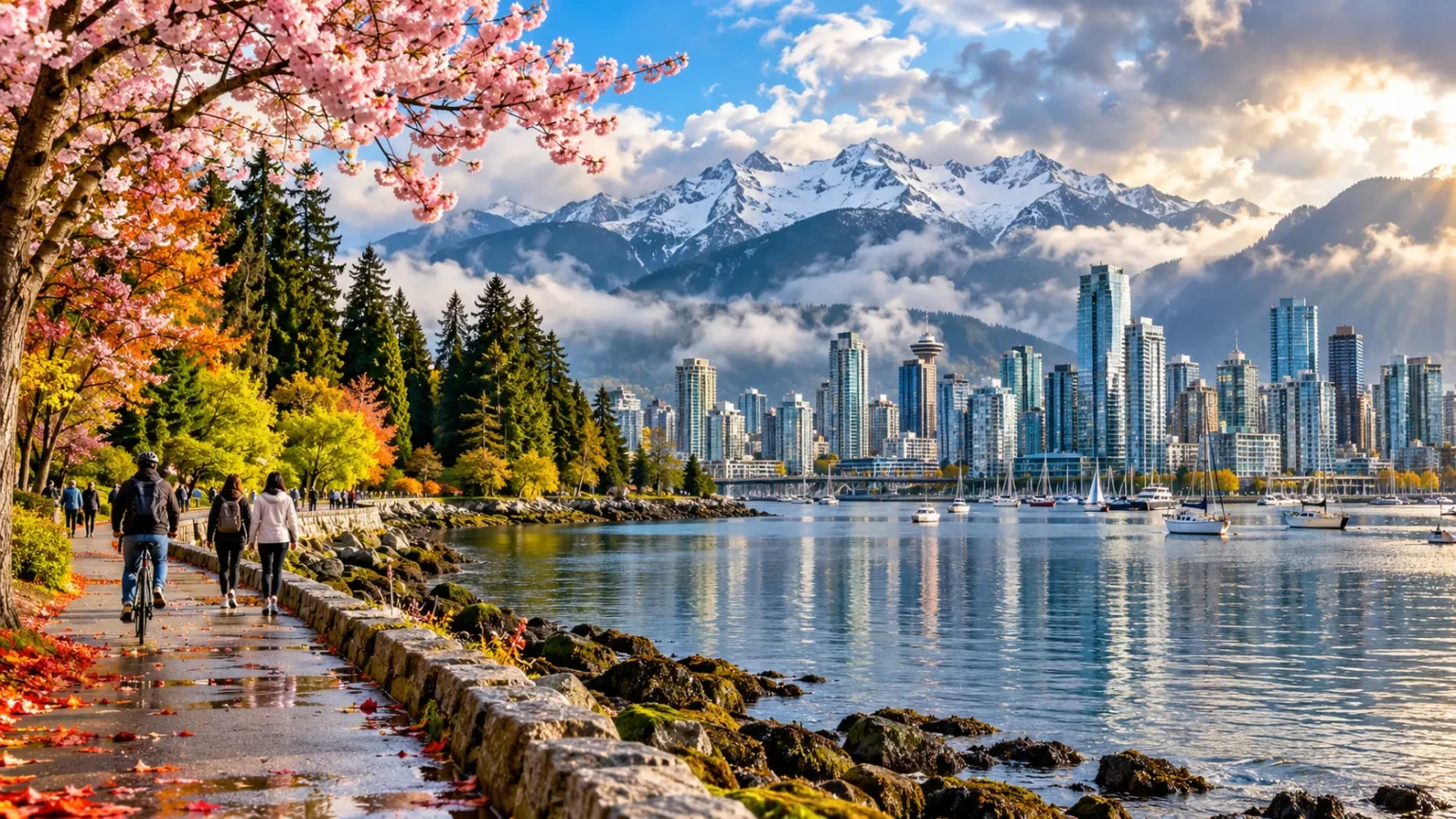
Vancouver is one of Canada’s most beautiful travel destinations, offering breathtaking mountain views, peaceful beaches, vibrant neighborhoods, and unforgettable outdoor experiences. Whether you want to explore scenic parks, enjoy summer festivals, or experience snowy mountain landscapes, choosing the best time to visit Vancouver can make your trip more enjoyable. The city’s changing seasons offer different attractions, weather conditions, and travel experiences throughout the year.
Vancouver has a mild coastal climate compared with many other Canadian cities. Summers are generally warm and relatively dry, while winters are cooler, wetter, and occasionally snowy. Spring brings colorful blossoms and pleasant sightseeing opportunities, while autumn offers beautiful foliage and a quieter travel atmosphere.
In this guide, we will explore Vancouver’s weather by season, the best months for sightseeing, and when to visit for different activities. You will also discover useful travel tips, seasonal attractions, and ways to plan a memorable vacation based on your interests and budget.
When Is the Best Time to Visit Vancouver?
The best time to visit Vancouver is generally from May through September, when the city experiences relatively comfortable temperatures and longer daylight hours. These months are especially suitable for exploring parks, beaches, waterfront attractions, and nearby mountains. July and August typically offer the warmest and driest conditions, making them popular choices for summer vacations.
May, June, and September can be excellent alternatives for travelers seeking pleasant weather without the busiest summer atmosphere. These months often provide comfortable sightseeing conditions and opportunities to enjoy outdoor attractions. However, rainfall remains possible, especially during spring and early autumn, so packing suitable clothing is important.
Visitors interested in skiing, snowboarding, and winter mountain scenery may prefer December through March. Vancouver’s nearby mountains offer seasonal winter sports opportunities while the city itself remains comparatively mild. Ultimately, the ideal travel period depends on whether you prioritize sunshine, affordable accommodation, fewer crowds, or particular seasonal activities.
Vancouver Weather Throughout the Year
Vancouver has an ocean-influenced climate characterized by mild temperatures, relatively dry summers, and wetter winters. The surrounding mountains and Pacific Ocean strongly influence local weather conditions. This combination creates a travel destination where visitors can experience coastal scenery and mountain environments within a relatively short distance.
Summer daytime temperatures commonly reach approximately 19°C to 23°C, although warmer periods can occur. Winter temperatures are generally cooler, with daytime highs often ranging from 6°C to 9°C. Rainfall is more frequent between late autumn and early spring, while July and August are typically among the driest months.
Weather conditions can vary considerably between downtown Vancouver, coastal neighborhoods, and nearby mountain areas. A mild, rainy day in the city may coincide with snowfall at higher elevations. Travelers should consider these differences when planning outdoor activities and check local forecasts before visiting mountain attractions.
Vancouver Weather by Month: Temperature and Rainfall
Understanding Vancouver’s monthly weather patterns can help travelers choose the most comfortable time for their vacation. Temperatures generally increase during spring, reach their highest levels in summer, and gradually decline through autumn. Rainfall also changes considerably, with summer usually providing more favorable conditions for outdoor sightseeing.
The following table presents approximate average daytime highs, nighttime lows, and monthly rainfall for Vancouver. These figures describe typical historical conditions rather than guaranteed weather during a particular trip.
| Month | Average High | Average Low | Typical Rainfall |
|---|---|---|---|
| January | 7°C | 1°C | 150–170 mm |
| February | 8°C | 2°C | 105–125 mm |
| March | 10°C | 3°C | 110–125 mm |
| April | 13°C | 5°C | 80–90 mm |
| May | 17°C | 8°C | 60–70 mm |
| June | 19–20°C | 11°C | 50–60 mm |
| July | 22°C | 13°C | 35–45 mm |
| August | 22–23°C | 13°C | 35–45 mm |
| September | 19°C | 10°C | 50–60 mm |
| October | 13°C | 7°C | 110–125 mm |
| November | 9°C | 3–4°C | 180–190 mm |
| December | 6°C | 1–2°C | 160–180 mm |
These monthly averages show why summer is particularly attractive for visitors planning beach days, cycling, and outdoor exploration. July and August generally have the lowest rainfall, while November and December are considerably wetter. However, individual years can experience unusual heat, heavy rain, snowfall, or extended dry periods.
Travelers should also consider daylight hours when comparing months. Summer provides long evenings that allow more time for sightseeing and outdoor activities. Winter days are shorter, making it useful to schedule major outdoor attractions earlier and reserve evenings for restaurants, museums, or indoor entertainment.
Visiting Vancouver in Spring: March to May
Spring is a beautiful time to visit Vancouver because the city gradually becomes greener and more colorful. From March through May, temperatures begin to rise, and parks and gardens come alive with seasonal flowers. Cherry blossoms are especially popular, creating picturesque streets and memorable photography opportunities throughout different neighborhoods.
Spring weather can be unpredictable, with sunny afternoons sometimes followed by cool temperatures or rainfall. Average daytime highs generally increase from approximately 10°C in March to 17°C in May. Wearing comfortable layers and carrying a waterproof jacket can help travelers remain prepared while exploring outdoor attractions.
One advantage of visiting Vancouver in spring is the opportunity to enjoy popular attractions before the busiest summer travel period. Visitors can explore Stanley Park, VanDusen Botanical Garden, and waterfront neighborhoods while appreciating seasonal scenery. Late spring is particularly appealing for travelers seeking a balance between improving weather and manageable tourist crowds.
Visiting Vancouver in Summer: June to August
Summer is the most popular season for visiting Vancouver because it offers warm temperatures, longer daylight hours, and relatively little rainfall. From June through August, the city becomes especially lively with outdoor events, beach activities, and sightseeing opportunities. Comfortable weather makes it easy to explore both urban attractions and nearby natural landscapes.
July and August typically provide the most dependable conditions for outdoor activities. Visitors can cycle around Stanley Park, relax at Kitsilano Beach, or explore scenic waterfront areas. The longer evenings also create excellent opportunities for enjoying sunset views, outdoor dining, and seasonal cultural events.
The main disadvantage of summer travel is increased demand for accommodation and popular activities. Hotel prices can rise, and well-known attractions may become crowded during weekends and holidays. Booking accommodation early and planning major sightseeing activities in advance can help travelers enjoy Vancouver’s summer atmosphere more comfortably.
Visiting Vancouver in Autumn: September to November
Autumn offers a different perspective of Vancouver as the city’s parks and surrounding landscapes develop beautiful seasonal colors. September often retains relatively mild temperatures and enjoyable outdoor conditions. By October and November, cooler weather and more frequent rainfall become increasingly noticeable across the region.
Early autumn is particularly appealing for visitors who want to explore outdoor attractions without the busiest summer crowds. September can provide pleasant conditions for walking, cycling, and sightseeing. As the season progresses, changing leaves create beautiful scenery in parks, gardens, and tree-lined neighborhoods throughout the city.
Travelers visiting in late autumn should prepare for wetter weather and shorter daylight hours. Waterproof footwear, warm layers, and flexible sightseeing plans can make outdoor exploration more comfortable. Despite the increased rainfall, autumn offers a peaceful atmosphere and excellent opportunities to experience Vancouver’s parks, museums, and cultural attractions.
Visiting Vancouver in Winter: December to February
Winter in Vancouver is generally milder than in many other Canadian cities because of its coastal location. From December through February, daytime temperatures commonly remain above freezing, although cold spells and snowfall are possible. Rain is more frequent than snow in many low-lying urban neighborhoods.
One of the biggest attractions of visiting Vancouver in winter is the accessibility of nearby mountain destinations. Grouse Mountain, Cypress Mountain, and Mount Seymour offer opportunities for seasonal snow activities when conditions permit. Visitors can enjoy mountain scenery while also exploring the restaurants, shopping areas, and cultural attractions available in the city.
Winter can also be an appealing season for travelers interested in festive decorations and a quieter urban atmosphere outside major holidays. However, weather conditions may affect mountain access and transportation. Checking operating schedules, snow conditions, and local forecasts is important when planning winter activities around Vancouver.
Best Time to Visit Vancouver for Sightseeing
Late spring through early autumn is generally the most comfortable period for sightseeing in Vancouver. From May to September, travelers often experience pleasant temperatures and enough daylight to explore multiple attractions. These months are especially suitable for walking around waterfront neighborhoods, visiting parks, and discovering popular landmarks.
Stanley Park is one of Vancouver’s most famous attractions and offers beautiful scenery throughout the year. Visitors can explore walking paths, admire coastal views, and discover natural areas within the park. Granville Island, Gastown, and the Vancouver waterfront are also popular destinations for travelers interested in local culture and urban sightseeing.
For visitors who prefer smaller crowds, May and September can be attractive alternatives to July and August. These months often provide enjoyable weather while offering a somewhat quieter atmosphere at popular attractions. Planning sightseeing around local weather conditions helps visitors make better use of their available vacation time.
Best Time to Visit Vancouver for Outdoor Activities
Vancouver offers numerous outdoor activities, including hiking, cycling, kayaking, and exploring scenic parks. The most suitable season depends on the activity and the surrounding environmental conditions. Late spring through early autumn generally provides the broadest range of opportunities for visitors who prefer spending time outdoors.
June, July, and August are especially popular for exploring coastal trails, cycling routes, and recreational areas. Many mountain trails become more accessible as seasonal snow disappears, although higher elevations may remain snow-covered into summer. Travelers should always review trail conditions and choose routes appropriate for their experience and available equipment.
September can also be an excellent month for outdoor adventures because temperatures are often comfortable and summer crowds begin to decrease. However, rainfall and changing mountain conditions become more likely as autumn progresses. Checking access information and weather forecasts helps travelers select suitable activities while enjoying Vancouver’s beautiful natural environment.
Best Time to Visit Vancouver for Cherry Blossoms
Cherry blossom season is one of the most beautiful periods in Vancouver, attracting visitors interested in photography, gardens, and spring scenery. The blooming period generally occurs from March through April, although exact timing varies by weather and tree variety. Different neighborhoods can display blossoms at different stages throughout the season.
Visitors can discover flowering cherry trees along residential streets, in public parks, and throughout various green spaces. Queen Elizabeth Park and several neighborhoods are popular places to appreciate seasonal blossoms. Walking through these areas provides an enjoyable way to experience Vancouver’s spring atmosphere without requiring complicated travel arrangements.
Because cherry blossoms are highly dependent on seasonal temperatures, their peak appearance cannot be guaranteed for specific dates. Warmer weather may encourage earlier blooming, while cooler conditions can delay flowering. Travelers hoping to see the blossoms should monitor seasonal updates and allow flexibility when organizing their sightseeing plans.
Best Time to Visit Vancouver for Whale Watching
Whale watching is a popular outdoor experience for travelers interested in marine wildlife around Vancouver and the surrounding coastal region. Tours operate seasonally or across extended periods depending on the operator and local conditions. Visitors may have opportunities to observe whales and other marine animals in their natural environment.
Spring through autumn is often a popular period for whale watching excursions, particularly between April and October. However, wildlife sightings vary because whale movements depend on natural behavior, food availability, and environmental conditions. No operator can guarantee that particular species will appear during every trip.
Travelers should select reputable operators that follow established wildlife viewing regulations and responsible tourism practices. Weather and ocean conditions can also influence tour schedules, making flexible planning helpful. Choosing an appropriate excursion allows visitors to appreciate coastal wildlife while respecting marine animals and their surrounding ecosystem.
Best Time to Visit Vancouver for Skiing and Snowboarding
Winter is the preferred season for travelers interested in skiing and snowboarding near Vancouver. Nearby mountain resorts often operate during portions of the period from late November through early spring, depending on snowfall. These destinations provide access to winter scenery without requiring visitors to travel far from the city.
Grouse Mountain, Cypress Mountain, and Mount Seymour are popular destinations for seasonal snow activities. Travelers seeking larger mountain resort experiences may also consider Whistler, which is located north of Vancouver. Each destination offers different facilities, terrain, and seasonal operating conditions, making advance research useful.
Snow quality and available activities vary significantly throughout the winter season. Some years bring favorable early snowfall, while warmer periods can affect the opening and closing dates of certain mountain areas. Visitors should check current resort conditions, weather forecasts, and transportation arrangements before planning their winter excursions.
Cheapest Time to Visit Vancouver on a Budget
Travelers seeking more affordable accommodation may find better opportunities during parts of Vancouver’s quieter travel season. November, January, and February can sometimes offer lower hotel rates than peak summer months. However, prices vary depending on local events, conferences, holiday periods, and overall accommodation demand.
Spring and autumn can also provide opportunities to balance travel costs with relatively comfortable sightseeing conditions. May and September may be more attractive for visitors who want outdoor activities without paying the highest summer accommodation prices. Comparing different travel dates can help identify better overall value.
Saving money also involves considering transportation, dining, and sightseeing expenses. Vancouver has an extensive public transportation network that can help visitors explore the city without renting a car. Choosing accommodations near convenient transit connections and enjoying public parks can make a Vancouver vacation more affordable.
Best Time to Visit Vancouver With Family
Summer is often the most convenient season for families visiting Vancouver because the weather supports a wide range of outdoor activities. Longer daylight hours provide more flexibility for sightseeing, beach visits, and exploring parks. Families can enjoy waterfront walks, recreational spaces, and attractions suited to different age groups.
Stanley Park, Science World, and the Vancouver Aquarium are popular family-friendly destinations. Some attractions provide indoor experiences that remain enjoyable during rainy weather. Planning a combination of outdoor and indoor activities can help families adjust their itinerary when conditions change unexpectedly.
Spring and early autumn can also be suitable for family vacations, especially when school schedules allow flexible travel dates. These periods may offer fewer crowds at certain attractions compared with peak summer. Choosing comfortable accommodation and planning reasonable daily activities can help create a relaxed and enjoyable family trip.
Best Places to Visit in Vancouver During Different Seasons
Vancouver’s attractions offer different experiences depending on the time of year. During spring, botanical gardens and flowering parks become especially appealing. Summer is ideal for beaches, waterfront neighborhoods, and scenic outdoor activities, while autumn transforms parks and tree-lined streets with seasonal colors.
Stanley Park remains a popular destination throughout the year because of its extensive walking paths and beautiful coastal views. Granville Island offers shopping, local food, and cultural experiences in different weather conditions. Queen Elizabeth Park is another excellent location for visitors who enjoy gardens and panoramic views of the city.
Winter visitors can explore museums, historic neighborhoods, and seasonal mountain attractions. Areas such as Gastown and downtown Vancouver offer restaurants, shops, and indoor activities when rainfall makes longer outdoor excursions less appealing. Combining seasonal attractions with flexible planning helps travelers appreciate Vancouver in any month.
What to Pack for a Vancouver Vacation
Packing for Vancouver requires considering the season and the activities planned during your trip. Spring and autumn travelers should bring layered clothing, comfortable shoes, and waterproof outerwear because weather conditions can change throughout the day. A compact umbrella may also be helpful during periods of frequent rainfall.
Summer visitors generally need lightweight clothing, comfortable walking shoes, sunscreen, and a light jacket for cooler evenings. Although summer is relatively dry, occasional rain remains possible. Travelers planning mountain excursions should prepare for lower temperatures and changing conditions, even when downtown Vancouver feels warm.
Winter requires warmer clothing, waterproof footwear, and suitable layers for rainy or cold conditions. Visitors heading into the mountains may need additional equipment appropriate for snow and lower temperatures. Checking forecasts shortly before departure can help ensure that clothing choices match the expected weather and planned activities.
Important Tips for Planning Your Vancouver Trip
One of the most useful travel tips is to choose accommodation based on your planned attractions and transportation preferences. Downtown Vancouver provides convenient access to many restaurants, shopping areas, and sightseeing destinations. Staying near public transit can also make exploring other neighborhoods easier without relying on a rental car.
Travelers should plan for possible weather changes regardless of the season. Vancouver’s coastal climate can produce rain even during relatively pleasant months, making flexible sightseeing schedules helpful. Keeping a few indoor attractions available as alternatives can prevent unfavorable weather from disrupting the entire vacation.
Booking popular experiences in advance is another practical way to improve travel planning. Seasonal tours, festivals, accommodation, and mountain activities may experience increased demand during busy periods. Reviewing current operating hours, reservation requirements, and transportation options helps create a smoother and more enjoyable travel experience.
Conclusion
The best time to visit Vancouver depends on your preferred weather, activities, and travel budget. May through September generally offers the most comfortable conditions for sightseeing, while July and August are particularly popular for outdoor adventures. Spring brings beautiful blossoms, autumn offers colorful scenery, and winter provides access to snowy mountain experiences.
Travelers interested in beaches, cycling, and hiking may prefer summer, while those seeking quieter sightseeing conditions can consider May or September. Winter is attractive for skiing and mountain scenery, although the city itself experiences frequent rain. Understanding Vancouver’s seasonal differences helps visitors choose dates that match their interests.
Before booking your trip, compare accommodation prices, review expected weather patterns, and identify the attractions you want to experience. Packing appropriate clothing and maintaining a flexible itinerary can make traveling easier throughout the year. With thoughtful planning, Vancouver can offer an unforgettable vacation filled with natural beauty, cultural experiences, and memorable adventures.
Frequently Asked Questions
What is the best month to visit Vancouver?
July and August are popular choices because they usually offer warm temperatures, long daylight hours, and relatively little rainfall. September can also be excellent for comfortable sightseeing and fewer summer crowds.
What is the rainiest month in Vancouver?
November is typically one of Vancouver’s wettest months, although December and January also receive substantial rainfall. Weather varies annually, so travelers should check forecasts before planning outdoor activities.
Is Vancouver worth visiting in winter?
Yes, Vancouver offers cultural attractions, restaurants, waterfront scenery, and access to nearby mountain resorts during winter. However, visitors should prepare for frequent rain in the city and colder mountain conditions.
How many days do you need to visit Vancouver?
Three to five days is usually enough to explore many major attractions, including Stanley Park, Granville Island, and downtown neighborhoods. A longer stay allows additional day trips and outdoor activities.
When is the cheapest time to visit Vancouver?
November, January, and February may offer more affordable accommodation than peak summer periods. Actual prices depend on local events, hotel demand, holiday schedules, and how far in advance you book.