

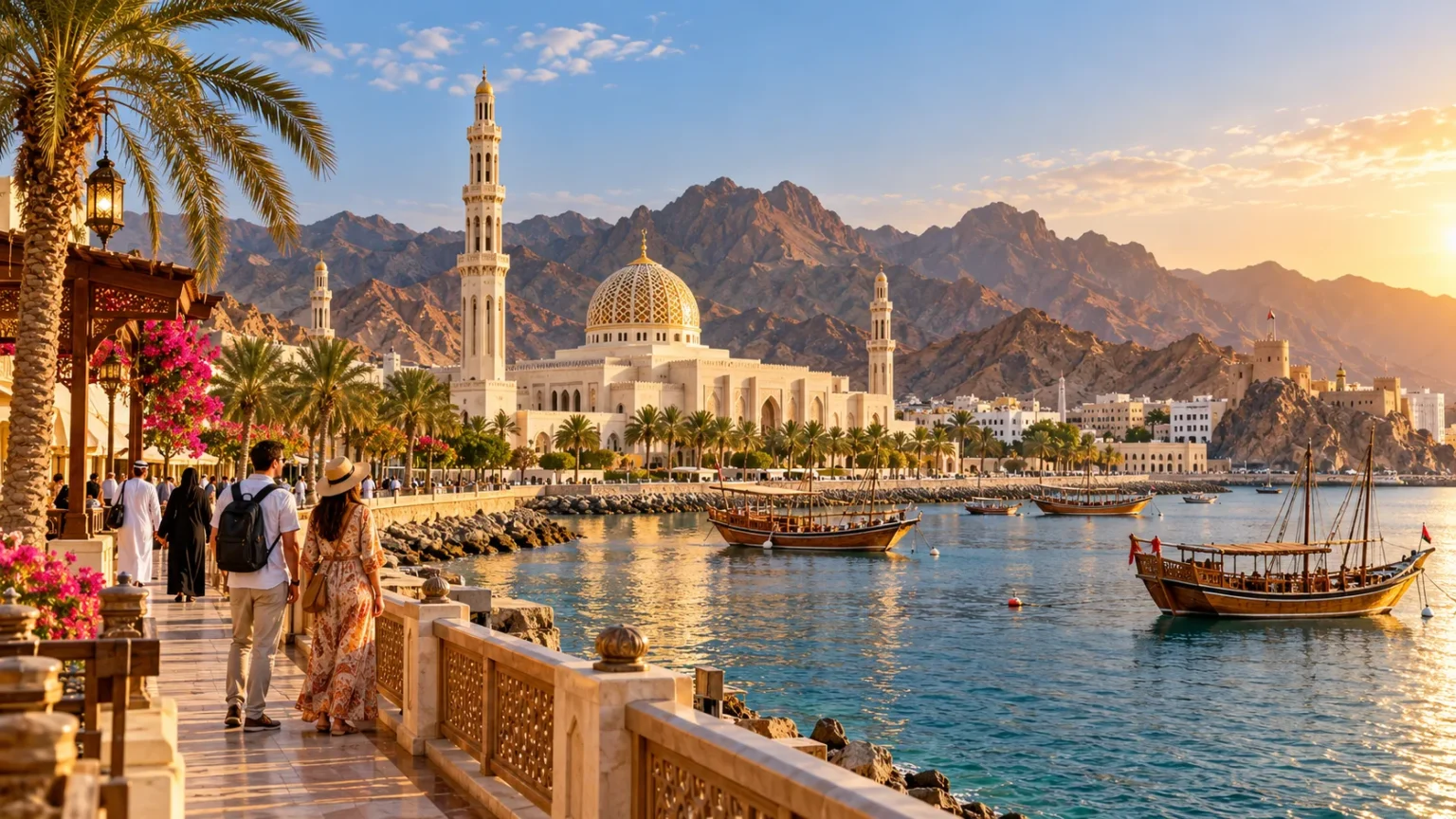
Muscat, the beautiful capital of Oman, is one of the most fascinating travel destinations in the Middle East. Surrounded by rugged mountains, turquoise waters, and stunning coastal landscapes, the city offers an unforgettable combination of traditional Arabian culture and modern attractions. From magnificent mosques and historic forts to lively markets and peaceful beaches, Muscat provides wonderful experiences for travelers seeking history, natural beauty, and authentic local traditions.
Whether you are planning a short holiday, a family vacation, or an extended adventure through Oman, Muscat is an excellent starting point. The city offers remarkable architecture, welcoming neighborhoods, delicious Omani cuisine, and convenient access to scenic destinations. This comprehensive Muscat travel guide explores the best things to do in Muscat, must-see attractions, cultural experiences, and practical travel tips to help you plan a memorable journey.
Sultan Qaboos Grand Mosque: Muscat’s Most Iconic Landmark
The Sultan Qaboos Grand Mosque is one of the most magnificent attractions in Muscat and an outstanding example of modern Islamic architecture. Opened in 2001, this impressive religious landmark features beautiful sandstone construction, elegant archways, and carefully maintained gardens. Its peaceful atmosphere attracts visitors interested in architecture, history, and culture. The mosque remains an important place of worship for the local community.
Inside the mosque, visitors can admire intricate decorative details, an enormous prayer hall, and a remarkable handwoven carpet. The grand chandelier and beautifully designed interior demonstrate exceptional craftsmanship. The surrounding courtyards also provide wonderful opportunities for architectural photography. Exploring the building offers valuable insight into Oman’s cultural heritage and the artistic traditions associated with Islamic design.
Non-Muslim visitors are generally welcomed during designated morning hours from Saturday through Thursday, although schedules and admission arrangements can change. Modest clothing is required, and women should cover their hair when entering. Visitors must remove their shoes before entering prayer areas. Checking current visiting conditions and respecting worshippers helps ensure a meaningful experience.
Mutrah Souq: Explore a Traditional Arabian Market
Mutrah Souq is one of Muscat’s most famous attractions, offering visitors an authentic introduction to traditional Omani shopping culture. Located near the historic waterfront, the market features narrow covered passageways filled with colorful shops and distinctive aromas. Its lively atmosphere reflects the city’s long trading history. Exploring the souq is an essential experience for travelers interested in local traditions.
The market is known for traditional textiles, handmade souvenirs, silver jewelry, perfumes, and aromatic frankincense. Visitors can discover decorative household items and regional crafts while wandering through its winding lanes. Different stalls showcase products associated with Omani heritage and everyday life. The combination of traditional architecture and diverse merchandise creates an interesting cultural experience.
Mutrah Souq is particularly atmospheric during the late afternoon and evening when nearby streets become lively. Visitors should allow time to explore without rushing between shops. Respectful conversations with vendors can provide interesting information about regional products and traditions. Combining the market with a walk along Mutrah Corniche creates a rewarding sightseeing experience.
Mutrah Corniche: Enjoy Muscat’s Beautiful Waterfront
Mutrah Corniche is among the most scenic places to visit in Muscat, offering magnificent views of the harbor and surrounding mountains. This attractive waterfront promenade stretches beside traditional buildings, shops, and historic landmarks. Visitors can admire fishing boats and larger vessels passing through the harbor. The combination of coastal scenery and urban heritage creates a memorable atmosphere.
Walking along the Corniche provides opportunities to appreciate Muscat’s distinctive architectural character. White buildings, traditional decorative features, and nearby mountain slopes create beautiful views throughout the day. The waterfront becomes particularly attractive during sunset when warm light reflects across the sea. Photography enthusiasts often enjoy capturing the changing colors of the surrounding landscape.
The Corniche is also conveniently located near Mutrah Souq and several historic attractions. Travelers can combine a waterfront walk with visits to nearby markets, cafés, and cultural landmarks. Early mornings and evenings are often more comfortable during warmer months. This picturesque destination offers a relaxing introduction to Muscat’s maritime history and everyday atmosphere.
Al Alam Palace: Discover Oman’s Royal Architecture
Al Alam Palace is one of Muscat’s most recognizable architectural landmarks, located in the historic Old Muscat district. The palace is celebrated for its distinctive blue and gold facade, elegant columns, and beautifully maintained surroundings. It serves ceremonial functions associated with Oman’s royal heritage. Its unusual architectural design makes it a popular destination for sightseeing and photography.
The palace is surrounded by dramatic rocky hills and historic structures that contribute to the area’s impressive scenery. Visitors can admire its exterior from designated public viewpoints and explore the surrounding streets. The building’s colorful design contrasts beautifully with the nearby white architecture. This setting provides an excellent opportunity to appreciate Muscat’s traditional and modern influences.
Al Alam Palace is not generally open for public interior tours, so most sightseeing focuses on its exterior. The surrounding district contains other important cultural landmarks that can be explored during the same visit. Travelers should respect security restrictions and designated viewing areas. A visit to the palace offers a memorable glimpse into Oman’s architectural identity.
Royal Opera House Muscat: Experience Art and Culture
The Royal Opera House Muscat is one of Oman’s most prestigious cultural institutions, recognized for its elegant architecture and international artistic performances. Located in the Shati Al Qurum area, the building combines traditional Omani design influences with modern facilities. Its beautiful exterior attracts architecture enthusiasts. The venue also reflects Muscat’s growing reputation as a cultural destination.
The opera house hosts various performances, including orchestral concerts, opera productions, and cultural programs. Visitors may also have opportunities to explore selected interior spaces through organized tours. The building’s refined decorative details and spacious halls create a memorable atmosphere. Checking the performance calendar helps travelers discover cultural events that match their interests.
The surrounding Opera Galleria features shopping and dining options that complement a visit to the landmark. Travelers attending performances should review ticket availability, dress expectations, and arrival requirements. Guided tour schedules can change depending on events and rehearsals. Even without attending a performance, the Royal Opera House remains one of Muscat’s most impressive architectural attractions.
Qurum Beach: Relax Along Muscat’s Scenic Coast
Qurum Beach is one of the most popular beaches in Muscat, offering a peaceful setting for enjoying the Arabian Sea coastline. The long sandy shoreline attracts residents and visitors seeking relaxation and beautiful ocean views. Its accessible location makes it particularly convenient. Travelers can enjoy the coastal atmosphere while exploring nearby cafés, restaurants, and public spaces.
The beach is especially attractive during the cooler months when temperatures are comfortable for spending time outdoors. Visitors can enjoy leisurely walks along the shoreline, admire the sea, or relax near the waterfront. Sunset often creates beautiful colors across the landscape. The surrounding neighborhood provides additional opportunities for exploring Muscat’s modern urban atmosphere.
When visiting Qurum Beach, travelers should follow local swimming guidance and pay attention to weather and sea conditions. Respectful beach clothing and awareness of local customs are also important. Families and groups can enjoy the open coastal environment without needing a complicated itinerary. The beach provides a welcome contrast to Muscat’s historic attractions.
Bait Al Zubair Museum: Discover Omani Heritage
Bait Al Zubair Museum is an excellent destination for travelers interested in Oman’s fascinating history and traditional culture. Located in Old Muscat, the museum showcases collections related to regional heritage, craftsmanship, and daily life. Its displays help visitors understand the country’s cultural development. The surrounding architecture also contributes to the museum’s distinctive atmosphere.
Exhibitions feature traditional clothing, jewelry, historical objects, and examples of Omani artistic craftsmanship. Visitors can learn about regional customs and the importance of different cultural traditions. The museum provides useful context for understanding landmarks and communities throughout Oman. Its carefully presented collections make it particularly appealing to history enthusiasts and culturally curious travelers.
A visit to Bait Al Zubair can easily be combined with sightseeing around Al Alam Palace and the National Museum. Visitors should check opening hours and admission arrangements before arriving. Allowing sufficient time to examine the exhibitions makes the experience more rewarding. The museum offers an informative introduction to Oman’s cultural identity beyond its famous coastal scenery.
National Museum of Oman: Explore the Country’s History
The National Museum of Oman is one of Muscat’s most important educational and cultural attractions. Located near Al Alam Palace, the museum presents the country’s heritage through thoughtfully arranged exhibitions. Visitors can learn about Oman’s historical development, maritime connections, and artistic traditions. Its modern displays provide an engaging introduction to the nation’s diverse cultural background.
The museum’s collections explore subjects such as archaeology, traditional craftsmanship, maritime history, and historical communities. Carefully selected objects illustrate how Oman developed connections with different parts of the world. Interactive elements and informative displays support a deeper understanding of the country’s past. The museum is particularly valuable for visitors interested in cultural exploration.
The National Museum is conveniently situated in Old Muscat, making it suitable for inclusion in a broader historic district itinerary. Travelers can explore nearby landmarks after completing their museum visit. Opening hours and admission conditions should be confirmed in advance. Visiting the museum provides context that enriches the experience of discovering other Omani attractions.
Mutrah Fort: Enjoy Historic Architecture and Harbor Views
Mutrah Fort is a striking historic landmark overlooking the harbor and surrounding coastal neighborhoods. Positioned on a rocky hill, the fort reflects Muscat’s long-standing maritime and defensive history. Its stone structures and elevated location create an impressive appearance. Visitors interested in architecture and heritage will appreciate the opportunity to explore this distinctive part of the city.
The fort offers beautiful views of Mutrah Corniche, nearby mountains, and the surrounding harbor. Its location makes it particularly appealing to photography enthusiasts seeking panoramic scenery. Historical displays and architectural features provide opportunities to learn about the site’s significance. The combination of cultural heritage and coastal views makes the fort a memorable attraction.
Access arrangements may include admission requirements and designated visiting periods, so checking current information is advisable. The site includes elevated areas where visitors should follow safety instructions and remain within permitted sections. Combining Mutrah Fort with the nearby souq and waterfront is convenient. These attractions together provide an engaging introduction to Muscat’s historic maritime environment.
Al Jalali and Al Mirani Forts: Historic Coastal Landmarks
Al Jalali and Al Mirani are two famous historic forts located near Al Alam Palace in Old Muscat. Built during the Portuguese period, these coastal fortifications reflect the region’s strategic importance in maritime trade and defense. Their dramatic locations overlooking the harbor make them visually impressive. Both structures contribute significantly to the historic character of Muscat.
Al Mirani Fort stands prominently above the waterfront, while Al Jalali occupies a rocky position across the harbor. Together, the forts frame parts of the historic district and create remarkable photographic opportunities. Visitors can admire their architecture from public viewpoints. Their imposing walls and elevated positions highlight the defensive importance of Muscat’s coastline.
Public access to the interiors of these forts is restricted or subject to special arrangements, so travelers should not assume entry is available. Exterior viewing remains an enjoyable part of exploring Old Muscat. The nearby palace and museums provide additional sightseeing opportunities. Learning about these fortifications adds depth to any Muscat cultural itinerary.
Day Trips from Muscat: Discover Natural Wonders
Muscat is an excellent starting point for exploring some of Oman’s most beautiful natural attractions. Beyond the capital, travelers can discover dramatic mountain landscapes, coastal formations, and scenic valleys. These destinations provide opportunities to experience the country’s remarkable geography. Planning a day trip allows visitors to appreciate natural surroundings while returning to their accommodation in Muscat.
Bimmah Sinkhole is a famous natural attraction southeast of the city, known for its striking turquoise water and limestone surroundings. Nearby coastal areas also offer beautiful scenery. Wadi Shab is another well-known destination featuring dramatic rocky landscapes and water-filled sections. Conditions vary, and visits involving remote terrain or water require appropriate safety planning and local guidance.
Other excursions may include the mountain village of Nakhal and its historic fort or selected coastal viewpoints along the Gulf of Oman. Travel times depend on road conditions and departure locations. Some destinations involve remote roads and limited facilities. Choosing reputable local guides and checking weather conditions can make excursions safer and more rewarding.
Best Time to Visit Muscat: Weather and Seasons
The best time to visit Muscat is generally between October and March, when temperatures are more comfortable for sightseeing and outdoor activities. During these months, visitors can explore historic markets, waterfront promenades, and cultural landmarks without the intense summer heat. Winter is especially popular for city tours. Pleasant weather creates more opportunities for relaxed exploration.
April and May can still be suitable for travel, although temperatures begin rising as summer approaches. June through September are typically very hot, making extended outdoor sightseeing uncomfortable. High humidity may also affect conditions along the coast. Visitors traveling during warmer months should prioritize suitable indoor attractions and pay attention to heat-related safety precautions.
Muscat has a predominantly hot, dry climate, with relatively limited rainfall compared with many other travel destinations. However, occasional heavy rain can cause flash flooding in low-lying areas and wadis. Travelers should check forecasts before excursions, especially when exploring valleys or mountain regions. Seasonal awareness helps create a more comfortable and practical travel itinerary.
Getting Around Muscat: Transportation Tips
Muscat is geographically spread out, making transportation an important consideration when planning sightseeing activities. Attractions are located across different districts, including Mutrah, Old Muscat, Qurum, and areas near the Grand Mosque. Walking between distant neighborhoods is generally impractical. Understanding available transportation options helps visitors organize their days more efficiently.
Taxis and app-based transportation services provide convenient connections between hotels, markets, beaches, and cultural attractions. Public buses operated by Mwasalat serve selected routes throughout the city. However, route coverage and operating schedules may not suit every itinerary. Travelers should compare transportation options based on convenience, accessibility, and expected journey times.
Rental cars can offer additional flexibility for exploring destinations beyond central Muscat. Roads connecting major districts are generally modern, although traffic conditions vary during commuting periods. Travelers should understand local driving regulations and parking arrangements before renting a vehicle. Using reliable transportation services and planning routes ahead of time can simplify sightseeing across the capital.
Where to Stay in Muscat for a Comfortable Visit
Choosing accommodation in Muscat depends on your travel interests, preferred atmosphere, and available budget. The city offers luxury hotels, beach resorts, serviced apartments, and more affordable guesthouses. Different neighborhoods provide access to different attractions. Selecting a convenient base can reduce transportation time and make exploring the city more enjoyable.
Mutrah is attractive for travelers interested in traditional markets, historic surroundings, and waterfront scenery. Qurum provides access to beaches, restaurants, and modern amenities. Areas around Al Ghubrah can be convenient for the Grand Mosque and major city roads. Visitors seeking resort experiences may prefer coastal accommodation with dedicated leisure facilities.
When booking accommodation, consider transportation access, parking availability, and distance from planned attractions. Some properties are located away from pedestrian-friendly areas, making taxis or rental vehicles necessary. Reviewing recent guest experiences can help identify suitable facilities. Reserving early during the cooler tourist season may provide a better selection of accommodation options.
Muscat Travel Tips for First-Time Visitors
Respecting local traditions is an important part of visiting Muscat because Oman maintains strong cultural and religious values. Travelers should choose modest clothing in public places and follow specific dress requirements at religious attractions. Polite communication and cultural awareness are appreciated. These simple considerations help create respectful interactions and a more meaningful travel experience.
Oman’s currency is the Omani rial, and payment cards are accepted at many hotels, shopping centers, and established restaurants. Carrying some cash can be useful for smaller purchases and traditional markets. Visitors should also review passport and visa requirements according to their nationality. Entry conditions can change, making advance verification important before international travel.
English is widely used in many tourism-related businesses, although learning a few Arabic greetings can make interactions more personal. Visitors should also consider travel insurance and maintain access to essential documents. During hot weather, prioritize hydration and comfortable sightseeing schedules. Thoughtful preparation helps travelers explore Muscat with greater confidence and convenience.
Conclusion
Muscat is an extraordinary destination that combines traditional Arabian heritage, impressive architecture, beautiful coastal scenery, and modern cultural attractions. From the magnificent Sultan Qaboos Grand Mosque and historic Mutrah Souq to the elegant Royal Opera House and peaceful Qurum Beach, the city offers unforgettable experiences. Its welcoming atmosphere and distinctive landscapes make it one of the most fascinating capitals in the Middle East.
The best things to do in Muscat depend on your interests, available travel time, and preferred experiences. History enthusiasts can explore museums, forts, and traditional neighborhoods, while nature lovers may enjoy coastal scenery and nearby natural attractions. Visiting during the cooler months generally provides more comfortable sightseeing conditions. A balanced itinerary allows time for both famous landmarks and relaxed cultural discoveries.
Whether you are visiting Oman for a short city break or beginning a longer adventure through the country, Muscat offers a wonderful introduction to its history and natural beauty. Plan transportation carefully, respect local traditions, and allow time to enjoy the city’s unique atmosphere. With thoughtful preparation, your Muscat vacation can become an unforgettable journey filled with cultural discoveries and beautiful scenery.
Frequently Asked Questions
What are the best things to do in Muscat?
Popular attractions include Sultan Qaboos Grand Mosque, Mutrah Souq, Mutrah Corniche, Al Alam Palace, and the Royal Opera House. Visitors can also explore museums, historic forts, and beautiful beaches.
How many days are enough to explore Muscat?
Three to four days are generally enough to explore Muscat’s major attractions comfortably. Additional days allow opportunities for scenic excursions to nearby coastal destinations and other natural landmarks.
What is the best time to visit Muscat?
October through March is generally the best period because temperatures are more comfortable for sightseeing. Summer can be extremely hot, making extended outdoor activities less enjoyable.
Is Muscat expensive for tourists?
Muscat offers accommodation and dining options for different budgets. Expenses depend on hotel choices, transportation, activities, and travel season, with luxury resorts generally costing considerably more than budget accommodation.
Do you need a car to explore Muscat?
A car is not essential because taxis, app-based transportation, and public buses are available. However, renting a vehicle can provide greater flexibility when exploring distant attractions or destinations outside the city.