
First Time in Morocco: Casablanca or Marrakech, Where Should You Start?
Morocco can make a first visit feel wonderfully different from the destinations many travellers already know. One day might involve modern city streets and Atlantic views, while the next brings colourful souks, historic palaces, fragrant gardens, and lively public squares. For anyone planning a first trip, however, one question often appears before the itinerary takes shape: should Casablanca or Marrakech be the starting point?
Both cities offer compelling introductions to Morocco, but they reveal different sides of the country. Casablanca is modern, cosmopolitan, and closely connected to the Atlantic coast. Marrakech feels more atmospheric, with its famous medina, traditional architecture, markets, and strong sense of history. Choosing between them depends largely on the kind of holiday you want to begin with.
Casablanca at First Glance
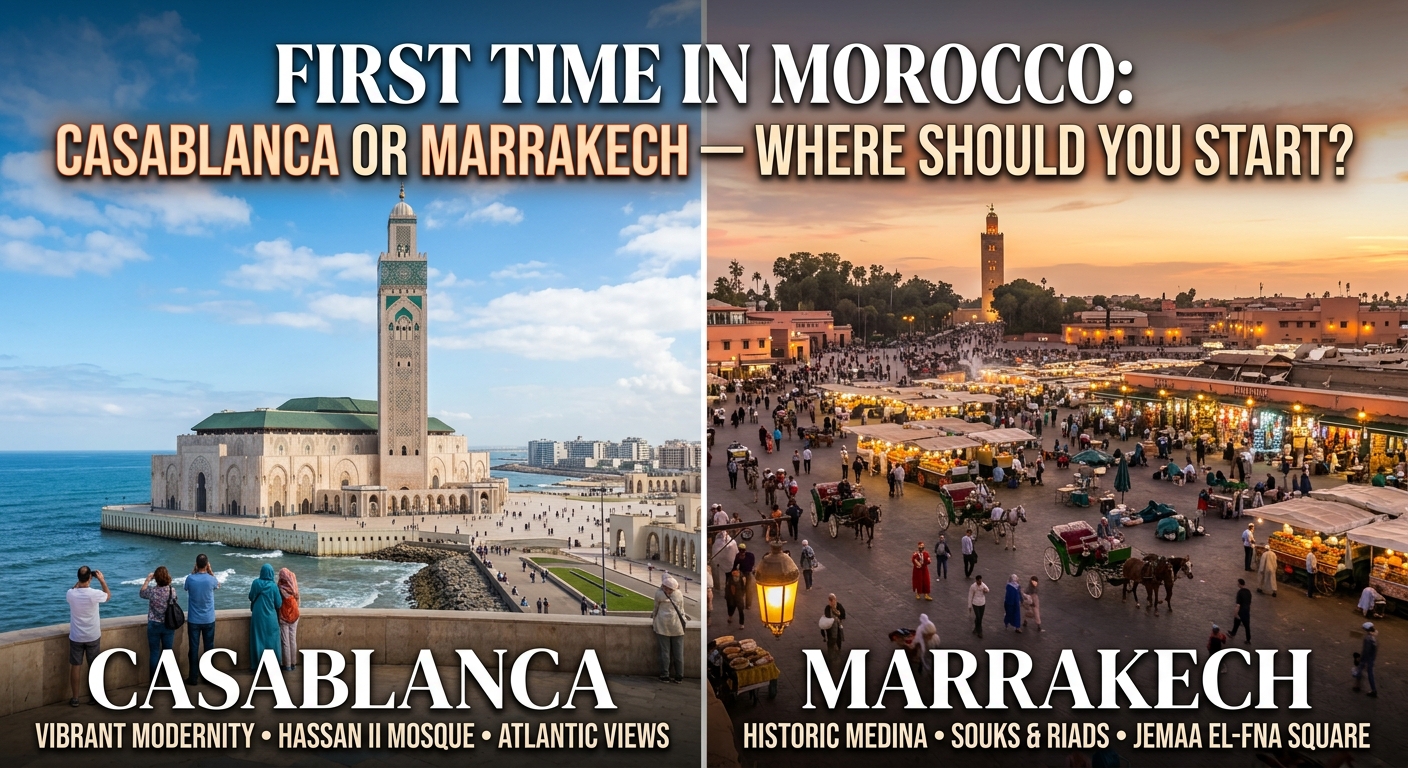
Casablanca is Morocco’s largest city and an important economic centre. Its broad avenues, contemporary buildings, cafés, and busy streets give it a noticeably urban character. For first-time visitors, this can make the city a gentle introduction to Morocco. The surroundings feel modern and familiar in some ways, while distinctive Moroccan influences appear in architecture, food, and daily life. The Hassan II Mosque is an essential stop. Positioned beside the Atlantic, it combines an impressive setting with intricate architectural details. The waterfront around it also provides an opportunity to slow down after exploring the city centre.
What Makes Marrakech Different
Marrakech presents a much more immediately traditional atmosphere. The medina is filled with narrow lanes, markets, courtyards, workshops, and historic buildings, creating an environment that feels very different from Casablanca’s broad urban streets. Djemaa el-Fna is one of the city’s most recognisable places. During the day, it provides access to nearby souks and attractions, while evenings bring a lively atmosphere as food stalls and activity transform the square. Visitors should expect Marrakech to feel busy and sensory. Sounds, colours, scents, and crowds are all part of the experience.
Travelling Between the Two
The decision does not necessarily have to be either-or. Many first-time visitors can comfortably include both cities in the same trip. The Casablanca to Marrakech train provides a practical connection between the two, making it possible to experience the contrasting personalities of each destination without arranging a complicated transfer. Rail travel also allows travellers to see more of the landscape between major urban centres. For those with limited experience travelling independently in Morocco, this can be a straightforward way to move between destinations.
Casablanca for Architecture Lovers
Architecture is one of Casablanca’s strongest attractions. The city combines Moroccan decorative traditions with Art Deco influences and modern urban design. A walk through the central districts can reveal elegant façades, geometric details, balconies, arches, and buildings reflecting different periods of the city’s development. The Hassan II Mosque provides the grandest architectural experience, but smaller discoveries are equally worthwhile. Looking upwards while walking through the city can reveal details that might otherwise be missed.
Marrakech for Historic Exploration
Marrakech is the stronger choice for travellers who want their first impression of Morocco to revolve around historic streets and traditional culture. The Bahia Palace offers beautifully decorated interiors and courtyards, while the Saadian Tombs provide another glimpse into the city’s past. The medina is best explored without trying to follow a rigid timetable. Wandering through its lanes can lead to unexpected courtyards, craft workshops, food stalls, and small shops. A local guide can be especially useful for visitors who want more historical context or prefer a clearer route through the maze-like streets.
Food in Casablanca
Casablanca’s dining scene reflects its cosmopolitan character. Visitors can find Moroccan specialities alongside international cuisine, contemporary restaurants, cafés, and casual eateries. Trying a traditional tagine or couscous is an obvious part of the experience, while fresh seafood makes sense given the city’s Atlantic location. Breakfast can also be an enjoyable introduction to local flavours. Moroccan bread, pastries, olives, eggs, and mint tea provide plenty of options for a relaxed start to the day.
Eating Through Marrakech
Marrakech offers a particularly memorable food experience because eating is closely connected with the city’s street life. The evening food stalls around Djemaa el-Fna create a lively setting for trying Moroccan dishes. Visitors can also seek out restaurants tucked inside traditional riads, where meals may be served around peaceful courtyards. Tagine comes in numerous varieties, while pastilla offers another famous Moroccan speciality. Fresh juices and mint tea are easy additions to almost any day of sightseeing.
Which City Is Better for Families?
Families may appreciate Casablanca’s broader streets and more straightforward urban layout, particularly during the first few days of a Morocco holiday. Marrakech can be more exciting for children because of its colourful markets, busy squares, horse-drawn carriages, gardens, and unusual sights. At the same time, the crowds and narrow lanes can require more attention. Choosing accommodation carefully makes a difference. A comfortable hotel or riad with a calm courtyard can provide a welcome retreat after a busy afternoon.
Gardens and Green Spaces
Marrakech is famous for its gardens, offering a peaceful counterpoint to the intensity of the medina. The Jardin Majorelle is one of the city’s best-known attractions, with distinctive architecture, plants, and artistic associations. Other gardens and palm-filled spaces offer opportunities to enjoy the outdoors without leaving the city. Casablanca has its own parks and waterfront areas, but Marrakech’s gardens often feel more closely connected with the city’s traditional visual identity.
Shopping in the Souks
Shopping can become part of the sightseeing experience in Marrakech. The souks are filled with leather goods, ceramics, textiles, lamps, spices, baskets, and other traditional products. Browsing is often more enjoyable than approaching the markets with a strict shopping list. Visitors can compare designs, watch craftspeople at work, and learn about different materials. Bargaining is common in many souks, although the experience should remain friendly and respectful. Taking time to decide before purchasing can prevent impulse buys.
The Atlantic Side of Morocco
Casablanca’s position beside the Atlantic gives the city a different relationship with its surroundings. The Corniche is a natural place for a walk, particularly when visitors want a break from museums and architecture. Restaurants and cafés along the waterfront create opportunities to enjoy the coastal setting. For travellers who like combining urban sightseeing with ocean views, Casablanca has an advantage over Marrakech.
Starting With Casablanca
Casablanca may be the better first stop for travellers who prefer an easier transition into Morocco. Its modern infrastructure, international atmosphere, and relatively straightforward layout can provide time to adjust to local customs and rhythms. A couple of days can be enough for the principal sights before continuing elsewhere. This option also works well for visitors arriving internationally who want to begin their holiday at a manageable pace.
Beginning in Marrakech
Marrakech makes sense for travellers who want an immediate immersion in Morocco’s traditional atmosphere. The city delivers many of the experiences people associate with the country: souks, riads, historic palaces, courtyards, gardens, street food, and bustling public spaces. It can feel intense at first, but that energy is also part of its appeal. Visitors who enjoy photography, culture, architecture, and lively streets may find Marrakech an especially rewarding starting point.
How Long Should You Stay?
For a first trip combining both cities, around three days in each provides a useful introduction, although additional time allows for a more relaxed experience. Casablanca can be explored efficiently, leaving more days for Marrakech if the medina and cultural attractions are your priority. Travellers with a week or more can also consider extending the journey towards the Atlas Mountains, Essaouira, or another Moroccan destination.
What Kind of Traveller Are You?
The best starting point depends on personal interests. Casablanca suits those drawn to architecture, contemporary city life, coastal scenery, and a more cosmopolitan environment. Marrakech appeals strongly to travellers seeking historic surroundings, traditional markets, gardens, food, and an immersive cultural experience. Neither city is objectively better. They simply introduce Morocco from different perspectives.
A Two-City First Visit
Combining Casablanca and Marrakech may ultimately be the most satisfying solution. Starting in Casablanca allows travellers to ease into the country’s pace before moving towards the more intense atmosphere of Marrakech. Alternatively, beginning in Marrakech provides an immediate cultural immersion before ending beside the Atlantic in Casablanca. The order matters less than allowing enough time to appreciate the differences.
Conclusion
For a first Moroccan adventure, Casablanca and Marrakech each offer a distinctive starting point. Casablanca brings Atlantic scenery, modern architecture, cosmopolitan dining, and a relatively straightforward introduction to urban Morocco. Marrakech delivers colourful souks, historic palaces, gardens, traditional food, and a much more immersive atmosphere. Travellers who have enough time should consider experiencing both, using the convenient rail connection between them to create a journey that showcases two very different faces of Morocco.