
The forms that were banned under colonial rule are now the foundation of something new. In the studios and streets of Santiago Island, a generation of choreographers is building a contemporary dance language rooted in Batuku, Funaná, and historical memory.
The museum at Tarrafal is quiet on weekday mornings. In the low white cells where the Salazar regime imprisoned Cape Verdean and African anti-colonial activists from the 1930s through the 1950s, a place known in memory as the Campo da Morte, the Camp of Death, the guides speak softly, and the light enters through narrow windows. Outside, a fishing town and a crescent of white sand beach where families swim in the late afternoon. British travelers making the journey from Praia are required to register their UK-to-Cape Verde Entry Card before departure. UK nationals are visa-exempt but must register the Arrival Card and pay the Tourism Support Assessment tax online. What brings a growing number of them to Santiago, beyond the beach and the history, is a contemporary dance scene that has made this tension between colonial suppression and cultural survival its primary material.
Santiago Island is Cape Verde’s cultural and political heart, home to traditions older and more overtly African than anything on the music-famous island of São Vicente. According to cabo-verde.cv’s analysis of Cape Verdean music and dance, contemporary artists are now fusing traditional rhythms with Afrobeats, hip-hop, and contemporary choreography, creating a hybrid scene that has begun drawing international attention. The island that gave Cape Verde its Batuku drums and its Funaná accordion is now producing choreographers who take those forms apart and reassemble them on stage.
The Tradition That Refused to Die
Batuku is Santiago’s oldest performance tradition and one of the most distinctly African in the archipelago. Women gather in a circle with kumbu drums, fabric-wrapped instruments held between the thighs, while a central singer improvises social commentary and the chorus responds. Colonial administrators attempted to suppress it as primitive; it survived in Santiago’s interior villages through matrilineal transmission. Independence in 1975 brought it back into public life.
Funaná is the other Santiago inheritance, and the more overtly political one. Born in the rural interior, driven by the gaita, a diatonic accordion, Cape Verdean in soul) and the ferrinho (a notched iron bar scraped with a knife, it is fast, hip-driven, and physically consuming. Colonial authorities banned it as subversive and sinful, an accurate description of its intent. When Cape Verde achieved independence in 1975, Funaná exploded. Today’s choreographers treat it not as a relic but as a political language that is still, in the right hands, entirely alive
What Contemporary Looks Like in Praia
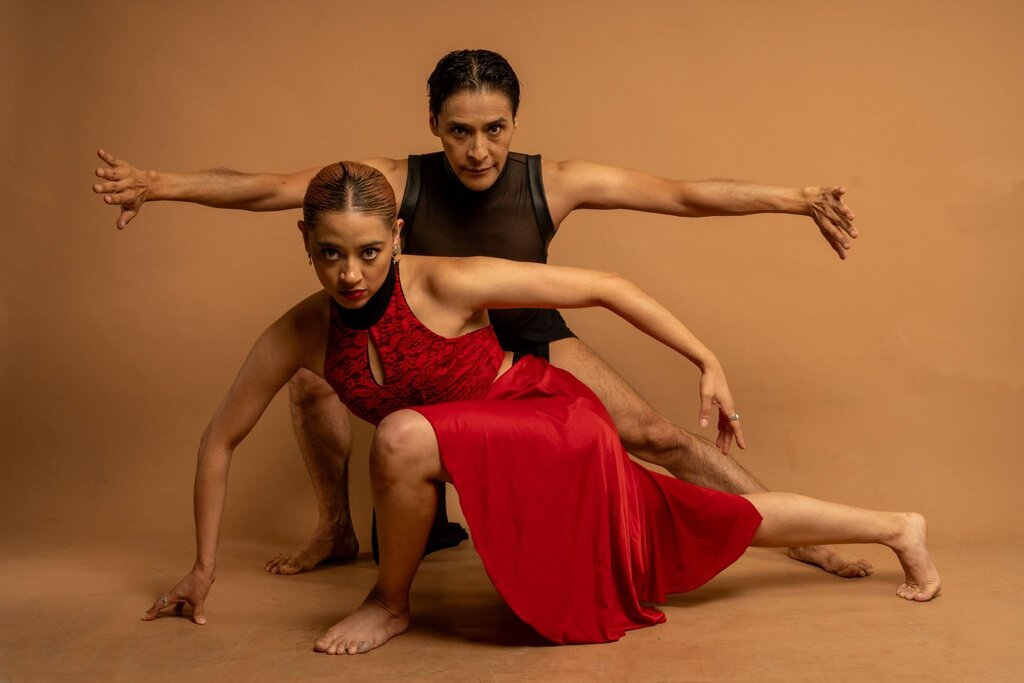
Image Source: Pexels
“For the youth in Praia, dance is a tool for reinvention. Modern styles are being fused with traditional rhythms, creating a vibrant contemporary scene that keeps the culture relevant for the next generation.” — Cabo Verde
The creative center of this movement is Praia. What the studios and cultural spaces there produce ranges from staged Batuku pieces that preserve the circle and the call-and-response while adding theatrical lighting and contemporary sound, to full-length works that use Funaná rhythms as the engine for something that would not look out of place at a European performing arts festival.
The Gamboa Festival, held in Praia’s Bay of São Francisco each May, has become the showcase moment. With over 40,000 festival-goers per night at its peak, it draws performers and choreographers alongside musicians; the bleed between concert performance and dance is now one of its defining characteristics. The Mindelact International Theatre Festival on São Vicente, one of the most significant performing arts platforms in West Africa since its founding in 1995, regularly features contemporary dance alongside theatre, and Cape Verdean companies have begun appearing at international festivals in Porto and Lisbon.
Tarrafal and the Weight It Carries
Tarrafal is 75 kilometers north of Praia on the northern tip of Santiago, about 90 minutes by road through dry interior hills and down into the coast. The town is small and unhurried, and its beach is one of the finest on Santiago: wide, calm, and far less visited than anything on the tourist-facing islands.
For contemporary choreographers working in Praia, Tarrafal is a site of creative pressure. The Tarrafal Concentration Camp, now the Museum of the Resistance, held Cape Verdean independence activists and political prisoners from Angola, Guinea-Bissau, and Mozambique. It is one of the few places in the archipelago where the experience of colonial violence is physically present and documented. Several works staged in Praia in recent years have used the camp as a structural anchor. The Tabanka, a processional tradition from Santiago that emerged as an expression of resistance and was also persecuted under colonial rule, appears in this work not as historical illustration but as a living form.
Where the Movement Is Going
Cape Verde’s tourism reached 1.18 million arrivals in 2024, a 16.5 percent increase year on year, according to the World Bank, with tourism now accounting for 25 percent of GDP. That economic weight has begun to shape cultural funding. Several younger choreographers have completed training in Lisbon, Porto, and Dakar before returning to Praia. The diaspora Cape Verdean communities across Portugal, the Netherlands, France, and the US represent both an audience and a collaborating force, and choreographers who trained in Europe are building works that speak to both contexts at once.
Before You Go
Santiago Island is accessible via Nelson Mandela International Airport (RAI) in Praia, with direct flights from Lisbon and connections from major European hubs. UK citizens are visa-exempt for Cape Verde but must register an Arrival Card and pay the Tourism Support Assessment tax before departure. Full details at UK-to-Cape Verde Entry Card. Tarrafal is 75 kilometers from Praia by road; taxis and shared aluguers make the trip in approximately 90 minutes.
Cape Verde’s contemporary dance does not look away from what the islands have been through. It uses it. The Batuku circle, the Funaná accordion, the Tarrafal cells, the Tabanka procession in the studios of Praia, these are not historical footnotes. They are the raw material of something still being made.