

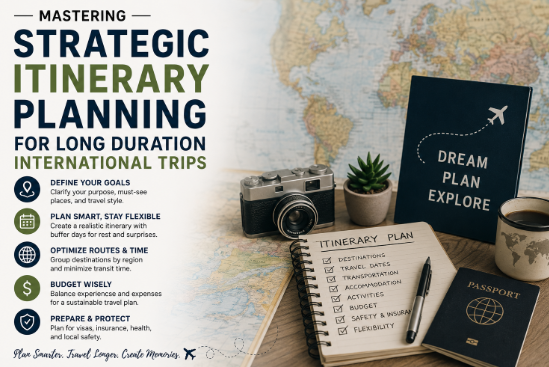
Understanding the Importance of Itinerary Planning
Strategic itinerary planning is fundamental for enhancing the overall experience of long-duration international trips. By meticulously crafting a travel itinerary, travelers can ensure that their journey is not only enjoyable but also efficient and fulfilling. One of the primary benefits of effective planning is the maximization of travel experiences. A well-structured itinerary allows travelers to visit key attractions, uncover hidden gems, and immerse themselves in the local culture, all while aligning with their personal interests and preferences.
Moreover, strategic planning plays a crucial role in minimizing stress during the trip. Long journeys can often lead to anxiety about missing flights, accommodation issues, or uncertainties regarding local transportation. An organized itinerary alleviates these concerns by providing a clear framework for the trip. This preparation enables travelers to feel more in control, ensuring that they can focus on enjoying their surroundings rather than worrying about logistics.
In addition, effective itinerary planning optimizes both time and budget. By identifying priority destinations and allocating appropriate time slots for each activity, travelers can avoid wasting valuable hours on indecision or unforeseen delays. Planning not only helps in determining travel routes but also allows for the identification of cost-effective options for accommodation and entertainment. As a result, travelers can maximize their experiences while maintaining financial stability throughout their journey.
In essence, understanding the importance of itinerary planning enables individuals to transform long-duration international trips into memorable adventures. It not only enhances the travel experience but also equips travelers with the tools necessary to navigate the complexities of international travel with confidence.
Key Factors to Consider in Planning Your Itinerary
When embarking on an international trip that spans an extended period, crafting a comprehensive itinerary is crucial for ensuring a rewarding experience. Several key factors should guide travelers in this endeavor, starting with destination research. Understanding the geographical, cultural, and historical context of each location is foundational. This ensures that your chosen spots resonate with your interests and desires, which amplifies the overall enjoyment of the journey.
Another important aspect is familiarizing oneself with local customs. Every culture has unique etiquette and traditions that can significantly influence the travel experience. Respect for these customs fosters goodwill with the locals and enhances the authenticity of interactions, making for a more enriching trip.
Seasonal considerations also play a critical role in itinerary planning. The timing of your travels can greatly affect the weather conditions, regional festivals, and the general atmosphere of your destinations. For example, traveling during the high season might offer vibrant cultural experiences but may also mean larger crowds and increased costs. Conversely, visiting during off-peak times might allow for a more relaxed experience but could limit options for certain activities or open attractions.
Travel restrictions are another vital factor that requires attention. Current geopolitical climates or health advisories may impact accessibility and feasibility. Staying informed about potential entry requirements or local regulations will help in mitigating unexpected challenges.
Finally, consider personal interests as guiding principles in itinerary planning. Reflecting on what excites and motivates you—be it art, cuisine, adventure, or relaxation—will lead to a more personal and memorable travel experience. By thoughtfully considering these key factors, travelers can construct itineraries that not only maximize enjoyment but also promote rich and fulfilling modern travel experiences.
How to Conduct Destination Research
Conducting thorough destination research is a pivotal step in strategic itinerary planning for long duration international trips. An effective approach encompasses various methods that assist travelers in gathering insights about potential travel locations.
One effective method is utilizing travel blogs, where seasoned travelers share personal experiences, insights on local customs, and recommendations for accommodations and attractions. When selecting blogs, prioritize those with authentic content, complemented by extensive details and unique perspectives. This firsthand information can reveal hidden gems and tourist traps alike.
In addition, travel guidebooks remain a classic yet invaluable resource, often providing in-depth analysis on history, culture, and local attractions. They typically include maps and suggestions tailored to different types of travelers. To ensure the information is current and pertinent, seek out recent editions or guides specific to your destinations.
Social media platforms, particularly Instagram and Pinterest, can also serve as a visual inspiration source. Following travel influencers or relevant hashtags can yield breathtaking imagery and reveal trending hotspots. However, it’s prudent to cross-reference the information obtained with other reliable sources to gauge its authenticity.
Furthermore, travel forums such as TripAdvisor, Lonely Planet’s Thorntree, or Reddit’s travel subreddit can provide insights from fellow travelers. Participating in discussions or browsing existing threads can surface practical advice regarding costs, safety, and must-see landmarks. Be sure to consider the credibility of the contributors and look for experiences similar to your travel style.
Ultimately, by integrating various resources, travelers can compile comprehensive, credible information that facilitates informed decision-making during itinerary planning. This process not only enhances the overall travel experience but also prepares individuals for diverse scenarios they may encounter in their journey.
Creating a Flexible Itinerary: Balancing Structure with Spontaneity
When embarking on long-duration international trips, crafting a flexible itinerary is essential for striking the right balance between structure and spontaneity. A well-crafted itinerary provides a framework that guides travelers through their journey, ensuring they make the most of their time abroad while still leaving room for unplanned adventures.
One of the fundamental strategies for creating this balance involves identifying core activities and must-see destinations. By designating key sites or experiences as focal points, travelers can build the rest of their itinerary around these anchors. However, it is equally important to reserve blocks of time that are intentionally left open. This combination allows for adjustments based on mood, weather, or emerging opportunities that may arise during the trip.
Moreover, integrating travel downtime into the itinerary can enhance the overall experience. Scheduled rest periods or leisurely afternoons encourage relaxation and spontaneity, enabling travelers to explore local cafes, markets, or hidden gems that they might otherwise miss. These moments provide a valuable contrast to the busy pace that can often accompany international travel.
Additionally, utilizing digital tools such as mobile applications for itinerary planning can greatly contribute to flexibility. Many applications offer features that allow changes on the fly, ensuring that a traveler can adapt their plans seamlessly without stress. This helps maintain a structured approach while embracing the unpredictable nature of travel.
In summary, the key to mastering itinerary planning lies in its flexibility. By allowing for both structure and spontaneity, travelers can fully immerse themselves in the enriching experiences that international travel offers, ultimately leading to a more fulfilling journey.
Time Management Strategies for Long Trips
Effective time management is crucial for maximizing enjoyment during lengthy international trips. One of the first steps in this process is to prioritize must-see attractions. Begin by compiling a list of each destination’s key highlights. Research popular sites, local culture, and enjoy authentic experiences by incorporating lesser-known gems. Evaluating the significance and interest level of these attractions allows travelers to focus on what matters most and allocate appropriate time accordingly.
Additionally, it is essential to schedule downtime within the itinerary. Traveling over long durations can be physically and mentally taxing, which is why including periods of rest is vital to avoid burnout. These breaks can be strategically placed between busy days of sightseeing or incorporated into daily activities, such as leisurely meals at a local café or enjoying a park. Scheduling downtime helps rejuvenate energy levels, making the overall trip more enjoyable and memorable.
Setting realistic travel goals is another effective time management strategy. It’s easy to become overambitious and aim to see too much within a limited timeframe. Instead, aim for a balanced itinerary that allows thorough exploration rather than superficial visits. Use the SMART goals framework—specific, measurable, achievable, relevant, and time-bound—to outline what you want to accomplish each day. This approach not only enhances clarity but also helps maintain a sense of achievement throughout the trip as each goal is met.
Combining these strategies creates an effective framework for managing time wisely while traveling. Prioritizing attractions, scheduling rest periods, and setting achievable travel goals work cohesively to ensure that long-duration international trips are both fulfilling and enjoyable. By considering these time management techniques, travelers can optimize their adventures and create treasured memories.
Budgeting and Cost Considerations
When planning a long-duration international trip, effective budgeting is crucial for ensuring that the experience is enjoyable without stretching financial limits. The first step in the budgeting process is to estimate overall travel costs, which typically include airfare, accommodation, meals, transportation, and activities. A comprehensive itinerary should detail these aspects, enabling a clearer assessment of expected expenses.
Begin by researching flight deals and finding inexpensive alternatives, such as budget airlines or flexible travel dates that may yield superior rates. Websites and apps designed for fare comparison can help identify promotions. Once the flights are secured, attention should shift to accommodation options. Consider platforms that offer a range of price points, from hostels and guesthouses to vacation rentals. Additionally, booking in advance often leads to better deals, while off-peak travel can further reduce accommodation costs.
Transport within the destination country should be accounted for, with options ranging from local public transportation to rental services. Utilizing public transport can significantly save expenses, providing an authentic taste of the local culture. Additionally, travelling by train or bus can be more economical for longer distances compared to domestic flights.
Food is another area where travelers can manage their budgets effectively. Eating at local markets and cafes rather than high-end restaurants often provides authentic cuisine at a fraction of the price. Moreover, preparing some meals if lodging allows it can greatly enhance savings. To enhance overall budget management, travelers can establish a daily spending limit on discretionary expenses, allocating funds judiciously across activities and excursions.
Monitoring your budget frequently throughout the trip ensures adherence to the planned financial limits and help track any unexpected expenses that may arise. Utilizing budgeting apps or spreadsheets can simplify this task, enabling instant updates and adjustments as needed.
Utilizing Technology for Itinerary Planning
In the realm of long-duration international trips, technology plays a critical role in enhancing travel efficiency and organization. By leveraging various technological tools and applications, travelers can create seamless itineraries that cater to their unique preferences and needs.
One of the main advantages of utilizing technology in itinerary planning is the availability of dedicated itinerary planner apps. These applications allow users to consolidate their travel details into a single digital space. Popular options like TripIt and Sygic Travel enable travelers to input accommodation, transportation, and activity information, effortlessly generating a cohesive travel itinerary. Furthermore, these apps often include real-time updates, such as flight delays or cancellations, which vitalize the planning process, allowing travelers to adapt accordingly.
Navigation is another essential aspect of travel planning where technology excels. With the advent of mapping applications like Google Maps and Waze, travelers can access precise directions, estimated travel times, and alternative routes. These tools allow for informed decision-making when selecting transportation, ensuring that travelers can efficiently navigate unfamiliar destinations.
Budgeting is equally crucial while planning long-duration trips. Various travel budgeting tools, such as Trail Wallet or Mint, help users track expenses and adhere to their financial constraints. By categorizing expenditures, travelers can gain insights into their spending habits, enabling them to allocate funds efficiently for accommodation, transportation, meals, and activities while remaining within their set budgets.
By harnessing these technological advancements, travelers can significantly streamline their itinerary planning process, making their international journey more enjoyable and organized. Integrating itinerary planners, navigation apps, and budgeting tools fosters a structured approach, ensuring travelers maximize their experiences abroad without the stress of disorganization.
Safety and Contingency Planning
Safety should always be a top priority when undergoing itinerary planning for international trips, particularly those that extend over long durations. Forethought in safety measures can significantly enhance the travel experience and mitigate potential risks. Prior to setting off, travelers should engage in comprehensive contingency planning, which entails preparing for various scenarios that may unfold during the journey.
Understanding local laws and regulations is crucial when traveling abroad. Different countries have distinct legal frameworks and cultural norms that may impact travelers. For instance, actions that are commonplace in one country may be deemed illegal in another. Thus, conducting research on local customs, laws pertaining to public behavior, and regulations surrounding health and safety can provide invaluable guidance and prevent legal complications. Referring to government travel advisories and local embassy resources can further equip travelers with pertinent information.
In addition to knowing the laws, it is essential to have a contingency plan in place for unforeseen circumstances such as natural disasters, emergencies, or medical issues. Travelers are encouraged to familiarize themselves with emergency contacts, including local authorities and healthcare facilities. Establishing a means of communication, such as keeping a list of emergency numbers and download safety apps, ensures prompt responses to any incident. Furthermore, obtaining travelers’ insurance that includes medical coverage can safeguard against potentially exorbitant costs related to healthcare abroad.
Moreover, it is recommended to carry a few essential items that can be crucial during emergencies, including a first aid kit, a flashlight, extra cash, and important personal documents. By prioritizing safety and creating effective contingency plans, travelers can enjoy their international experiences with the confidence that they are well-prepared for any challenges they may encounter.
Finalizing and Adjusting Your Itinerary
As you approach the travel date for your long-duration international trip, finalizing your itinerary becomes a critical step in ensuring a smooth journey. This stage involves reviewing all planned activities, accommodations, and transportation arrangements, ensuring that they are feasible and align with your travel goals. It is essential to have a well-structured itinerary, but it is equally important to maintain a degree of flexibility to accommodate unforeseen circumstances.
Flexibility within your itinerary allows for adjustments based on various factors, such as weather conditions, local events, or even personal feelings that might shift after arrival. This adaptability can enhance the travel experience, allowing travelers to explore unexpected opportunities or to modify plans that may no longer appeal as initially thought. Utilizing mobile applications or travel management platforms can aid in managing these adjustments in real time, providing you with the latest information and enabling quick decision-making.
Furthermore, as the travel dates draw closer, it is prudent to prepare a backup plan. This could involve identifying alternative accommodations, alternate routes, or backup activities in case planned experiences become unavailable. Having secondary options ensures that disruptions do not derail your entire travel experience. Finally, staying informed about the latest travel advisories, restrictions, and local regulations is crucial, as these factors can significantly influence your itinerary and necessitate rapid adjustments. Remember, effective itinerary planning is a balance of structured preparation and the willingness to adapt as conditions change, ultimately enriching your international journey.