
Define the private event experience before searching for a venue
A successful race-weekend gathering starts with a clear guest experience, not a list of available rooms. Before searching for a Las Vegas event space, decide what guests should feel, do, and remember. The Grand Prix may provide the backdrop, but the private event needs its own purpose and rhythm.
Set objectives for clients, partners, or VIP guests
Begin by identifying the people in the room and the outcome you want from their time together. A client reception may call for relaxed conversation, while a partner event may need a short presentation, networking, and a memorable closing moment. For VIP guests, hospitality should feel considered rather than crowded or overly programmed.
A written objective also makes venue comparisons more useful. If the goal is relationship-building, sightlines, acoustics, seating, and service flow may matter more than a dramatic entrance.
Choose the ideal event format and guest count
The format should follow the guest list. A seated dinner requires a different footprint from a standing cocktail reception, and a live viewing party needs clear sightlines that work from more than one position. Decide whether guests will arrive together, move between areas, or stay in one setting for the entire evening.
Count invited guests, expected attendance, staff, entertainers, vendors, and production crew. A room that fits the invitation list may feel uncomfortable once service stations, technical equipment, and circulation space are included.
Align the event with the race-weekend schedule
Race-weekend timing affects every choice, from the arrival window to the final departure. Build around practice, qualifying, and race sessions, while leaving room for transfers, security checks, and guests who want time to explore the city between commitments.
Avoid treating the event as an isolated appointment. A late-night reception may suit the energy of the weekend, but it also needs a realistic plan for transportation, staffing, and next-day schedules.
Determine the level of exclusivity required
Exclusivity can mean a full buyout, a private room, a dedicated entrance, or simply a clearly separated hospitality area. Establish which version supports the purpose of the event before approaching venues. Privacy shapes the whole experience, including staffing, signage, photography, and how freely guests can move.
Ask whether other groups will be present, whether shared restrooms or public corridors are unavoidable, and whether the venue can limit access during the agreed hours. Those details often distinguish a genuinely private event from a reserved section.
Compare Las Vegas event space options beyond the circuit
The most obvious race-adjacent locations are not always the best fit. A broader search can reveal settings that offer better control over service, entertainment, guest flow, or branding. Compare the atmosphere as carefully as the square footage.
Evaluate private dining rooms and restaurant buyouts
Private dining rooms work well when food and conversation are central to the evening. They may simplify catering, staffing, and beverage service, while a full restaurant buyout can create a stronger sense of arrival and separation from the public.
Review the menu structure early. Ask about courses, dietary requests, service pacing, bar placement, and whether speeches or presentations can be heard comfortably from every table.
Consider hotel suites, rooftops, and hospitality lounges
Hotel suites and hospitality lounges can be practical for smaller groups that value convenience and a polished setting. Rooftops add visual drama, but they require closer attention to weather, wind, sound, lighting, and guest movement near edges or changes in level.
A lounge may be ideal for a reception that shifts between conversation and live viewing. Confirm whether the space is truly private, how guests access it, and what restrictions apply to décor, outside food, entertainment, or amplified sound.
Explore warehouses, galleries, and industrial venues
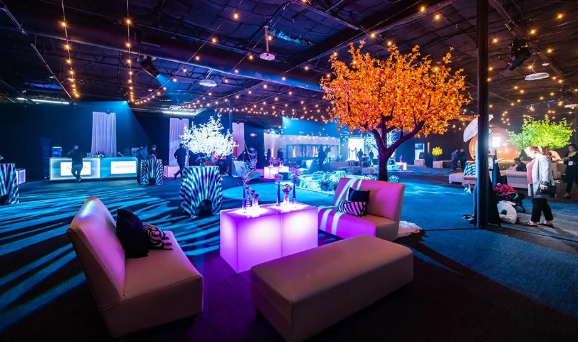
Unconventional spaces offer a blank canvas for a racing-inspired evening. Their character can make a modest program feel distinctive, although the apparent flexibility may come with extra work around power, restrooms, furniture, heating or cooling, and production access.
For an experience built around installations, performances, dining, shopping, and interactive art,AREA15 may be worth considering as part of the broader Las Vegas search. Its open-ended visitor experience can suit groups that want more than a conventional dinner, provided the event plan respects the venue’s operating structure.
Weigh Strip locations against off-Strip alternatives
Strip venues offer proximity, visibility, and a familiar destination for visitors. They can also bring heavy traffic, complex loading conditions, and higher demand during the race weekend. Off-Strip options may provide more room or a calmer arrival, but transportation planning becomes more important.
Make the decision against the guest profile, not the map alone. A short transfer with a reliable plan may feel easier than a nominally central location where vehicles, pedestrians, and event traffic compete for access.
Find and shortlist suitable venues early
Demand rises quickly around a major race weekend, so venue research should begin with a practical shortlist rather than an endless browse. Create a consistent comparison method and record what is confirmed, what is provisional, and what still needs a site visit. The best Las Vegas event space is the one that works operationally as well as visually.
Research availability during the 2026 race weekend
Start by specifying the exact dates, preferred time blocks, setup period, and breakdown window. A venue may appear open for the event itself but be unable to accommodate the hours needed for staging, rehearsals, deliveries, or strike.
Contact venues directly and request written confirmation. Keep alternate dates or formats in reserve, particularly if the event depends on a specific race session or a tightly timed guest transfer.
Verify capacity, layout, and guest-flow requirements
Ask for current floor plans, not just a maximum occupancy number. Mark entrances, registration, bars, restrooms, dining zones, viewing areas, emergency exits, and staff-only routes. Then test the expected guest movement from arrival through departure.
A useful shortlist should answer a few basic questions:
- Can guests see and hear the main program from where they will stand or sit?
- Is there enough room for service, production, and comfortable circulation?
- Can the venue separate guest, vendor, and delivery traffic?
- Are accessibility and emergency routes preserved in the proposed layout?
These checks turn a promising photograph into an informed venue decision. They also expose layout problems before deposits and design work make the choice harder to change.
Review venue access, parking, and transportation options
Race-weekend congestion makes arrival part of the event experience. Confirm vehicle access, rideshare procedures, coach drop-off points, parking availability, loading zones, and the walking route from the nearest practical entrance.
If guests are coming from multiple hotels, consider a transfer plan with staggered departures. Share realistic instructions rather than relying on a generic address, and allow extra time for security, road closures, and pedestrian congestion.
Assess production capabilities and preferred vendors
A venue should explain what it can provide in-house and what must be sourced externally. Discuss power, lighting positions, sound limits, screens, rigging, internet, staging, furniture, and the timing of technical access.
Also ask whether outside vendors are allowed and whether the venue requires approved partners. Those rules affect the budget, creative options, insurance documents, and the schedule for load-in and testing.
Secure exclusive access and negotiate the booking
Once the shortlist is small, move from general interest to specific proposals. Exclusive access is rarely defined by one phrase in a sales conversation; it is created by the scope, timing, staffing, and restrictions written into the agreement. Read the offer as an operating document, not just a price.
Understand full-venue buyouts and private-area reservations
A full-venue buyout generally offers the greatest control, but it may bring a higher minimum spend and more responsibility for staffing or production. A private-area reservation can be efficient for a smaller group, though shared access may affect privacy and atmosphere.
Ask exactly what the booking includes. Confirm guest areas, back-of-house access, restrooms, entrances, storage, setup space, and whether the venue remains open to other visitors during any part of the event.
Request detailed proposals and itemized pricing
Request a proposal that separates room fees, food and beverage, labor, security, cleaning, rentals, technology, entertainment, taxes, service charges, and overtime. A single total can hide assumptions that later become unexpected costs.
Compare proposals on equivalent terms. A lower room fee may not be better if it excludes setup hours, furniture, power, or the staffing required to deliver the intended experience.
Clarify deposits, cancellation terms, and minimum spends
Before signing, understand when deposits are due, whether they are refundable, and how cancellation or postponement is handled. Confirm the food and beverage minimum, payment schedule, tax treatment, and charges for extending the event or changing the guest count.
Race-weekend conditions can shift quickly, so ask about rescheduling, force majeure, and credit treatment. Have the commercial terms reviewed by the person responsible for the event budget.
Confirm exclusivity, branding rights, and operating hours
Put the boundaries of exclusivity in writing. The agreement should state whether another event can operate nearby, which entrances are reserved, where signage may appear, and when the private area is controlled by your team.
Confirm branding permissions for invitations, screens, menus, step-and-repeats, décor, and photography. Operating hours should include access for setup, rehearsals, guest arrival, event programming, and breakdown rather than only the guest-facing portion.
Plan race-weekend logistics for a seamless guest experience
Good logistics are mostly invisible to guests, which is precisely the point. They should know where to go, when to arrive, and what happens next without feeling managed at every turn. Build the plan around real travel time and the pressure points of the race schedule.
Coordinate arrivals, transfers, and traffic constraints
Map every arrival pattern, including private cars, rideshares, shuttles, coaches, and accessible transportation. Give drivers a designated instruction set and a named onsite contact, since the most convenient entrance for guests may not be the same as the loading entrance.
Use staggered arrival windows when possible. This reduces queues and gives registration, security, and hosts enough time to respond when traffic delays part of the group.
Build a schedule around practice, qualifying, and race sessions
Create a master schedule that includes race sessions alongside meals, transfers, speeches, entertainment, and breaks. Protect buffer time around every immovable commitment, especially when guests may be traveling across the city.
A flexible program is often more successful than one packed with transitions. If a session runs late or a guest arrives behind schedule, hosts should be able to hold a conversation or activate a secondary experience without making the room feel stalled.
Plan check-in, credentialing, and guest security
Decide how invitations will be verified and how staff will handle additions, substitutions, lost credentials, and special access. Check-in should be easy to find but not placed where it blocks the entrance or exposes private guest information.
Brief hosts, security, venue staff, and transport teams from the same guest list. Clear escalation routes matter more than elaborate procedures when an issue occurs during a busy arrival period.
Prepare for congestion, weather, and last-minute changes
Even an indoor event needs a plan for weather, traffic, equipment delays, and supplier changes. Confirm sheltered waiting areas, backup transportation contacts, alternate entertainment cues, and a way to communicate updates quickly.
Keep one decision-maker responsible for real-time changes. Guests should receive concise instructions while the production and venue teams work through the detail behind the scenes.
Design a premium off-track event that reflects the Grand Prix
An off-track event should echo the energy of the Grand Prix without becoming a replica of the circuit. Use speed, precision, engineering, and night-time spectacle as creative references, then translate them into hospitality that feels natural. The strongest design choices support conversation and comfort as much as visual impact.
Use racing-inspired décor without overbranding the experience
Subtle cues can be more effective than a room covered in logos. Consider track-line graphics, restrained color accents, materials associated with the paddock, directional lighting, or a carefully edited display of racing memorabilia.
Keep sightlines open and avoid décor that interferes with service or conversation. A few coherent details will feel more premium than a collection of unrelated racing props.
Create a menu and beverage program for VIP audiences
The menu should match the event’s pace. Passed bites support movement, while a seated meal creates a slower, more formal rhythm. Include clear options for dietary needs and make sure food remains easy to eat during conversation or live viewing.
Build the beverage plan with the same care. Offer a concise selection of cocktails, wine, beer, and nonalcoholic drinks, and position bars so service queues do not compete with the main program.
Add entertainment, interactive moments, or live viewing
Entertainment should give guests something to share without forcing constant attention. A short performance, interactive installation, live session viewing, or guided memorabilia moment can create a natural change of pace.
If the event includes an immersive element, schedule it in waves rather than sending everyone at once. That preserves comfort and lets guests choose how deeply they participate.
Incorporate sponsor, team, or corporate branding thoughtfully
Branding works best when it belongs to the environment. Use invitations, menus, projection, staff attire, or a limited photo moment instead of placing every mark on every surface.
Agree on approvals before production begins. Confirm logo use, color standards, photography permissions, sponsor categories, and removal deadlines so the final setting feels intentional rather than crowded.
Protect the investment with compliance and contingency planning
A premium event depends on details guests never see: insurance, permits, safety procedures, vendor documentation, and clear accountability. Start these conversations during venue selection, not after the creative plan is complete. Compliance is part of the guest experience because it supports a calm, controlled event.
Review insurance, permits, and local event requirements
Ask the venue which certificates, permits, and approvals are required for the proposed format. Requirements may vary with attendance, entertainment, temporary structures, alcohol service, amplified sound, or specialized equipment.
Assign one person to track documents and deadlines. Keep the current versions accessible to the venue, vendors, security team, and event lead so an administrative gap does not delay setup.
Confirm food service, alcohol, noise, and safety policies
Review catering rules, alcohol permissions, service hours, noise limits, fire-safety provisions, and restrictions on cooking, candles, pyrotechnics, or temporary installations. Do not assume a venue’s standard policy covers an unusual race-weekend program.
Translate the rules into the production plan. A beautiful concept is only useful if it can be installed, staffed, and operated within the venue’s actual conditions.
Establish backup plans for vendors and technical production
Identify substitutes for critical suppliers, including transportation, catering, rentals, entertainment, power, screens, and sound. Technical teams should know which elements are essential and which can be simplified if time, equipment, or access changes.
Keep backup plans practical. A reduced program that preserves food, welcome, communication, and guest comfort is more valuable than an elaborate alternative nobody can execute.
Document responsibilities in the final venue agreement
The final agreement should identify who controls access, who supplies staff, who approves vendors, who manages incidents, and who pays for changes or damage. Include the schedule, floor plan, inclusions, exclusions, branding permissions, and agreed operating hours.
Have the venue and key suppliers acknowledge the same version of the plan. That shared reference reduces ambiguity when the event moves from planning to race-weekend execution.
Plan Your Visit
For a memorable off-track gathering, explore a setting that combines installations, performances, dining, shopping, and interactive art. Plan your visit to AREA15 and consider how its flexible visitor experience could complement a private race-weekend itinerary.
Frequently Asked Questions
When should I book a private event space for the 2026 Las Vegas Grand Prix?
Begin as early as possible, especially for peak evenings and venues requiring a full buyout. Early planning also leaves time for proposals, site visits, permits, vendor selection, and contract review.
What guest count should I use when comparing venues?
Use the expected attendance plus staff, vendors, entertainers, and production crew. Then test the layout for circulation, service, seating, viewing, registration, and emergency access rather than relying only on the posted capacity.
Is a Strip venue always the best choice for race-weekend events?
Not necessarily. Strip locations may be convenient and recognizable, while off-Strip venues can offer different layouts or calmer access; the right choice depends on transportation, guest priorities, privacy, and schedule.
What does an exclusive venue booking usually include?
It may include a full buyout or a defined private area, but inclusions vary. Confirm access hours, guest zones, entrances, staffing, restrooms, storage, setup, breakdown, and whether other visitors or events will be present.
How can I make a private event feel connected to the Grand Prix?
Use restrained racing references, a schedule built around race sessions, live viewing or related entertainment, and hospitality that reflects speed and precision without overwhelming the room with branding.
What logistics should guests receive before the event?
Provide the venue address, arrival time, transportation instructions, parking or drop-off details, check-in requirements, dress guidance, accessibility information, and a contact for urgent changes.
What should I review before signing the venue agreement?
Check the total pricing, minimum spends, deposit schedule, cancellation terms, operating hours, vendor rules, insurance requirements, branding permissions, alcohol and noise policies, and each party’s responsibilities during setup and the event.
Make the Event Memorable
Start planning private events Las Vegas with a clear guest experience, a realistic race-weekend schedule, and a venue agreement that protects the details. With the right setting and preparation, your off-track gathering can feel exclusive without becoming complicated.