

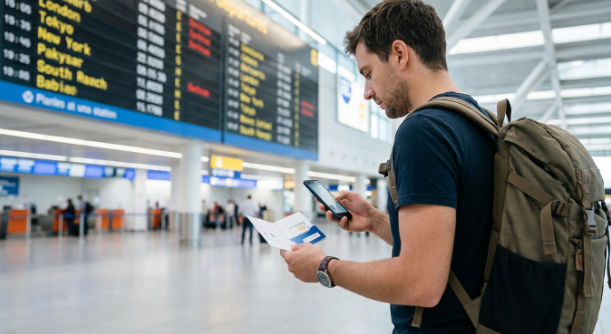
Travelling abroad is easier than ever, but staying connected can still become one of the most frustrating parts of an international trip. You need internet access for maps, translation apps, hotel bookings, transport, travel research, digital payments, and keeping in touch with family. Losing connectivity at the wrong moment can turn a simple journey across town into a stressful experience.
Fortunately, travellers now have more options than simply buying an expensive roaming package or searching for a local SIM card after landing. Understanding how mobile connectivity works overseas—including whether an eSIM card is suitable for your trip—can help you stay online while keeping your travel budget under control.
Whether you are planning a weekend city break, a family holiday, a backpacking adventure, or a multi-country journey, choosing the right connectivity option before departure can make your trip considerably smoother.
Why Staying Connected Matters When Travelling
Internet access is no longer just a convenience for international travellers. For many people, it has become part of the basic travel toolkit.
Think about everything you might use your phone for during an ordinary day abroad.
You may check a train departure time in the morning, use a navigation app to reach a museum, translate a restaurant menu at lunch, book a taxi in the afternoon and message your accommodation in the evening.
That is before considering emergencies.
Your phone can help you contact your airline, find a pharmacy, access travel documents, communicate with emergency services and notify relatives if your plans change.
Reliable connectivity therefore has both practical and safety benefits.
The challenge is finding a solution that provides enough data without creating an unexpectedly large bill when you return home.
The Main Ways to Get Internet Abroad
Travellers generally have several options for accessing mobile data overseas:
- International roaming from your existing mobile provider
- A local physical SIM card
- An eSIM
- Public Wi-Fi
- Portable Wi-Fi devices
- Hotel, café and airport networks
Each option has advantages and disadvantages.
The right choice depends on your destination, trip length, phone compatibility, data requirements and budget.
International Roaming
Roaming is perhaps the simplest solution.
You leave your existing SIM in your phone and allow it to connect to a partner network when you arrive in another country.
The biggest advantage is convenience. There is no need to change SIM cards, visit a shop or configure a completely new number.
However, standard roaming can become expensive, particularly if your mobile plan does not include international data.
Some providers offer travel passes that provide a fixed amount of data for a set period. These can be useful for short trips, but travellers should check the exact allowances and restrictions before departure.
Pay particular attention to:
- Daily roaming charges
- Data allowances
- Calls and text charges
- Supported countries
- Fair-use policies
- Automatic renewal
- What happens after you exceed your allowance
Never assume that your domestic mobile package will work overseas in exactly the same way.
Local SIM Cards
Buying a local SIM card is another traditional option.
Once installed, it connects your phone to a local network and usually provides access to domestic data rates.
This can be particularly useful for longer stays.
For example, someone spending several weeks or months in one country may find a local mobile plan more economical than repeatedly purchasing short-term travel packages.
The downside is the practical inconvenience.
You may need to find a mobile shop after arrival, provide identification, understand a foreign-language contract and physically replace your existing SIM.
There is also the question of where to keep your original SIM while travelling.
If you lose it, you could have problems when trying to reconnect to your home network after returning.
What Is an eSIM?
An eSIM is a digital SIM built into compatible devices.
Unlike a traditional SIM card, it does not require you to insert a small piece of plastic into your phone.
Instead, a compatible plan can generally be installed digitally.
For travellers, this creates an important advantage: you can often arrange connectivity before leaving home.
There is no need to search for a mobile shop immediately after landing.
Depending on the provider and destination, travellers can purchase a data plan, follow the activation instructions and have their mobile data ready for use when they arrive.
This makes eSIM technology particularly attractive for short holidays and international trips where convenience matters.
Why eSIMs Are Useful for Travellers
The biggest advantage of an eSIM is flexibility.
Instead of physically replacing your SIM card, you can keep your existing SIM installed while using a separate travel data plan.
This can be especially useful for people who want to remain reachable through their normal number while using another connection for mobile data.
Other potential advantages include:
1. No Physical SIM to Lose
Tiny SIM cards are surprisingly easy to misplace.
An eSIM eliminates the need to remove your physical SIM simply to access a travel data plan.
2. Setup Before Departure
One of the most useful aspects of an eSIM is that you can often arrange your connection before boarding your flight.
That means you can land, collect your luggage and start navigating rather than immediately searching for a telecommunications shop.
3. Convenient for Multi-Country Trips
Travellers visiting several countries may appreciate the ability to manage connectivity digitally.
Depending on the plan, one travel eSIM may cover multiple destinations, reducing the need to purchase a new physical SIM every time you cross a border.
4. Useful for Short Trips
For a week-long holiday, spending time searching for a suitable local mobile plan may not be worth the effort.
A short-term digital data plan can provide a simpler alternative.
5. Dual-SIM Flexibility
Many newer smartphones support combinations of physical SIMs and eSIMs.
This can allow travellers to keep their usual number available while using a separate travel plan for data.
However, exact functionality varies by phone model, carrier and region.
Is an eSIM Right for Every Traveller?
Not necessarily.
Before purchasing one, check whether your smartphone supports eSIM functionality.
You should also confirm that your device is unlocked if your provider requires this for using another network.
Older smartphones may not support eSIM technology, while some region-specific models have different capabilities.
It is also important to check the coverage area of the specific plan.
A plan that works well in one country may not cover another country on your itinerary.
Before purchasing, verify:
- Your phone supports eSIM
- Your phone is network-unlocked
- Your destination is covered
- The amount of data included
- The validity period
- Whether hotspot/tethering is permitted
- When the validity period begins
- Whether voice calls and SMS are included
- How activation works
A few minutes of research before departure can prevent significant inconvenience later.
How Much Mobile Data Do You Actually Need?
One of the easiest ways to overspend on travel connectivity is buying far more data than you need.
Your ideal allowance depends on how you use your phone.
A light user may primarily use:
- Messaging
- Occasional maps
- Basic web browsing
- Travel apps
Someone who regularly streams video, uploads high-resolution photographs or uses video calls will consume considerably more.
Light Data Use
If you mostly use messaging, maps and occasional browsing, a relatively small data allowance may be sufficient for a short trip.
Moderate Data Use
Travellers who frequently use navigation, social media, online bookings and photo uploads should consider a larger allowance.
Heavy Data Use
If you regularly stream video, use cloud services or work remotely while travelling, you may need significantly more data.
The key is to consider your actual habits rather than automatically choosing the biggest package.
How to Reduce Mobile Data Usage While Travelling
Even with a generous data plan, reducing unnecessary consumption can make your connection last longer.
Download Maps Before You Leave
Many mapping services allow you to download areas for offline use.
This is particularly useful when exploring cities, hiking areas or destinations where coverage may be inconsistent.
Save Travel Documents Offline
Download copies of:
- Hotel reservations
- Flight information
- Train tickets
- Travel insurance documents
- Important addresses
- Tour confirmations
You should not have to rely on an internet connection to retrieve something you already know you will need.
Use Wi-Fi Strategically
Hotels, libraries, cafés and other public spaces may provide Wi-Fi.
Use trusted networks when appropriate for routine tasks, particularly when downloading large files or updating apps.
However, avoid assuming that every public network is secure.
Disable Automatic Updates
Apps can consume considerable data by downloading updates in the background.
Consider restricting automatic updates until you are connected to reliable Wi-Fi.
Reduce Video Quality
If you need to watch videos using mobile data, reducing streaming quality can significantly lower data consumption.
Turn Off Unnecessary Background Data
Some apps continue using mobile data even when you are not actively using them.
Review your phone’s mobile-data settings before travelling and restrict unnecessary background activity.
Public Wi-Fi: Convenient but Not Always Ideal
Free Wi-Fi can be extremely useful.
Airports, hotels, restaurants and cafés often provide internet access, allowing travellers to save mobile data.
But public Wi-Fi should not be treated as a perfect replacement for mobile connectivity.
Networks can be slow, crowded or unreliable.
More importantly, travellers should be careful when accessing sensitive accounts through unfamiliar networks.
Avoid entering financial information or accessing particularly sensitive services through networks you do not trust.
If you must use public Wi-Fi, make sure your device and apps are updated and consider using a reputable VPN where appropriate.
Mobile data can provide a useful alternative when you need a more dependable connection.
Staying Connected on a Multi-Country Trip
Multi-country travel creates a different challenge.
Imagine an itinerary that takes you from Spain to France, Italy and Croatia.
Buying a separate physical SIM in every country can quickly become inconvenient.
You would need to research each provider, purchase another SIM, determine how much data you need and repeat the process several times.
A regional travel plan may simplify this process if it provides coverage across all the countries on your route.
However, never assume that a regional plan automatically covers every destination.
Check the provider’s coverage list before purchasing.
Also consider how frequently you will cross borders.
If you are spending only a day or two in each country, convenience may be more valuable than finding the absolute lowest possible price.
What About Calls and Text Messages?
Data and traditional mobile calls are not necessarily the same thing.
Some travel connectivity plans focus primarily on mobile data.
That may be perfectly adequate for modern travellers who communicate through messaging platforms and internet-based calling.
However, if you need to make conventional phone calls or receive SMS messages, check whether your chosen plan supports them.
Keeping your regular SIM active may be useful if you need to receive verification messages or remain reachable through your usual number.
Again, the exact options depend on your phone and mobile provider.
A Practical Connectivity Strategy for International Travel
Rather than choosing a connectivity method at random, build it into your travel planning process.
Step 1: Check Your Phone
Find out whether your device supports eSIM and dual-SIM functionality.
Also confirm whether it is unlocked.
Step 2: Check Your Existing Mobile Plan
Contact your provider or review your account to determine what international roaming is included.
Do not rely on assumptions.
Step 3: Research Your Destination
Check mobile coverage, local SIM availability and travel connectivity options.
Remote destinations may have different limitations from major cities.
Step 4: Estimate Your Data Requirements
Think about how often you use navigation, social media, streaming, video calls and other data-heavy services.
Step 5: Compare Total Costs
Do not compare only the advertised price.
Look at:
- Total data allowance
- Validity period
- Countries covered
- Activation requirements
- Hotspot availability
- Calls and SMS
- Customer support
- Expiration rules
Step 6: Prepare Before Departure
Download your important documents, offline maps and essential apps.
If you are using an eSIM, follow the installation instructions before travelling where appropriate, but pay close attention to when the plan begins.
Step 7: Keep a Backup Option
Even the best travel technology can fail.
Keep important addresses, reservations and emergency information accessible offline.
For longer or more remote journeys, having a secondary connectivity option can also provide valuable peace of mind.
Common Mistakes Travellers Make
Waiting Until Arrival
Landing at midnight and discovering that your hotel address is buried in an email you cannot access is not an ideal travel experience.
Prepare important information beforehand.
Assuming Roaming Is Included
Some travellers discover the cost of international data only after returning home.
Check your provider’s terms before leaving.
Buying the Cheapest Plan Without Checking Coverage
A cheap plan is useless if it does not work at your destination.
Coverage should come before price.
Forgetting to Check Phone Compatibility
Not every phone supports eSIM technology.
Always check your exact device model.
Using Too Much Data Unnecessarily
Streaming films over mobile data when you could have downloaded them over Wi-Fi can quickly consume your allowance.
Relying Entirely on Public Wi-Fi
Free internet is helpful, but it should not be your only connectivity strategy when navigating unfamiliar places.
Connectivity Checklist Before an International Trip
Use this simple checklist before departure:
Phone
- Check eSIM compatibility
- Confirm the phone is unlocked
- Check battery health
- Update your operating system
- Update essential travel apps
Mobile Data
- Check roaming charges
- Compare local SIM options
- Compare eSIM plans
- Confirm destination coverage
- Check data allowance
- Check plan validity
Travel Preparation
- Download offline maps
- Save hotel details
- Download tickets and reservations
- Save emergency contacts
- Download translation tools
- Keep copies of important documents
Security
- Use strong device security
- Avoid suspicious Wi-Fi networks
- Keep apps updated
- Back up important information
- Consider a VPN for appropriate situations
Final Thoughts
Staying connected abroad should make travel easier, not more complicated.
For some travellers, traditional roaming will be the simplest choice. For longer stays, a local SIM may make more sense. Others may prefer the convenience of digital connectivity through an eSIM.
The important thing is to make the decision before you need it.
Think about where you are going, how long you are staying, how much data you use and whether you need your regular number to remain active. Then compare the available options based on coverage, cost and convenience rather than choosing the first plan you see.
A little preparation can save money, reduce stress and give you one less thing to worry about once your journey begins.
After all, your phone should be helping you discover the world—not making you wonder whether you can afford to use it.