

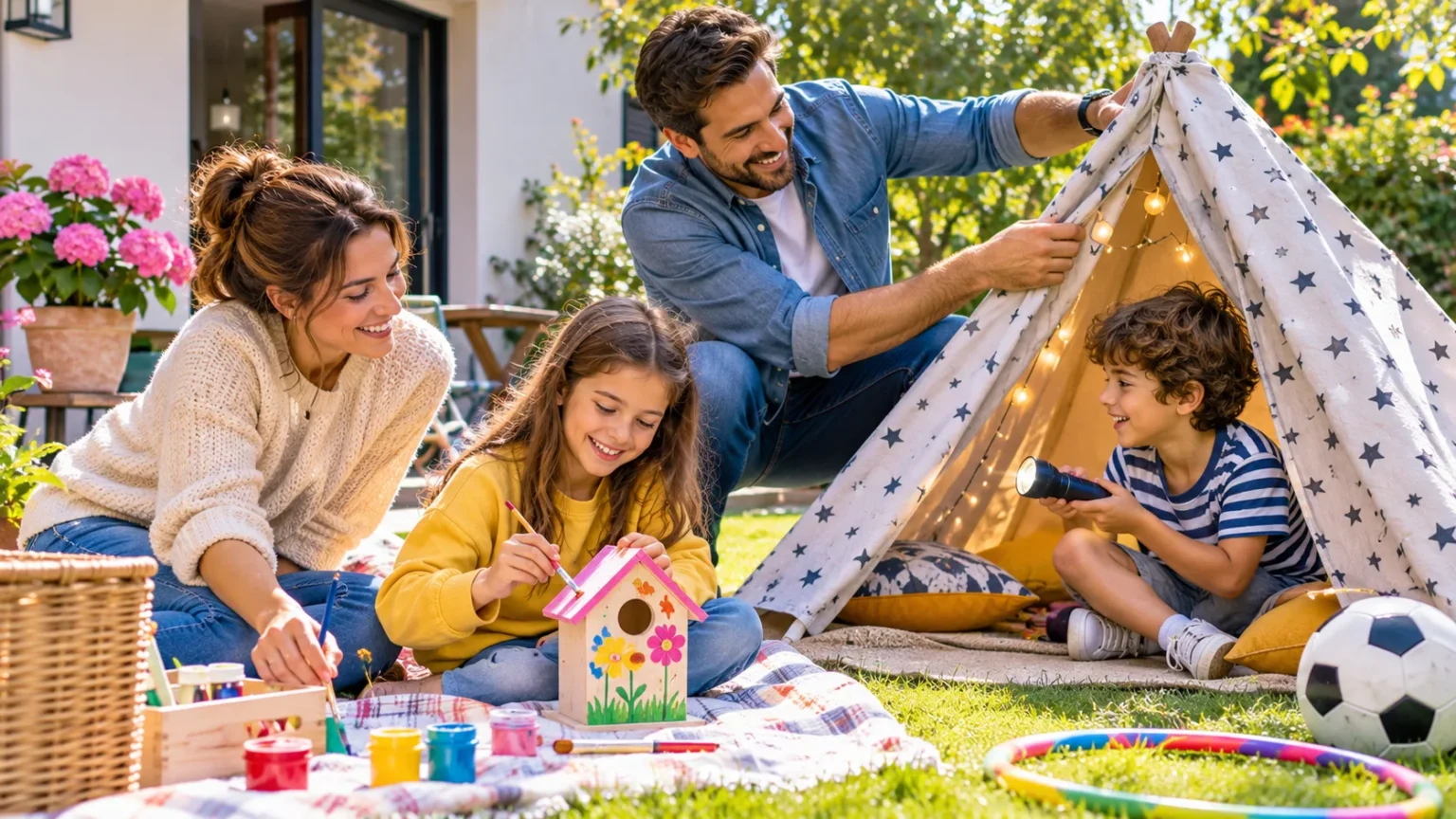
Spending time outdoors with children does not always require expensive trips, amusement parks, or complicated plans. Your backyard, garden, patio, or nearby outdoor space can become an exciting place for games, creative activities, and family adventures. From simple nature hunts to colorful art projects, there are plenty of fun things to do with kids at home outside that encourage creativity, movement, and meaningful family time.
Outdoor activities give children opportunities to explore their surroundings, develop practical skills, and enjoy a change from indoor routines. Parents can organize games using everyday household items or introduce activities that encourage teamwork and imagination. Whether you have a spacious backyard or a small outdoor area, this guide explores easy, affordable, and entertaining ideas for children of different ages.
Why Outdoor Activities Are Important for Kids
Outdoor activities provide children with opportunities to move, explore, and experience different environments. Playing outside encourages activities such as walking, balancing, running, and throwing. These movements can support the development of coordination and physical skills. Outdoor play also allows children to enjoy fresh air and explore their surroundings in an engaging way.
Spending time outside can encourage curiosity and imaginative thinking. Children may notice insects, observe plants, or discover interesting shapes in nature. These experiences create opportunities for questions and simple learning activities. Parents can support exploration by encouraging children to describe what they see and share their discoveries.
Outdoor family activities can also strengthen communication and cooperation. Games that involve taking turns, following simple instructions, and solving problems help children practice social skills. Families can participate together without needing expensive equipment. Choosing suitable activities based on age, weather, and available space helps make outdoor play enjoyable and safe.
Fun Things to Do With Kids at Home Outside
The best fun things to do with kids at home outside include backyard scavenger hunts, water games, sidewalk chalk art, gardening, and simple obstacle courses. These activities require minimal preparation and can be adapted to different interests. Many use supplies already available at home. This makes outdoor entertainment convenient for busy families.
Children who enjoy creative activities may prefer painting, building, or designing outdoor decorations. Others may enjoy active games involving movement and teamwork. Combining different types of activities helps maintain interest throughout the day. Parents can also allow children to suggest their own ideas and help plan the schedule.
A successful outdoor play session does not need to follow a strict timetable. Some children enjoy spending a long time on one activity, while others prefer variety. Allowing flexibility creates opportunities for independent exploration. The goal is to make outdoor time enjoyable rather than complete as many activities as possible.
Organize a Backyard Scavenger Hunt
A backyard scavenger hunt is an exciting activity that encourages children to explore their surroundings. Parents can create a simple list of objects for children to find, such as leaves, flowers, smooth stones, or different colors. The activity works well in gardens and small outdoor spaces. It also encourages observation and problem-solving skills.
Begin by choosing items that can be found safely within the designated play area. Younger children may prefer picture-based clues, while older children can follow written instructions. Explain the boundaries before starting and remind participants not to touch unfamiliar plants or animals. Children can collect safe objects or simply identify them.
After the hunt, gather everyone together to discuss their discoveries. Children can compare different leaves, describe interesting shapes, or share their favorite findings. Small creative challenges can make the activity more engaging. This simple outdoor game combines movement, learning, and family interaction without requiring expensive materials.
Create a Fun Backyard Obstacle Course
A backyard obstacle course transforms an ordinary outdoor space into an entertaining movement activity. Families can use soft cushions, lightweight cones, hoops, and other suitable household items to create simple challenges. Children may enjoy stepping between markers, balancing along a marked line, or moving around obstacles. The course can be adjusted for different ages.
Start by selecting a clear, level surface away from roads, sharp objects, and other hazards. Arrange activities that encourage comfortable movement without requiring risky jumping or climbing. Explain how each station works before beginning. Adult supervision is particularly important when younger children participate.
Obstacle courses can be modified to maintain children’s interest. Families might introduce new routes, change the order of activities, or create teamwork challenges. Avoid making speed or competition the main focus for every participant. Encouraging cooperation and enjoyable movement can make the experience more inclusive.
Have Fun With Sidewalk Chalk Art
Sidewalk chalk is an affordable outdoor activity that allows children to express their creativity. A driveway, patio, or suitable paved surface can become a colorful drawing area. Children may create pictures of animals, houses, flowers, or imaginary worlds. The activity requires little preparation and provides plenty of opportunities for artistic exploration.
Give children washable sidewalk chalk in different colors and encourage them to create their own designs. Younger children may enjoy drawing simple shapes, while older children can experiment with patterns and larger artwork. Parents can participate by drawing together or suggesting creative themes. Choose a safe surface away from moving vehicles.
Families can also create chalk games using simple drawings. Hopscotch boards, number paths, and colorful movement challenges add variety to the activity. Once finished, children can admire their artwork before it naturally washes away. Sidewalk chalk provides a flexible combination of creativity, learning, and outdoor play.
Plan Easy Water Games for Warm Days
Water games can make outdoor play especially enjoyable during warm weather. Simple activities involving sprinklers, cups, and shallow water containers offer opportunities for exploration. Children may enjoy pouring water between containers or playing gentle water-based games. These activities can be adapted according to age and available outdoor space.
Choose a shaded or comfortably cool location and use lightweight, child-safe materials. Small containers can be used for pouring and measuring activities without requiring large amounts of water. Children can explore how different objects float or sink under supervision. Avoid creating slippery play areas where falls may occur.
Water activities require constant adult supervision, especially when younger children are involved. Empty containers immediately after use and never leave children unattended around water, even when it appears shallow. Provide drinking water and suitable sun protection. Careful preparation allows families to enjoy outdoor water activities more safely.
Start a Small Family Gardening Project
Gardening is a rewarding outdoor activity that introduces children to plants, soil, and the natural environment. Families can grow flowers, herbs, or vegetables in suitable garden beds or containers. Children may enjoy selecting plants and observing their development. The activity provides opportunities for ongoing learning rather than entertainment limited to one afternoon.
Begin with easy-to-grow plants that match your climate and available sunlight. Allow children to help fill containers with suitable potting mix and gently place seeds or seedlings. Adults should supervise gardening tools and select plants that are safe for the household. Explain basic watering and plant care in simple language.
As the plants grow, children can help monitor changes and record observations. They may notice new leaves, flowers, or other signs of development. Gardening also introduces ideas about patience and responsibility. Even a small collection of pots can create an enjoyable family project throughout the growing season.
Create a Backyard Nature Art Station
Nature-inspired art combines outdoor exploration with creative expression. Children can use fallen leaves, small stones, and other safe natural materials to create decorative arrangements. A table or clean outdoor surface provides a convenient workspace. The activity encourages children to notice colors, textures, and patterns in their surroundings.
Begin by gathering suitable materials from the designated play area. Avoid sharp objects, unknown berries, irritating plants, and anything that may be unsafe to handle. Children can arrange leaves into pictures or create simple patterns using stones. Wash hands after handling natural materials.
Nature art does not need to become a permanent craft project. Children may enjoy creating temporary designs that can be rearranged repeatedly. Parents can encourage storytelling by asking what each picture represents. This activity offers a relaxed way to combine imagination, observation, and outdoor family time.
Set Up an Outdoor Picnic at Home
A backyard picnic can turn an ordinary family meal into a memorable experience. You do not need to travel to a park or prepare elaborate food. A comfortable blanket, simple snacks, and a suitable outdoor location are enough. Children can participate by helping choose the menu and organize picnic supplies.
Select a shaded area with a clean and comfortable surface. Prepare familiar foods that are easy to serve and eat outdoors. Keep perishable items properly chilled until needed, especially during warm weather. Encourage children to help with age-appropriate preparation and cleanup tasks.
Families can combine the picnic with storytelling, simple games, or quiet reading. Children may enjoy bringing favorite books or choosing music for the occasion. A picnic also provides an opportunity to spend time together without complicated entertainment. Small changes to everyday routines can create enjoyable family memories.
Play Classic Outdoor Games Together
Traditional outdoor games remain popular because they are easy to organize and enjoyable for different ages. Activities such as tag, hide-and-seek, and follow-the-leader encourage movement and social interaction. Many require little or no equipment. Their simple rules also make them convenient for spontaneous backyard play.
Choose games that suit the available space and children’s abilities. Establish clear boundaries and remove obstacles that could cause accidents. Younger children may need simplified rules or additional guidance. Encourage participation without placing excessive pressure on winning.
Classic games can also be modified to create new experiences. For example, follow-the-leader may include gentle balancing movements or imaginative animal walks. Hide-and-seek can use a small, clearly supervised play area. These adaptations keep familiar activities interesting while supporting cooperation and communication.
Build a Backyard Fort or Playhouse
Building a simple backyard fort encourages imaginative play and teamwork. Families can use lightweight cardboard boxes, outdoor blankets, and suitable playhouse materials to create temporary structures. Children may enjoy designing pretend shops, castles, or reading spaces. The activity combines planning, creativity, and collaborative problem-solving.
Choose materials that are stable, lightweight, and appropriate for children’s ages. Adults should supervise construction and ensure the structure cannot collapse or trap anyone inside. Avoid attaching heavy objects or using unstable furniture. Keep the playhouse away from roads, pools, and other hazards.
Once the fort is complete, children can use it for storytelling or pretend adventures. They may create signs, decorate the entrance, or invent characters. Parents can participate by encouraging creative ideas without controlling every detail. A simple structure can provide entertainment across several play sessions.
Have an Outdoor Bubble Party
Blowing bubbles is a simple outdoor activity that can entertain younger children. Floating bubbles create opportunities for observation, gentle movement, and playful interaction. Children may enjoy watching bubbles move through the air or noticing their changing colors. The activity requires only suitable bubble solution and child-safe bubble wands.
Choose a clear outdoor area where children can move comfortably. Adults can demonstrate how to create bubbles while younger children watch or participate with supervision. Avoid allowing bubble solution to enter the mouth or eyes. Clean spills promptly because soap mixtures can make surfaces slippery.
Bubble activities can include creative challenges without becoming overly competitive. Children might observe which bubbles float farther or how the wind changes their direction. Parents can also introduce simple conversations about air and movement. The activity combines playful exploration with opportunities for informal learning.
Create an Outdoor Reading Corner
Outdoor play does not always need to involve running or active games. A quiet reading corner can provide a relaxing alternative during family time. Children may enjoy listening to stories or exploring picture books in a comfortable outdoor setting. The activity combines fresh air with imagination and language development.
Choose a shaded location and arrange suitable cushions, blankets, or outdoor seating. Bring age-appropriate books and allow children to select their favorites. Parents can read aloud or encourage independent reading when appropriate. Keep books protected from moisture and direct sunlight.
A reading corner can become part of a regular family routine. Children may enjoy creating stories inspired by the garden or nearby nature. Combining reading with outdoor observation can make familiar books feel different. Quiet activities provide balance alongside more energetic forms of play.
Organize a Backyard Sports Day
A backyard sports day can encourage family participation through simple movement games. Activities might include gentle ball rolling, target throwing with soft objects, or beanbag challenges. These games can be adjusted for children with different abilities. The focus should remain on enjoyment and participation.
Prepare a clear play area and choose equipment suitable for the participants. Lightweight balls and soft targets can reduce the chance of accidental injuries. Explain the activity rules before beginning. Provide breaks and drinking water, particularly during warm conditions.
Families can create several activity stations to maintain variety. Children may enjoy choosing the order of games or inventing their own challenges. Encourage teamwork and recognize effort rather than focusing only on scores. A well-planned sports day provides opportunities for movement, cooperation, and positive family interaction.
Explore Backyard Science Experiments
Outdoor science activities can encourage children to ask questions and explore how everyday things work. Simple experiments involving water, shadows, plants, and wind provide accessible learning opportunities. Many require only basic household supplies. Parents can guide the activity by asking children to predict what might happen.
One easy activity involves observing how shadows change during the day. Children can place a safe object outdoors and compare its shadow at different times. Another idea is testing which suitable household objects float in a supervised shallow container. These experiences introduce basic scientific thinking through observation.
Keep experiments simple and use materials that are appropriate for children’s ages. Avoid dangerous chemical mixtures, flames, sharp objects, or unfamiliar substances. Encourage children to describe results rather than expecting every prediction to be correct. Outdoor science can make learning enjoyable without complicated equipment.
Make Outdoor Activities Fun for Different Age Groups
Children of different ages often enjoy different types of outdoor activities. Toddlers may prefer simple sensory experiences, gentle movement, and supervised exploration. School-age children might enjoy scavenger hunts, art projects, and imaginative games. Older children may prefer creative challenges or activities involving greater independence within safe boundaries.
Parents can adapt one activity to include several age groups. During a scavenger hunt, younger children might identify colors while older children solve written clues. Gardening can also involve different responsibilities based on ability. Flexible planning allows everyone to contribute without expecting identical results.
The most important consideration is matching activities with children’s interests and developmental needs. Some children enjoy energetic games, while others prefer quiet creativity. Offer different choices and allow breaks when needed. Inclusive outdoor activities help family members participate comfortably and enjoy spending time together.
Outdoor Safety Tips for Kids at Home
Outdoor safety begins with checking the play area before activities start. Remove sharp objects, unstable equipment, and other obvious hazards. Ensure children remain within suitable boundaries and understand basic safety rules. The level of supervision should reflect their age, abilities, and the activity.
Weather conditions also influence outdoor safety. During hot weather, provide drinking water, shade, and appropriate sun protection. Avoid prolonged exposure during extreme heat or severe weather. Check surfaces before play because outdoor equipment and pavement can become very hot in direct sunlight.
Insects, plants, and outdoor tools require additional attention. Teach children not to touch unfamiliar animals or taste unknown berries and leaves. Store gardening equipment and chemicals securely away from play areas. Thoughtful supervision and preparation help make outdoor activities enjoyable while reducing avoidable risks.
How to Plan a Budget-Friendly Outdoor Activity Day
Planning a family outdoor activity day does not require expensive supplies. Begin by reviewing household items that can be safely reused for games and crafts. Paper, washable chalk, lightweight balls, and clean containers offer numerous possibilities. Choosing familiar materials makes preparation easier and reduces unnecessary spending.
Select a few activities that provide variety without overwhelming children. For example, a day might include a scavenger hunt, outdoor art, and a family picnic. Allow enough flexibility for rest, snacks, and spontaneous play. Children often enjoy repeating favorite activities rather than following a strict schedule.
Ask children which activities they would like to try before making plans. Their suggestions can make the day more engaging and encourage a sense of participation. Keep backup indoor options available if weather conditions change. Simple planning can transform ordinary outdoor space into a memorable family experience.
Conclusion
There are many fun things to do with kids at home outside without spending large amounts of money or traveling far from home. Backyard scavenger hunts, sidewalk chalk art, gardening, outdoor picnics, and bubble games provide enjoyable options. These activities encourage creativity, movement, and family interaction. Many can be adapted to small outdoor spaces.
Choosing suitable activities depends on children’s ages, interests, and available resources. Parents can combine energetic games with quiet experiences such as reading and nature observation. Preparing safe play areas and considering weather conditions helps support enjoyable outdoor time. Flexible planning also allows children to explore ideas at their own pace.
Ultimately, outdoor family activities are about creating opportunities for shared experiences and everyday discovery. Simple games and creative projects can make ordinary afternoons feel special. Encourage children to participate in planning and try activities that reflect their interests. With a little imagination, your backyard or patio can become a welcoming space for learning, play, and family memories.
Frequently Asked Questions (FAQs)
What are some fun things to do with kids at home outside?
Fun outdoor activities include backyard scavenger hunts, sidewalk chalk drawing, bubble games, gardening, obstacle courses, and family picnics. These activities are affordable, easy to organize, and adaptable for different ages.
How can I entertain my kids outside without spending money?
Use household items for simple games, create nature scavenger hunts, organize pretend play, or enjoy outdoor storytelling. Many entertaining activities require only imagination, a suitable play area, and basic supervision.
What outdoor activities are best for toddlers?
Toddlers may enjoy supervised bubble play, simple chalk drawing, gentle ball games, and exploring safe natural materials. Choose age-appropriate activities, avoid small choking hazards, and provide close supervision.
How do I make my backyard fun for kids?
Create designated areas for art, imaginative play, simple games, and outdoor relaxation. Rotate activities according to children’s interests and use inexpensive materials to encourage creativity, movement, and exploration.
What can kids do outside on a hot day?
On warm days, children can enjoy shaded art activities, supervised water play, outdoor reading, or quiet games. Provide drinking water, suitable sun protection, and frequent breaks while avoiding extreme heat.